Joint pain and inflammation: When should you test for CRP?

For many people, the first clue that something is wrong with their joints will be something small like struggling to open a jar lid. Your fingers resist when you twist it, then loosen as the morning goes on.
In other cases, it might be more obvious. A sore knee may behave differently, feeling fine after rest and aching after a long walk.
Joint pain can come from inflammation, wear, injury, or infection. A joint pain CRP test may add useful information, though it cannot identify the cause by itself.
Can a CRP test tell if joint pain is inflammatory?
A raised CRP level can support the possibility of inflammatory joint pain, but it cannot diagnose arthritis or show which joint is affected.
C-reactive protein is made by the liver and rises with inflammation. CRP test guidance lists infection, tissue injury and autoimmune disease among the causes. Doctors read the result alongside symptoms, examination and other tests.
A raised inflammatory arthritis CRP result may fit rheumatoid arthritis, psoriatic arthritis or an acute gout flare. It may also come from an unrelated infection or injury.
How do inflammatory and mechanical joint pain differ?
Inflammatory pain is often worse after rest and may ease as you begin moving. Mechanical pain tends to build during or after activity, then settle with rest.

Signs that point towards inflammation include:
- Morning stiffness lasting longer than 30 minutes
- Persistent swelling, warmth or tenderness
- Pain in several joints or the hands and feet
- Symptoms that ease with gentle movement
- Fatigue, fever, psoriasis or nail changes
Rheumatoid arthritis often affects the small joints of the hands and feet. The NHS symptom guide notes that its morning stiffness commonly lasts longer than stiffness from osteoarthritis.
Psoriatic arthritis may come with psoriasis, nail pitting, heel pain or a swollen finger or toe. Gout usually starts quickly in one hot, intensely painful joint. CRP may rise during a gout flare, but urate and sometimes joint fluid testing are more specific. Rezure’s guide to high uric acid without gout explains why urate needs separate interpretation.
For osteoarthritis, NICE describes activity-related pain with no morning stiffness, or stiffness lasting no longer than 30 minutes, in people aged 45 or over. See the NICE osteoarthritis guidance. An injury often has a clear starting point, though significant tissue damage can itself raise CRP.
What does raised CRP mean with joint pain?
It means inflammation is present somewhere in the body at the time of testing. It does not show the location or cause.
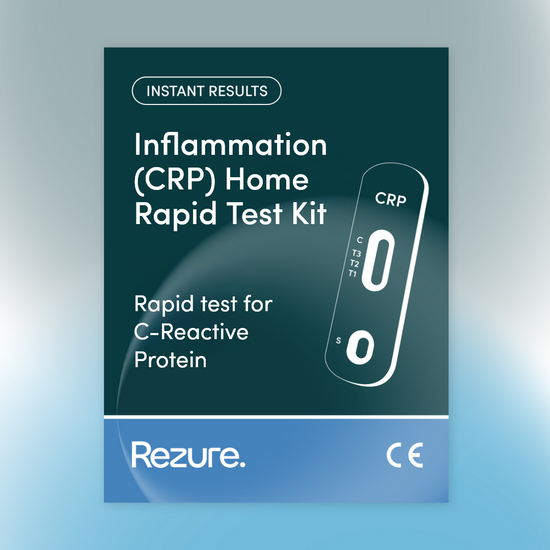
The Inflammation (CRP) Rapid Home Test Kit uses a finger-prick sample. Its negative result is below 10 mg/L. A result at or above the threshold needs context, particularly with swollen joints, fever, recent infection or injury.
Before interpreting the result, note:
- Any current infection or dental problem
- Recent surgery, injury or strenuous exercise
- Which joints hurt and swell
- How long morning stiffness lasts
- Psoriasis, nail changes, fever or fatigue
For causes outside joint disease, read what a high CRP result means.
How does CRP relate to rheumatoid arthritis activity?
CRP often rises when rheumatoid arthritis is active and may fall when treatment controls inflammation. Rheumatology teams can use CRP or ESR within the DAS28 score, which combines a 28-joint assessment, blood results and the patient’s view of their health.
The relationship is imperfect. NHS laboratory guidance states that CRP or ESR can be normal in up to 40% of people with rheumatoid arthritis. Active disease can exist with normal CRP, while a raised result may reflect something other than an RA flare.
For someone already diagnosed, a trend is more informative than one reading. Treatment decisions still depend on symptoms and joint examination.
When should you ask for a rheumatology referral?
Ask your GP about referral when you have persistent joint swelling that may be synovitis, especially in several joints or the small joints of your hands and feet.

NICE referral guidance says adults with suspected persistent synovitis should be referred. Referral should be urgent even when CRP or ESR is normal and rheumatoid factor or anti-CCP tests are negative.
Ask for a clear decision if you have:
- Ongoing swelling rather than pain alone
- Morning stiffness lasting over 30 minutes
- Several affected joints
- Swollen knuckles, wrists, fingers or toes
- Psoriasis or nail changes
- Symptoms that are worsening or persisting
Blood tests can help, but they should not delay referral. The NHS psoriatic arthritis guide also advises GP assessment for recurring pain, stiffness and swelling.
Can a home CRP result support your GP appointment?
Yes. A raised result gives you a concrete point to discuss, particularly if you tested during swelling or marked stiffness. It cannot prove a diagnosis or referral need.
Bring a short record showing:
- The result and test date
- Which joints are affected
- Morning stiffness duration
- How activity affects the pain
- Photographs of swelling
- Recent illness, injury and medicines
Your GP may repeat CRP and consider ESR, a full blood count, rheumatoid factor, anti-CCP antibodies, urate and kidney or liver tests. The NHS diagnosis guide explains why no single rheumatoid arthritis blood test can confirm or exclude the condition.
A negative home result should not weaken a well-founded request for assessment. Persistent synovitis drives referral, not raised CRP.
Could another test explain similar symptoms?
Yes. Fatigue, weakness, muscle pain and bone pain can sit beside joint symptoms without coming from inflammatory arthritis.
The Iron Deficiency (Ferritin) Rapid Home Test Kit may be relevant when tiredness or breathlessness suggests low iron. Ferritin can rise during inflammation and mask low stores. Rezure’s guide to persistent fatigue explains common overlaps. If heavy bleeding may be involved, see heavy periods and iron.
Low vitamin D may cause muscle weakness or bone pain that feels like joint pain. The Vitamin D Rapid Home Test Kit checks vitamin D status, while the guide to low vitamin D levels explains when testing may fit.
For gout assessment, Rezure stocks Gout (Uric Acid) Urine Rapid Test Strips for professional use. They do not replace serum urate testing in the NICE gout guidance. Kidney checks may also matter in gout; protein in urine explains one relevant marker.
When does joint pain need urgent help?
Seek urgent medical advice for sudden, severe pain in one joint with swelling, heat or skin colour change, especially if you feel feverish, shivery or generally unwell. These can be signs of septic arthritis.
Contact an urgent GP service or NHS 111 if:
- Severe joint pain starts suddenly
- One joint becomes hot and swollen
- You have a high temperature or chills
- You feel acutely unwell
Do not wait for a CRP test. Follow the NHS septic arthritis advice.
So, when should you test for CRP?

Consider CRP testing when joint pain comes with swelling, warmth, prolonged morning stiffness or general symptoms such as fever and fatigue. Treat the result as supporting information, not a verdict.
The jar lid still offers a useful clue. Pain that loosens with movement tells a different story from pain that builds after use. Record that pattern, add a CRP result when relevant and take both to your GP.
A raised result may strengthen the conversation. A normal one should never end it.