What does a high CRP blood test result mean for you?

A high CRP blood test can come as a surprise, and leave you wondering what it means and how to respond. You know something needs attention, but you don’t yet know if it’s something easily managed, or something more serious that needs further attention.
That is a useful way to think about CRP: It’s a signal, not a diagnosis.
A high CRP result tells you your body may be reacting to inflammation, infection or tissue damage. The harder part is working out what has set it off. Here, we untangle what it might all mean for you.
What does a high CRP blood test mean?
A high CRP blood test result usually means there is inflammation somewhere in your body.
CRP stands for C-reactive protein. The NHS describes a higher-than-usual CRP concentration as a key sign of inflammation.

A raised CRP does not tell you the exact cause on its own. It does not point to one organ, one condition or one clear answer. It simply tells you that your immune system may be responding to something, such as:
-
An infection
-
A recent injury
-
Tissue damage
-
A flare-up of inflammation
-
Recovery after surgery
So, if you’re asking what a high CRP blood test means, the honest answer is this: your body may be reacting, and the result needs context.
What is CRP in a blood test?
CRP is a protein linked to your body’s inflammatory response.
A C-reactive protein blood test measures the amount of CRP in your blood. Your liver makes CRP in response to inflammation, which can result from injury, infection, or disease.
Inflammation can be useful. If you cut your finger or catch an infection, your body needs an immune response. CRP can rise as part of that response.
It can also rise when inflammation lasts longer or appears without an obvious trigger. That is why a CRP test works best when considered alongside symptoms, timing, and other test results.
How high is high CRP?
High CRP levels depend on the test type, the lab range and your symptoms.
Many labs use mg/L for CRP. Mayo Clinic notes that results around 8 mg/L or 10 mg/L and above are often considered high, though ranges vary by lab.
CRP commonly rises to 10-40 mg/L in mild inflammation and certain viral infections, whereas higher levels may indicate acute inflammation or bacterial infection.
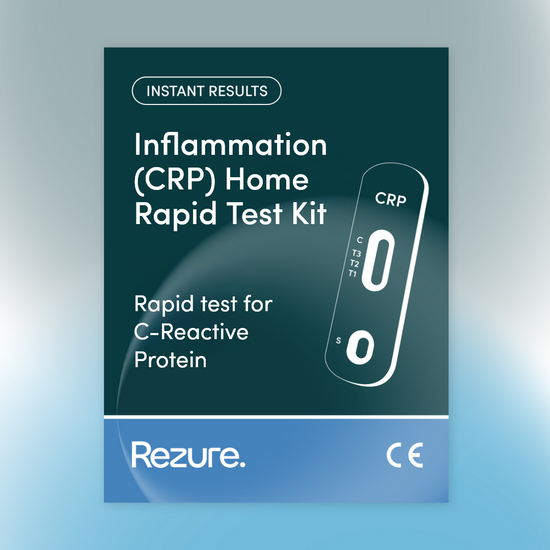
The Inflammation (CRP) Rapid Home Test Kit Rezure sells gives results in bands:
-
Under 10 mg/L
-
10 to 40 mg/L
-
40 to 80 mg/L
-
Over 80 mg/L
Those bands can help you see if CRP is raised. They still don’t identify the cause. A louder alarm may make action more pressing, but you still need to find the source.
What can cause raised CRP?
Elevated CRP can have many causes.
That is the point people often miss. High C-reactive protein does not mean one specific condition. South Tees Hospitals NHS Foundation Trust says CRP can rise with infection, tissue injury, surgery and inflammatory disorders, and should not be interpreted without a complete clinical evaluation.

Possible causes of elevated CRP include:
-
Short-term infections
-
Inflammatory bowel disease
-
Autoimmune conditions
-
Recent trauma, surgery or injury
-
Dental or gum inflammation
-
Smoking
-
Obesity
-
Some medicines
-
Recent hard exercise
Timing matters too. A CRP result taken during a cold, after a fall or soon after surgery may mean something different from the same result during months of unexplained symptoms.
Can symptoms help explain elevated CRP?
Yes. Symptoms help turn a CRP result into a more useful health conversation.
A CRP test tells you that inflammation may be present. Your symptoms help narrow down where to look next.
For example:
-
Fever, chills or feeling acutely unwell may point towards infection
-
Pain, swelling, or reduced movement may point towards injury or joint inflammation
-
Diarrhoea, stomach pain or blood in your stool may point towards gut inflammation
-
Breathlessness, dizziness or heavy periods may raise questions about iron
-
Weight change, cold sensitivity or low mood may raise questions about thyroid function
-
Muscle aches, low mood and winter tiredness may raise questions about vitamin D
If fatigue is part of the picture, CRP is only one possible piece. Rezure’s guide to feeling tired all the time looks at other common reasons tiredness can drag on.
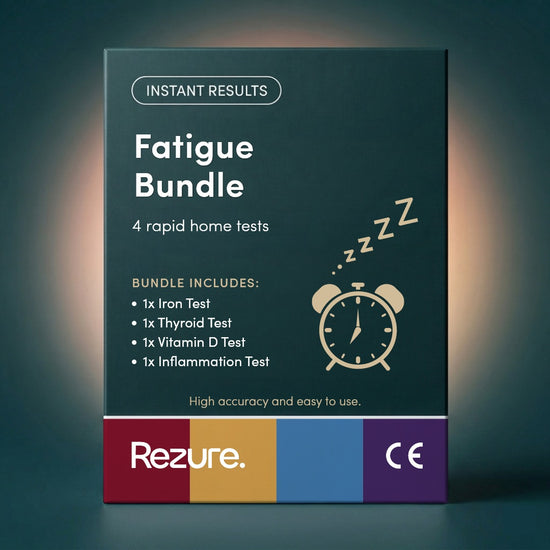
Rezure’s Fatigue Tests Bundle – 4 Home Rapid Tests for Tiredness brings together inflammation, iron, thyroid and vitamin D checks. You can also shop the iron test, thyroid test and vitamin D test separately.
Can a high CRP blood test diagnose a condition?
No. A high CRP blood test cannot diagnose a condition on its own.
This is the main point to remember. If your result shows that C-reactive protein is high, it may indicate inflammation. It does not say why.
Cleveland Clinic gives the same warning: a CRP test can’t show the cause of inflammation or where it is in your body, so clinicians may order extra tests after a high result.
Follow-up might include a full blood count, urine testing, stool testing, ferritin, thyroid tests, vitamin D testing, repeat CRP testing or a GP examination. The right next step depends on your symptoms.
What should you do after a high CRP result?
Treat a high CRP result as a prompt to investigate the cause.
Don’t ignore it, especially if you feel unwell. Don’t panic either. A raised CRP is common in many short-term problems, including infections and recent injury.
Before speaking to your GP, write down:
-
Your CRP result and units
-
When you took the test
-
Symptoms you had at the time
-
Any recent infection, injury or surgery
-
Medicines or supplements you take
-
Changes in energy, weight, digestion, mood or pain
This stops the number from becoming the whole story. The number is a signal. The cause is what matters.
Can a home CRP test be useful?
A home CRP test can be useful as an early check, as long as you understand its limits.
A CRP home test is designed to check for raised CRP from a finger-prick blood sample. It may suit people with fatigue, fever-like symptoms, muscle pain or a wish to check if inflammation could be part of their health picture.
It should not replace medical advice. If CRP is high, the next step is to explore the cause.
When should you get urgent medical help?
Get urgent medical advice if a high CRP result comes with severe or fast-worsening symptoms.

Do not wait on repeat testing if you have symptoms that feel serious, such as:
-
Chest pain
-
Severe shortness of breath
-
Confusion
-
Severe abdominal pain
-
A stiff neck with fever
-
Signs of sepsis
-
A rapidly worsening wound
-
Aevere pain after injury
-
Blood in your stool or vomit
A CRP test can support a health decision. It should not slow one down when your symptoms are severe.