Is it IBS or something else? The gut conditions doctors rule out first

A damp patch on the ceiling rarely means the roof needs replacing. Most people check the gutter and the window seal before assuming the worst. Irritable bowel syndrome tends to get diagnosed the same way.
Bloating, cramping and unpredictable bowel habits are among the most common reasons people see a GP about their gut, yet a GP won't usually settle on IBS the moment those symptoms turn up.
Several conditions with near-identical symptoms need to be checked and set aside first. Here's what that process looks like and why it exists.
What is IBS, and how common is it?
IBS is a long-term condition affecting how the gut works, causing abdominal pain alongside a change in bowel habit, whether that's diarrhoea, constipation, or a mix of the two.

There's no structural damage and no visible inflammation involved. A global analysis by Lovell and Ford put worldwide prevalence at around 11%, roughly twice as common in women as in men.
The condition was once grouped under the older term "spastic colon", a phrase doctors have since dropped in favour of more precise subtypes based on bowel habit.
Why do doctors rule out other conditions before diagnosing IBS?
NICE guidance is fairly direct here: a positive diagnosis of IBS can be given once red flags and other likely causes, such as coeliac disease, have been ruled out. For people meeting the IBS symptom criteria, NICE recommends a short list of blood tests rather than reflexive referral for scans or scopes.
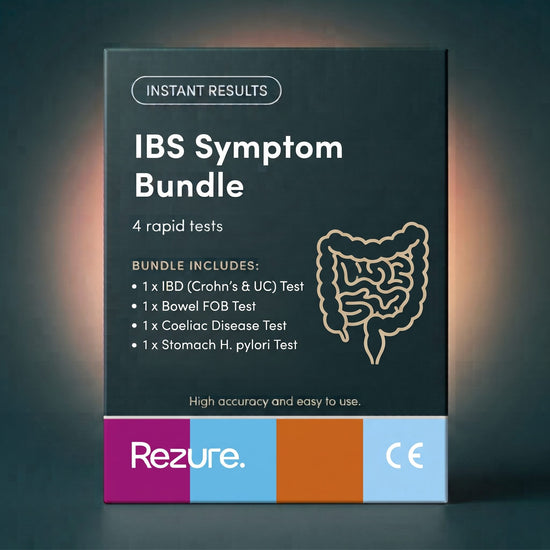
Rezure's IBS Symptom Bundle was put together around that same logic: four professional-use tests that mirror the checks a GP is likely to arrange.
Could inflammation be behind it instead of IBS?
Sometimes. Inflammatory bowel disease, meaning Crohn's disease and ulcerative colitis, shares several symptoms with IBS, which is exactly why the two get confused. The real difference is inflammation: IBD damages the gut lining, IBS doesn't.
Crohn's & Colitis UK estimates around 1 in every 227 people in the UK live with ulcerative colitis, with most diagnoses made between 15 and 25. Symptoms typically include blood or mucus in the stool, urgency and fatigue beyond ordinary tiredness, and in women, they're sometimes mistaken for gynaecological issues at first.
The exact cause isn't fully understood, though it's thought to involve the immune system reacting to gut bacteria in genetically predisposed people. Flare-ups can happen without warning, and treatment increasingly includes biologic drugs alongside standard medication.
A GP is more likely to look beyond IBS if there's:
- Blood or mucus in the stool
- Unexplained weight loss
- Night-time symptoms that wake you up
- A family history of Crohn's disease or ulcerative colitis
- Fatigue that doesn't match how much sleep you're getting
One useful clue is calprotectin, a protein released by white blood cells during gut inflammation.
NICE's diagnostics guidance backs faecal calprotectin testing specifically to help separate IBD from IBS, and an IBD (Crohn's & UC) Rapid Health Test checks calprotectin alongside a second marker called lactoferrin.
It's different from a test for hidden blood in stool, and a raised result doesn't confirm anything on its own. It's a reason to look further, not proof of anything by itself. Persistent fatigue alongside gut symptoms is worth mentioning to a GP too, rather than dismissing it as ordinary tiredness.
Could coeliac disease explain the symptoms?
Possibly. Coeliac disease is an autoimmune reaction to gluten that damages the small intestine's lining, and its symptoms overlap with IBS closely enough that NICE specifically recommends a coeliac blood test for anyone meeting the IBS diagnostic criteria.

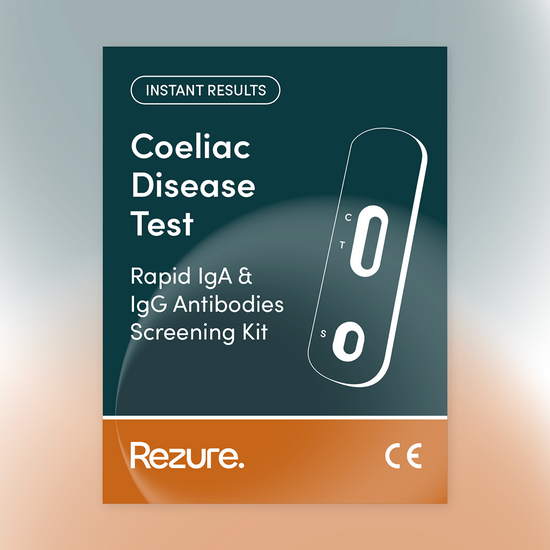
The test looks for tissue transglutaminase antibodies, and it only works reliably if gluten is still part of the diet; cutting it out early can lower antibody levels and produce a misleading result. Rezure sells an at-home coeliac test that checks for the same antibody response from a small blood sample, alongside the professional-use version built into the IBS Symptom Bundle.
Once confirmed, management is dietary rather than medical: a strict, lifelong gluten-free diet. That's a bigger adjustment than it sounds, since gluten hides in obvious places like bread and pasta and less obvious ones like sauces and stock cubes.
Could hidden bleeding point to something else?
This is one doctors won't leave to guesswork. IBS doesn't typically cause bleeding, so blood in the stool, visible or not, points away from IBS and towards something needing closer attention: piles, an ulcer, colitis, or occasionally bowel cancer.
A faecal occult blood (FOB) test checks for blood too small to see with the naked eye, using the same principle behind NHS bowel cancer screening.
A Bowel Health (FOB) Rapid Home Test works the same way for anyone a GP wants checked between appointments, including people who feel entirely well otherwise. A negative result doesn't rule out every cause of bowel symptoms, but a positive one isn't something to sit on.
Could an infection be causing the symptoms?
Sometimes, particularly when the main complaint sits higher up, around the stomach rather than lower down.
H. pylori is a common bacterial infection, affecting an estimated 40% of people in Europe, and it's strongly linked to gastritis and stomach ulcers. NICE recommends a "test and treat" approach for dyspepsia, meaning upper abdominal pain or discomfort after eating, checking for the bacteria before starting treatment.
Because the two can look remarkably similar when bloating follows meals, it's often checked early when symptoms sit above the belly button rather than below it. Rezure's Stomach Health Home Rapid Test for H.Pylori offers the same check for anyone who wants it done outside a GP visit.
What helps once IBS is confirmed?
Once other causes are excluded, treatment is mostly about managing symptoms rather than curing an underlying disease. The most evidence-backed IBS diet plan starts with a temporary low FODMAP diet, restricting fermentable carbohydrates that ferment in the gut and draw in water.

A 2021 network meta-analysis of 13 trials found it outperformed general dietary advice, though it works best with dietitian input rather than as a permanent DIY diet. Therefore, these steps should only be taken under the guidance of a doctor.
Peppermint oil capsules have decent short-term evidence for cramping and bloating, too.
Common next steps:
- A temporary low FODMAP diet, ideally with dietitian support
- Gut-directed hypnotherapy, including app-based programmes
- Peppermint oil capsules for cramping and bloating
- Medication targeted at the main symptom, such as antispasmodics or laxatives
Nobody wants a new roof over a stain that turns out to be condensation, but you do want the gutter checked first. That's really what this process is: a short, sensible list of things worth ruling out before settling on IBS, so whatever comes next is built on a proper answer rather than a guess.