What does blood in your poo mean?

Finding blood in your stool is one of those bathroom moments that can stop your day in its tracks. When you glance down and see red on the toilet paper, or a darker colour in the bowl, suddenly a normal trip to the loo feels like a mysterious health emergency.
That clue can point to something simple, such as piles or a small tear near the anus. It can also point to bleeding from higher up in the gut, bowel polyps, inflammation, ulcers or, less commonly, bowel cancer.
The first thing to remember is not to panic. It is important to notice the pattern, check the colour, look at any other symptoms, and get help when the signs call for it.
What does blood in your poo usually mean?
Blood in your poo means there may be bleeding somewhere in your digestive tract, anus or rectum. The colour and pattern can give useful clues, although they cannot give you a diagnosis on their own.
Common signs include:
-
Bright red blood on toilet paper
-
Red streaks on the outside of poo
-
Pink or red water in the toilet bowl
-
Blood mixed into poo
-
Bloody diarrhoea
-
Very dark, dark red or black poo
-
Hidden blood that you cannot see
Bright red blood often comes from near the anus, especially if it appears on the paper or outside the stool. Dark red or black poo can mean blood has come from higher up in the bowel or stomach, although iron tablets and some dark foods can also change stool colour.
The NHS advises getting rectal bleeding checked because it can sometimes be a sign of bowel cancer. Though a rare reason to find blood in your stool, bowel cancer is one of the most common cancers in the UK, with Cancer Research UK reporting around 48,200 new cases each year.
Is bright red blood usually piles or a fissure?
Bright red blood is often linked to piles or an anal fissure, especially if it appears after a hard stool or constipation. Still, you should not assume that it is always the cause.

Piles, also called haemorrhoids, are swollen blood vessels in or around the back passage. They can bleed when you poo. You may also notice itching, soreness or a lump near the anus.
An anal fissure is a small tear or crack in the delicate skin lining your anal canal. This can feel sharp when you poo, with burning pain afterwards. The blood is often bright red and may show on the toilet paper or in the toilet.
The pattern can help you explain symptoms to your GP:
-
Bright red blood with itching or lumps may suggest piles
-
Bright red blood with sharp pain during pooing may suggest a fissure
-
Blood mixed with stool needs closer attention
-
Bleeding with mucus, diarrhoea, or cramps may point to infection or inflammatory bowel disease
-
Bleeding without pain still needs checking
Piles and fissures are common and often don’t point to anything more serious. However, that doesn’t make rectal bleeding something you can safely ignore.
What does black or dark red poo mean?
Black, tar-like, dark red or plum-coloured poo can mean older blood has travelled from higher up in the digestive tract. This needs prompt medical advice, especially if the change is new.

Dark stool does not always mean bleeding. Iron tablets, liquorice, blueberries and some other foods can make poo look darker. Beetroot, tomatoes and some red or purple foods can also make poo look as if it contains blood.
A quick bathroom glance is useful, but it has limits. If your poo is black or dark red, if you have bloody diarrhoea, or if you feel unwell, ask for urgent medical advice. Do not try to work it out from colour alone.
Can blood in poo be invisible?
Yes. Hidden blood in stool is called faecal occult blood. “Occult” simply means it cannot be seen with the naked eye.
This matters because small amounts of bleeding can happen before obvious symptoms appear. A stool blood test can look for hidden blood in a sample of poo.
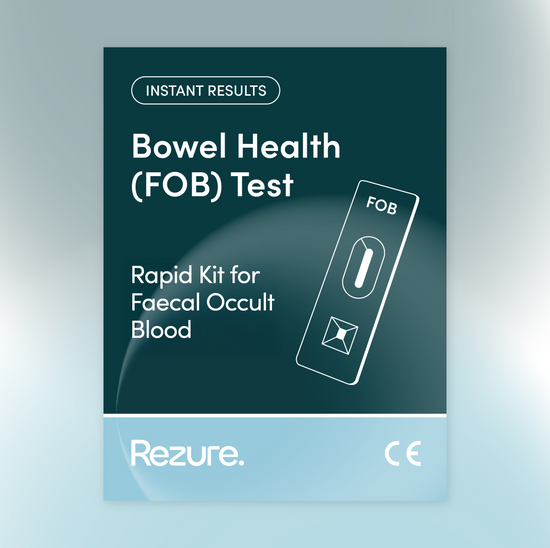
The Bowel Health (FOB) Rapid Home Test Rezure sells is designed to check for hidden blood in stool at home. It does not diagnose bowel cancer, piles, ulcers, polyps or inflammatory bowel disease. It gives you a result that can help you decide what to do next.
A positive result means blood has been detected, and you should speak to a healthcare professional. A negative result does not overrule symptoms. If you have blood in your poo, bowel changes, unexplained weight loss, ongoing pain, or fatigue that does not make sense, get medical advice.
What bowel changes matter when there is blood?
Bowel changes matter when they are new for you, persistent, or accompanied by blood. Your normal might not match someone else’s normal, so look for a shift in your own pattern.
Speak to a GP if you notice symptoms such as:
-
Poo that stays softer, thinner or longer than usual
-
Diarrhoea or constipation that is not normal for you
-
Needing to poo more or less often
-
Feeling you still need to poo after going
-
Blood with mucus
-
Tummy pain, bloating or a lump
-
Unexplained weight loss
-
Feeling very tired or short of breath
Tiredness and breathlessness can also happen with anaemia. Iron deficiency anaemia can have several causes, including blood loss. If tiredness is part of the picture, Rezure’s Iron Deficiency (Ferritin) Rapid Home Test Kit may give a useful first look at iron stores. It should not be used to explain away blood in your poo.

Constipation can also have causes outside the bowel. An underactive thyroid can cause constipation, fatigue, feeling cold and weight gain. If those symptoms fit your wider pattern, the Underactive Thyroid (TSH) Rapid Home Test Kit may help you decide if thyroid function is worth discussing with a clinician.
When should you get medical help for blood in poo?
Get medical help based on the bleeding pattern, the colour and your other symptoms.
Call 999 or go to A&E if:
-
You are bleeding non-stop from your bottom
-
There is a lot of blood
-
The toilet water turns red
-
You see large blood clots
-
You feel faint, very weak or seriously unwell
Ask for an urgent GP appointment or use NHS 111 if:
-
Your poo is black or dark red
-
You have bloody diarrhoea
-
You have blood in your poo with severe tummy pain
-
You cannot pass wind or poo and feel bloated or sick
See a GP if:
-
You have had blood in your poo for 3 weeks
-
Your bowel habit has changed for 3 weeks
-
You are losing weight without trying
-
You have a pain or lump in your tummy
-
You feel more tired than usual
A small one-off bleed can settle, especially after constipation. The safer approach is to record what happened and get checked if it returns, lasts, or comes with other changes.
Could the blood be coming from urine instead?
Sometimes, red in the toilet is hard to place. It may come from stool, urine, vaginal bleeding, a period, or the skin around the anus.
Blood in urine can make pee look pink, red or dark brown. The NHS advises urgent medical advice for blood in urine, even if there is only a small amount or you are not sure it is blood.
If you also have urinary symptoms, such as pain when peeing, frequent urination or lower tummy discomfort, Home Urinary Health Dipstick Test Strips can check markers including blood, protein, nitrites and leukocytes in urine. This is separate from a stool blood test, and it does not replace medical advice if you can see blood.
What should you do after seeing blood in your poo?
Start with the facts you can record. Your GP will find this more useful than a vague memory of “something looked wrong”.
Note down:
-
The date it happened
-
The colour of the blood or stool
-
If the blood was on the paper, outside the poo or mixed in
-
Pain, itching, lumps or constipation
-
Any diarrhoea, mucus, weight loss or tiredness
-
Medicines such as aspirin, warfarin, apixaban or anti-inflammatory painkillers
-
Recent foods that may affect colour, such as beetroot or liquorice
Then act on the pattern. One small bright red streak after a hard stool is not the same as black stool, blood mixed through poo, bleeding with weight loss, or blood that keeps coming back.
That bathroom glance is not a diagnosis. It is a prompt. If something looks wrong, take it seriously, write it down, and get the right help.