IBD (Crohn's & UC) Rapid Health Test

£20.00 £24.00
In stock
Skip to product information
1 of 1

IBD (Crohn's & UC) Rapid Health Test

IBD (Crohn's & UC) Rapid Health Test

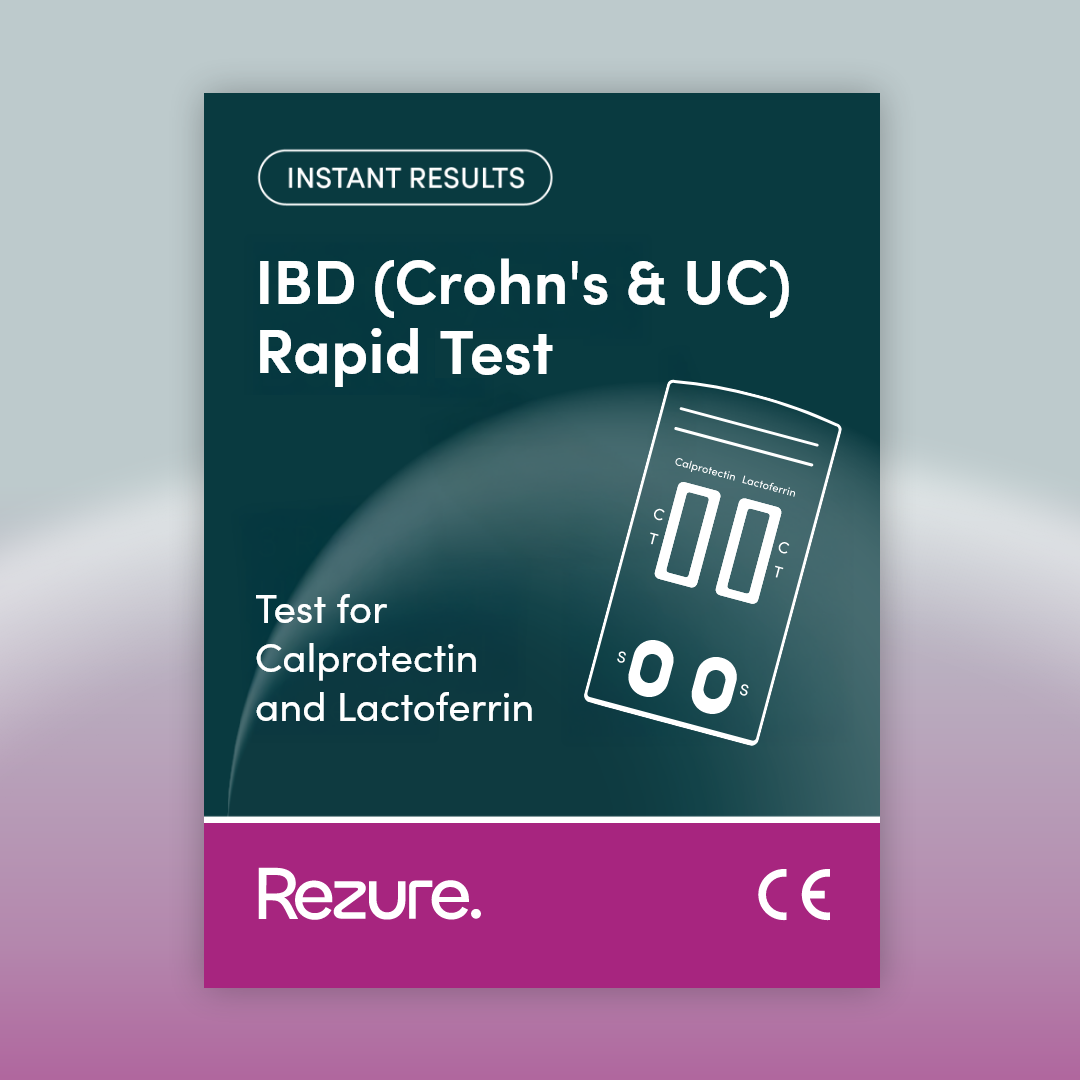
This rapid stool test checks two key markers linked to gut inflammation: calprotectin and lactoferrin. It is a practical option when you need a quick screen for signs associated with inflammatory bowel disease. 

Testing for calprotectin and lactoferrin in a faecal sample helps you identify markers linked to Crohn’s disease and ulcerative colitis.

It can be a useful first step when symptoms need a closer look or when further medical assessment may be needed.

Results ready in minutes. Designed for professional use.

Quantity
Regular price £20.00
Sale price £20.00 Regular price £24.00
Sale Sold out
Taxes included. Shipping calculated at checkout.

Free UK shipping for orders over £20

View full details

About this test

This test gives you a quick way to check two stool markers linked to inflammation in the bowel, making it a useful option within wider digestive health testing.

Calprotectin and lactoferrin are proteins released by white blood cells during intestinal inflammation.

Raised levels of these proteins in a faecal sample can point to inflammatory bowel disease rather than a non-inflammatory gut problem. That includes conditions such as Crohn’s disease and ulcerative colitis.

A negative result makes active bowel inflammation less likely at the time of testing. A positive result suggests that further medical assessment may be needed.

Results are available in minutes, supporting timely evaluation and decision-making.

For professional use only.

What this test offers

Checks calprotectin and lactoferrin
Screens for bowel inflammation
Supports Crohn’s and UC assessment
Results in 5 minutes
Professional-use format
Learn more about this test

Frequently Asked Questions

What is this test used for?

This test looks for calprotectin and lactoferrin in a stool sample.

These are two markers linked to inflammation in the bowel. It gives you a quick screen for signs associated with inflammatory bowel disease, including Crohn’s disease and ulcerative colitis.

That makes it useful when symptoms feel persistent, unclear, or hard to separate from other digestive problems.

Instead of relying on guesswork, you get a more focused read on whether bowel inflammation may be part of the picture.

What are the sensitivity, specificity and accuracy values for this test?

For calprotectin, sensitivity is 97.8%, specificity is 99.0%, and overall accuracy is 98.5%.

For lactoferrin, sensitivity is 97.6%, specificity is 98.3%, and overall accuracy is 98.1%.

In simple terms, sensitivity shows how well the test picks up positive samples, while specificity shows how well it avoids false positives in negative samples.

Accuracy reflects how often the test gives the correct result overall.

This test is designed to detect calprotectin at 50 μg/g and lactoferrin at 35 μg/mL.

Those are the lowest levels the test is set to pick up for each marker. That gives you a clear threshold for screening, helping identify raised levels linked to bowel inflammation while keeping the result quick and easy to interpret.

Taken together, these figures show strong performance across both markers and add confidence to the result when the test is used correctly.

Do I need to send my sample to a lab?

No, there’s no need to send the sample to a lab. The rapid test delivers instant results, with no lab analysis required.

Just follow the instructions to collect a stool sample, and read the results within minutes.

What can raised calprotectin or lactoferrin suggest?

Raised levels can suggest active inflammation in the gut.

That does not confirm a diagnosis on its own, though it can point to a pattern that deserves proper follow-up.

This is where the test has real value. It gives you an early signal that can help you decide whether to take the next step, rather than sitting with ongoing symptoms and no clear direction.

For many people, that kind of clarity is exactly what makes rapid testing worth doing in the first place.

Is this the same as an FOB test?

No. This test checks markers of bowel inflammation, while an FOB test looks for hidden blood in the stool.

They answer different questions, which is why they can be useful at different points depending on the symptoms you want to explore.

If bleeding is the concern, or you want to check for another possible sign of bowel problems, the Bowel Health Home FOB Test for Cancer, Polyps and Ulcers is the more relevant option.

It is a good companion test because it adds a different layer of information rather than repeating the same one.

Who might find this test useful?

It can be useful when bowel symptoms keep coming back, when inflammation is a concern, or when you want something more concrete before speaking to a clinician.

Digestive symptoms often overlap, and that is part of what makes them frustrating. Pain, urgency, loose stools, cramping, bloating, or changes in bowel habit do not always point clearly in one direction.

A targeted inflammation screen helps narrow the question. That gives this test a practical edge, because it is built around two markers that are directly relevant to bowel inflammation rather than offering a vague gut-health promise.

Can this test diagnose Crohn’s disease or ulcerative colitis?

No single rapid test should be treated as a diagnosis.

What this one can do is flag marker patterns associated with inflammatory bowel disease, which helps show when further assessment is worth pursuing.

That is still useful. A clear result gives you something more specific to act on, and it can make a medical conversation more informed from the start.

In other words, it works well as a screening step, especially when you want fast information without jumping straight into more involved testing.

How is this different from the H. pylori test?

They are designed for different parts of the digestive system.

This test focuses on bowel inflammation markers, while the Stomach Ulcer Home Rapid Test for H.Pylori is aimed at detecting H. pylori, a bacterium linked to ulcers, gastritis, and longer-term stomach problems.

That difference matters.

If your symptoms seem more upper-digestive, such as stomach discomfort after eating, nausea, bloating, or frequent burping, the H. pylori option may be the better fit.

If the concern is lower-bowel inflammation, this test is more on target.

Should I buy this on its own or as part of a wider digestive check?

If your main question is about bowel inflammation, this is a strong standalone choice. It is focused, relevant, and easier to interpret because it is built around two markers tied to the same concern.

If you want a broader overview across several common digestive issues, the Digestive Test Bundle - 4 Rapid Home Gut Health Tests may make more sense.

That bundle brings together several digestive checks in one order, which can be a better route when symptoms are more mixed or you want wider coverage from the outset.

What does a negative result mean?

A negative result makes active bowel inflammation less likely at the time of testing, which can be reassuring.

It does not rule out every digestive issue, and it does not explain symptoms by itself. What it does do is help narrow the field. That can stop you jumping too quickly to worst-case assumptions and help you think more clearly about what to look at next.

If you want a broader read on symptom patterns and home testing options, see Testing for digestive issues: Is your gut trying to tell you something

Can bowel problems exist even if symptoms are mild or easy to dismiss?

Yes. Digestive issues do not always arrive in a dramatic way, and symptoms can come and go, overlap, or feel too minor to take seriously at first.

That is one reason targeted testing can be so useful. A result gives you something firmer than a hunch, which makes it easier to decide whether to monitor things, explore another test, or speak to a professional.

If hidden bleeding is also on your mind, Can bowel problems exist without symptoms? When to test for FOB is worth reading alongside this page.

How to use this test

1
Prepare the test

Bring the test cassette, sample and buffer to room temperature before you begin.

Keep the cassette sealed until you’re ready to use it.

2
Collect the stool sample

Collect a small stool sample in a clean, dry container.

For best results, test it within 6 hours of collection.

3
Prepare the tube

Unscrew the collection tube and add the sample.

For solid stool, dip the applicator into at least 3 different areas. For liquid stool, add 2 drops to the extraction buffer.

4
Mix and wait

Tighten the cap and shake the tube well to mix the sample with the buffer.

Leave it to stand for 2 minutes.

5
Add to the cassette

Open the foil pouch, place the cassette on a flat surface, then invert the tube and add 2 full drops into the sample well marked ‘S’.

Start your timer straight away.

6
Read the result

Check the cassette at 5 minutes, and do not read it after 10 minutes.

Two lines mean positive, one line at ‘C’ means negative, and no control line means the result is invalid.

Good value and instant results

  • Quick screening for bowel inflammation, with results in minutes.
  • Checks calprotectin and lactoferrin from one stool sample.
  • No special equipment or lab processing needed.
  • Clear instructions for straightforward testing.
  • Helps guide next steps and further medical follow-up.

  • CE-Certified

    The CE mark means our tests have been assessed for quality

  • Tested

    Each test has undergone clinical trials

  • Discreet

    Discreet packaging and confidential results

  • Rapid results

    Instant answers for quick assessments