What’s the difference between an IBD stool test and an FOB test?

A lot of gut worries start the same way. Something feels off. Your stomach is not behaving as usual, your bowel habits have changed, and you are left trying to work out what the change actually means.
Is it inflammation? Is it blood? Is it something minor, or something that needs urgent follow-up?
That is where stool tests can seem helpful at first glance, and confusing a moment later. Two tests might both involve a stool sample, but they are not looking for the same thing.
An IBD stool test looks for signs of inflammation in the bowel. An FOB test looks for hidden blood. Those are very different clues, which is why they point to different questions and different next steps.
What does an IBD stool test actually look for?
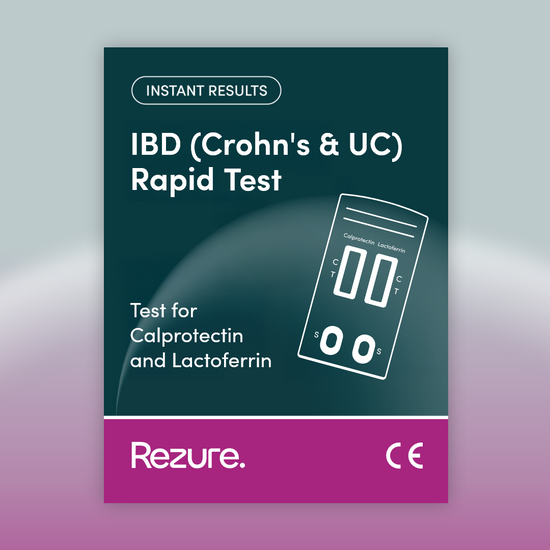
An IBD stool test looks for markers linked to inflammation in the bowel. For example, the IBD (Crohn's & UC) Rapid Health Test sold by Rezure checks calprotectin and lactoferrin, proteins released by white blood cells during intestinal inflammation.
When these markers are raised, it can suggest that inflammation is present in the gut. That is why these tests are often used when the question is less “Is there bleeding?” and more “Is this bowel inflammation?”
In practice, that matters because inflammation is a key feature of inflammatory bowel disease, including Crohn’s disease and ulcerative colitis.
Crohn's and Colitis UK explains that faecal calprotectin testing helps distinguish inflammatory bowel disease from non-inflammatory conditions such as irritable bowel syndrome in adults. It is used to assess gut inflammation and to guide next steps, alongside symptoms and other tests.
The main point is simple:
-
Calprotectin and lactoferrin are inflammation markers
-
They don't tell you the exact cause on their own
-
They can support further assessment for Crohn’s disease and ulcerative colitis
-
They are not the same as a cancer screening test
What does an FOB test look for?
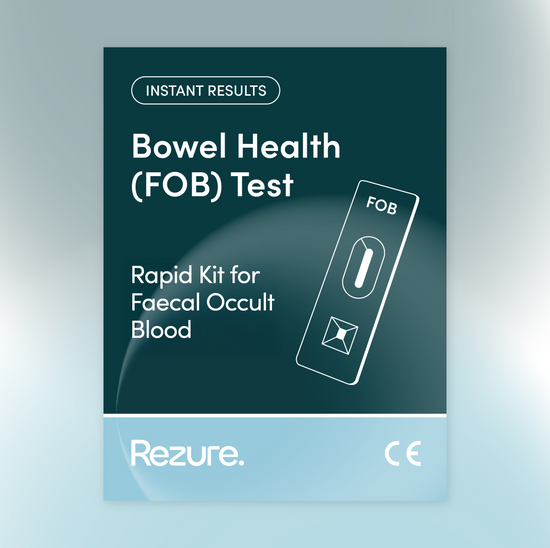
An FOB test looks for hidden blood in the stool.
“Occult” simply means blood that is not visible to the eye. The question this test asks is not “Is the bowel inflamed?” It is “Is there microscopic bleeding somewhere in the digestive tract?” That makes it a different kind of clue from calprotectin or lactoferrin.
That clue can matter because small amounts of bleeding may happen with bowel polyps, ulcers, colitis, diverticulitis, fissures, and bowel cancer.
Some polyps bleed only slightly, and the blood may stay hidden in the stool, which is one reason occult blood testing is used as an early warning sign rather than a diagnostic answer.
A positive FOB result means hidden blood has been detected. It doesn't tell you what caused that blood. A negative result can be reassuring, though it doesn't fully rule out bowel cancer or another bowel condition if symptoms continue.
That is why FOB testing is best understood as a screening or triage tool. It can show that further medical assessment may be needed, though it cannot diagnose bowel cancer, ulcers, or polyps on its own.
How does an IBD stool test relate to Crohn’s disease and ulcerative colitis?

Crohn’s disease and ulcerative colitis are the two main forms of inflammatory bowel disease. They involve ongoing inflammation in the digestive tract, which is why stool markers such as calprotectin and lactoferrin can be useful.
Raised results may support suspicion of active inflammation and can help show that symptoms need proper medical follow-up.
That said, raised inflammation markers don't diagnose Crohn’s disease or ulcerative colitis on their own. Doctors use the result alongside symptoms and other tests.
Raised faecal lactoferrin is not diagnostic for IBD, and normal levels don't fully exclude it either. Diagnosis usually depends on the wider picture, which may include blood tests, imaging, endoscopy, biopsy, and clinical review.
That is why a result is best viewed as an indication:
-
Positive markers can suggest that bowel inflammation is part of the picture
-
Negative markers can make active inflammation less likely at that moment
-
Neither result gives a formal diagnosis of Crohn’s disease or ulcerative colitis
How does an FOB test relate to bowel cancer?
FOB testing matters because blood in the stool can be an early sign of bowel cancer. These tests aim to pick up hidden blood before symptoms are obvious, which can help find cancer earlier.
Still, FOB testing doesn't diagnose bowel cancer on its own. Blood can come from causes other than cancer, including piles and small tears. A negative test also doesn’t mean bowel cancer is impossible.
The NHS advises people to pay attention to symptoms even after a screening result that shows no further tests are needed.
So the link is real, though it needs context. FOB testing is useful because it flags hidden bleeding. It doesn't tell you why the bleeding is there.
Can either test tell you if you have bowel cancer or IBD?
No. These tests offer indications. They don't diagnose bowel cancer, Crohn’s disease, or ulcerative colitis by themselves.
A positive inflammation test can point towards bowel inflammation, though inflammation has more than one cause. A positive FOB test can point towards bleeding, though bleeding has more than one cause, too.
A negative result on either test can be useful, though neither fully rules out serious disease when symptoms persist or red-flag features are present.
Which test is more useful for your symptoms?

That depends on the question you are trying to answer.
An inflammation-based stool test may be more relevant when symptoms suggest lower bowel inflammation, such as:
-
Ongoing diarrhoea
-
Abdominal pain with urgency
-
Recurring flare-type symptoms
-
A need to sort possible IBD from non-inflammatory gut problems
An FOB style test may be more relevant when the concern is hidden bleeding or bowel cancer risk, especially in the setting of:
-
Blood-related changes in stool
-
Unexplained anaemia
-
Unexplained weight loss
-
Symptoms that fit a colorectal cancer referral pathway
If you're comparing options, the useful distinction is this: the IBD (Crohn's & UC) Rapid Health Test targets inflammation markers, while the Bowel Health (FOB) Rapid Home Test targets hidden blood.
They are not competing versions of the same test. They answer different questions.
When does it make sense to think more broadly about digestive health?
Not every digestive concern starts and ends with IBD or bowel cancer.
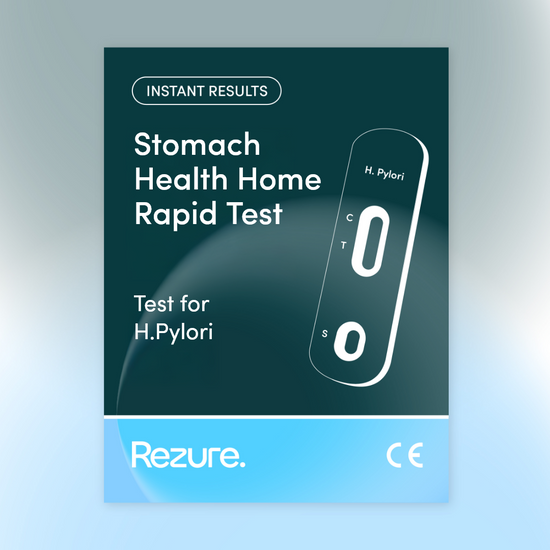
Upper digestive symptoms may point in a different direction, which is where options such as the Stomach Ulcer Home Rapid Test for H.Pylori can be relevant.
If the issue is a broader gut picture rather than a single narrow question, readers may also browse Rezure’s digestive health tests. That is useful because bowel inflammation, hidden blood, infection, and other digestive problems don't present in the same way.
So what is the real difference between an IBD stool test and an FOB test?

The real difference is the signal being measured. One is more closely tied to inflammatory activity seen in conditions such as Crohn’s disease and ulcerative colitis. The other is more closely tied to bleeding, which can matter in bowel cancer assessment and screening.
When your gut symptoms change, you usually want clarity first. That doesn't always come from one big answer straight away.
Sometimes it starts with asking the right question. Is this a sign of inflammation or bleeding?
These tests don't diagnose Crohn’s disease, ulcerative colitis, or bowel cancer on their own, but they can give a useful indication of what kind of problem may need closer attention.
Used in that way, they are less like verdicts and more like signposts, helping you make sense of what your body may be trying to tell you.