Can bowel problems exist without symptoms? When to test for FOB

You usually check your health when something feels off. Pain. Bleeding. A change you notice and cannot ignore.
Bowel health does not always work like that. Some bowel conditions start quietly, with no pain and no visible blood. That’s one reason the NHS invites adults aged 50 to 74 to complete a home stool test every two years, even if they feel fine.
The aim is simple. Look for early signs before symptoms appear.
There can often be a gap between feeling fine and actually being fine. Bowel health checks can spot tiny traces of blood you cannot see. This post explores how home testing fits into a more routine approach to gut health. Not as an alarm bell; more as a quiet check-in.
We want to encourage you to keep one basic question in mind: Is anything happening inside that I would otherwise miss?
In a hurry? Here are your key takeaways
- Yes, bowel problems can exist without symptoms. Pain or visible blood often appear later.
- Hidden blood in stool can be present even when everything looks normal.
- FOB testing looks for early signals, not diagnoses. It helps decide what to check next.
- Home testing makes it easier to act early, without appointments or awkward conversations.
- Testing makes sense if you want reassurance, fall into a higher-risk group, or simply do not want to rely on guesswork.
The gap between feeling fine and actually being fine
Many bowel problems begin quietly. You might feel normal, with no pain or visible blood. That does not always mean nothing is happening.
Some conditions cause tiny amounts of bleeding deep in the gut. You will not see that on the toilet paper or in the bowl.
Detecting tiny traces early gives clinicians a better chance to act before symptoms show. General screening programmes have been shown to reduce the death rate from bowel cancer, partly because they catch issues earlier.
This gap between feeling fine and actually being fine can be confusing. You assume no pain means no problem. With the bowel, that assumption can miss slow, low-level changes that only show up with a test.
What can hidden blood in stool actually tell you?

When a test looks for hidden blood, it is checking for microscopic traces you cannot see. That is what “faecal occult blood” means in this context. Blood can enter stool in very small amounts and still matter.
A hidden blood result can point to several things, including:
- Minor causes such as small haemorrhoids or tiny tears in the bowel lining
- Inflammation in the gut
- Bowel polyps, which can bleed without causing pain
- Less commonly, bowel cancer
Finding blood does not explain the cause. It flags that something needs checking. This is why stool tests sit early in the process, not at the end. They prompt a sensible next step, usually a conversation with your GP and, if needed, further tests such as a colonoscopy.
Why is home testing designed for people without symptoms?

Home stool tests exist because early bowel changes are easy to miss. You cannot feel them. You often cannot see them. Waiting for symptoms means waiting for the problem to announce itself.
Home testing also removes many of the reasons people delay checking their bowel health. You do not need symptoms to justify a test. You do not need an appointment. You can test privately, in your own time. The process is quick and straightforward.
This makes it easier to act early rather than react late. It also reframes bowel checks as routine. Not something reserved for moments of worry, but a practical way to stay informed.
How does a routine bowel check fit into everyday health?
Most people already accept routine health checks without symptoms. Dental check-ups. Eye tests. Blood pressure readings. Bowel health often gets left out, partly because it feels awkward and partly because it feels unnecessary when nothing hurts.
A routine bowel check fills that gap. It gives you information at a point where you would otherwise have none.
For some people, this matters more:
- If you are over 50
- If bowel cancer runs in your family
- If you have long-term gut issues or inflammation
- If you want reassurance rather than guesswork
Routine testing does not mean constant testing. It means checking at sensible intervals, especially as risk increases with age. It is about staying informed, not becoming anxious.
What a result means and what it does not
A stool test gives you information, not a verdict. The result helps decide what happens next. It does not explain causes on its own.
If your result is negative
A negative result means no blood was detected in the sample you provided at that time. For most people, that is reassuring.
It suggests:
- There was no sign of hidden bleeding in that sample
- No immediate follow-up is likely needed
It does not mean:
- That bowel problems can never develop later
- That you never need to test again
This is why screening and routine testing are repeated at intervals. A negative result gives you clarity now, not a lifetime guarantee.
If your result is positive
A positive result means blood was detected. That can sound alarming, yet it is important to keep it in context.
It tells you:
- Blood was found in the stool sample
- Further checks are recommended
It does not tell you:
- Where the blood came from
- Why it is there
- That you have cancer
Many positive results turn out to have non-serious causes. The test simply flags that something is worth checking more closely. In screening programmes, most people with a positive result do not end up with a cancer diagnosis.
What usually happens next

If blood is found, the usual next step is a conversation with your GP. They may suggest further tests, often a colonoscopy, to look directly at the bowel and identify the source.
This step exists to provide answers, not to confirm the worst. It is how clinicians distinguish minor causes from those that require treatment.
The value of a stool test sits in direction. It reduces uncertainty. Instead of guessing based on how you feel, you have a clear signal about what to do next.
A quiet check-in, not an alarm
So, is anything happening inside that you would otherwise miss?
Bowel health checks work best when they feel ordinary. Not dramatic. Not urgent. Just part of staying informed about your body. When you wait for symptoms, you rely on the bowel to tell you something is wrong. As you’ve seen, it does not always do that early on.
If you’re considering a home bowel health test, look for one that follows the same principles used in UK screening. Clear instructions. Reliable detection of hidden blood. Straightforward guidance on what to do with the result.
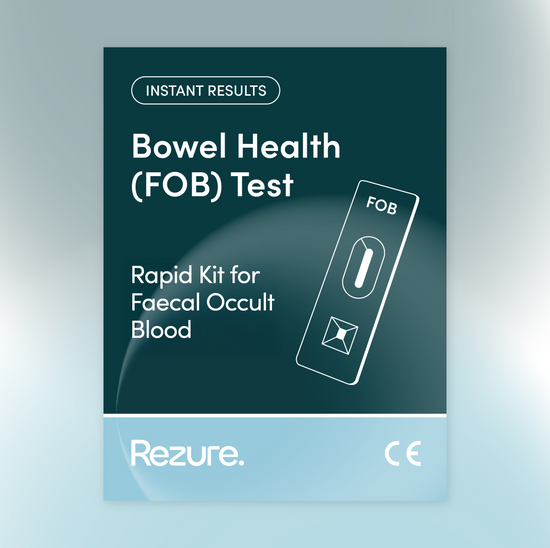
We sell a Bowel Health (FOB) Rapid Home Test that's easy to use and offers instant results.