Can you still be low in vitamin D if you take supplements?

Yes. You might take a vitamin D tablet with breakfast every day and still get a low result. That’s especially possible if your level was already low when you started, or if a condition or medicine affects how your body handles vitamin D.
A supplement usually helps. The question is whether the one you’re taking is enough for your situation.
Doesn’t a daily vitamin D supplement prevent a low level?
For most adults, a daily supplement is a sensible way to prevent levels from falling. The NHS recommends that everyone consider 10 micrograms (400 IU) a day during autumn and winter.
People who get little sun on their skin, and people with darker skin, should consider taking it throughout the year.
But prevention and treatment are different jobs. If you already have a substantial deficiency, the usual daily supplement may not raise your level quickly enough.
The NHS says a doctor may prescribe a short course of higher-dose vitamin D for severe deficiency, followed by a lower dose to maintain the level. Don’t start a treatment dose yourself on the strength of a home result.

That distinction matters particularly if you’re concerned about bone health after 50. Vitamin D helps your body use calcium, but taking a supplement doesn’t tell you what’s happening to your bones or how much vitamin D is in your blood.
Rezure’s broader guide to low vitamin D levels covers the signs and risk factors; the puzzle here is why a level might remain low despite taking it.
Why might my vitamin D stay low even when I take it?
The first thing to check is the ordinary one: what dose are you actually getting? Look at the amount per tablet or drop and how often the label says to take it. Vitamin D may also be included in a multivitamin, so check that before adding another product.
Other reasons a level may stay low include:
- Not enough time. If you started recently, your result may still reflect the period before you took supplements. The NHS says symptoms related to low vitamin D may take weeks or months to improve.
- Trouble absorbing it. Conditions such as coeliac disease and Crohn’s disease, and some types of weight-loss surgery, can reduce absorption. If bowel symptoms accompany repeated low nutrient results, you may want to explore coeliac disease symptoms and early Crohn’s symptoms. Neither condition can be identified from a vitamin D result.
- A medicine that affects vitamin D. Orlistat can reduce its absorption; some epilepsy medicines can increase the rate at which the body breaks it down. Ask a pharmacist or GP to review your medicines. Keep taking prescribed medicine unless your clinician advises a change.
- A different response to the same dose. In an analysis of a large clinical trial, vitamin D supplements raised blood levels less in participants with higher body mass indexes. That finding can help explain an unexpectedly low result, but it cannot tell you which dose you need.
The form of vitamin D can make a difference too. In a UK trial of 335 women, vitamin D3 added to food or drink raised blood levels more than the same amount of D2 over 12 winter weeks. It’s a reason to check the label, not proof that switching products will resolve a low result.
Could I be taking it correctly but expecting a result too soon?
Yes. A supplement doesn’t make an existing deficiency disappear after a few tablets. The NHS describes higher-dose treatment as a course taken over weeks; even then, someone with symptoms may need follow-up over a longer period.
How you take it is worth a look. NHS instructions for colecalciferol tablets and capsules say to take them with your main meal. If you’ve been prescribed vitamin D, follow the instructions for your particular product and ask your pharmacist if anything is unclear.
Avoid judging progress by how energetic you feel on a given day. Tiredness has many possible causes, as Rezure’s guide to persistent fatigue explains. Feeling better doesn’t confirm that your vitamin D level has risen, and continued fatigue doesn’t prove that it hasn’t.
Can food or sunlight help if I’m already taking supplements?
They can add to your intake, though food alone is difficult to rely on through a UK winter. From roughly late March or early April to the end of September, most people can make vitamin D when direct sunlight reaches their skin outdoors.

Between October and early March, UK sunlight isn’t strong enough for the body to make enough. Don’t stay in the sun long enough to burn.
Useful food choices include:
- Oily fish such as sardines, salmon or mackerel.
- Eggs, particularly the yolks.
- Foods with added vitamin D, such as some breakfast cereals and fat spreads. Check the label, as amounts vary.
These are ways to support your intake, not substitutes for assessing a persistent low result. If you rarely go outdoors, cover most of your skin outside or have darker skin, the NHS advice to consider a supplement all year still applies.
Can a home vitamin D test tell me why my level is low?
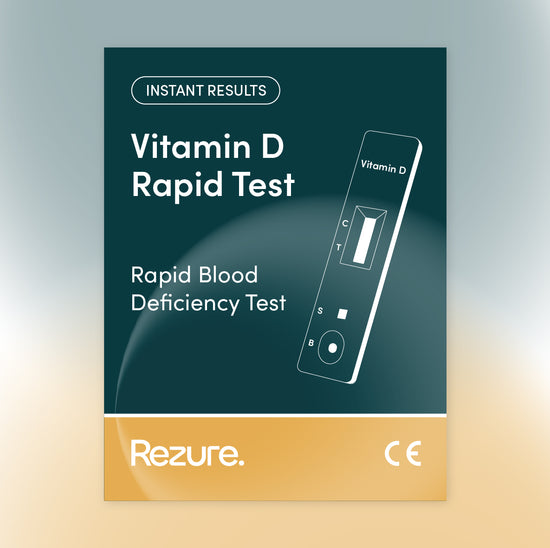
No. The Vitamin D Rapid Home Test Kit Rezure sells uses a finger-prick blood sample to check 25-hydroxy vitamin D. After about 10 minutes, you compare the result with a colour card. It gives an indication in three bands: sufficient, insufficient or deficient. It doesn’t give you a precise laboratory figure or identify why a level is low.
A low indication is useful information to take to a GP, especially if you’re already supplementing. Rezure advises that an insufficient or deficient home result should be verified by your GP. Tell them when you started taking vitamin D, the amount and form you take, and any other medicines or supplements. That gives them more to work with than the result alone.
Routine testing isn’t recommended for everyone without symptoms. UK clinical guidance reserves blood testing for situations where the result may affect care, such as suspected vitamin D-related bone problems.
When should I speak to a GP?
Book an appointment if a low result persists while you take supplements, or if you have bone pain, muscle weakness or ongoing symptoms you can’t explain. A GP can decide if you need a laboratory vitamin D test, treatment, or checks for another cause.

Bring the details that may change the advice:
- Your supplement packet, including the dose and how long you’ve taken it.
- Any home results and, if you have them, earlier laboratory results.
- A list of medicines, relevant health conditions and symptoms.
Don’t respond to a low result by repeatedly increasing your dose. The NHS upper limit for adults is 100 micrograms (4,000 IU) a day unless a doctor directs your treatment; too much vitamin D over time can cause harmful calcium build-up.
If you’ve taken more than intended or feel unwell after a high dose, seek medical advice.