How can you lower high cortisol levels?

If you’re trying to lower cortisol, start with the reason you think it’s high. Feeling stressed and getting a raised test result are different things. Cortisol normally rises and falls through the day, so a result needs its collection time and clinical context.
For everyday stress, changes to sleep, activity and the pressures you can control may help. If you have signs of sustained cortisol excess, speak to your GP. A breathing exercise or supplement won’t treat an underlying medical cause.
Our guide to high cortisol levels explains why a short-lived rise and a persistent problem call for different responses.
What should you change if everyday stress is wearing you down?
Work on the source of the pressure where you can, then give yourself ways to recover from it. You don’t need to build a perfect routine before making a useful change.

Start with what keeps happening:
- Name the pressure. Is it a workload you can renegotiate, a caring demand you need help with, or worry that follows you into the evening?
- Pick one action. Ask for a deadline change, share a task or set aside time to deal with a specific problem.
- Make room to switch off. Even a short, protected break is easier to repeat than an ambitious plan you can’t fit into your week.
- Get support if you’re stuck. If anxiety affects your daily life, speak to your GP. In England, you can also refer yourself for NHS talking therapies.
The NHS’s problem-solving advice suggests separating problems you can act on from worries you cannot settle immediately. That’s more practical than treating every stressful feeling as a hormone reading.
Can better sleep help reduce cortisol?
It may help your body keep its usual daily rhythm. It isn’t a guaranteed way to bring down a particular test result.
Cortisol is normally higher around waking and lower late at night. Poor sleep can disturb that pattern, although research has not found that every bad night causes the same cortisol change in every person. Rezure’s article on poor sleep and cortisol looks more closely at that relationship.
Give sleep a fair chance:
- Keep a regular waking time, including after a poor night when you can.
- Notice your caffeine timing if you’re relying on it to get through the afternoon.
- Leave some time to wind down before bed, especially if work or worry tends to follow you there.
Most healthy adults need around 7 to 9 hours of sleep, though individual needs vary. If poor sleep keeps affecting your days, the NHS sleep guidance offers ways to look at what may be disrupting it.
Do exercise and relaxation actually change cortisol levels?
They can, though the effect varies and the goal needn’t be a lower number on a test.
A review of 58 studies involving 3,508 people found that stress-management programmes changed cortisol measures compared with control groups. Mindfulness, meditation and relaxation showed the clearest effects in that analysis.
The studies used different types and timings of cortisol tests, so the findings don’t promise that one breathing session will fix a raised result.
Try something you can repeat. The NHS says physical activity can ease tension and recommends aiming for around 150 minutes of moderate activity a week. Start smaller if that fits your health and schedule. For a tense moment, its breathing exercise takes about five minutes: breathe gently, without forcing it, and let the breath out slowly.
Will a supplement lower high cortisol?
Be wary of a product that promises to “reset” or “flush out” cortisol. Cortisol is a hormone your body needs, and a supplement cannot replace assessment for a suspected medical cause of excess cortisol. Rezure’s article on cortisol detoxes deals with that claim in detail.

There’s also a risk in deciding that tiredness, weight changes or poor sleep must be caused by high cortisol. Those symptoms have many possible causes. Read more about persistent fatigue to understand some of the overlap.
Feeling cold alongside tiredness, constipation and weight gain, for example, may prompt a conversation about thyroid health. Rezure offers an Underactive Thyroid (TSH) Rapid Home Test Kit, though symptoms and any test result still need interpretation in context.
When should you ask your GP about high cortisol?
Make an appointment if you develop several progressive physical changes, especially if you take steroid medicine. Cushing’s syndrome is rare, and no single symptom proves you have it. The pattern matters.
Changes worth discussing include:
- Weight gain around the trunk with comparatively thinner arms or legs.
- Easy bruising or new, wide stretch marks.
- Muscle weakness, such as finding it harder to rise from a chair or climb stairs.
- A rounder face, alongside other changes that have appeared over time.
Tell your GP about any steroid tablets, injections, inhalers or creams you use. Steroid exposure is an important part of an assessment, and long-term high-dose steroid treatment is a common cause of Cushing’s syndrome. Don’t stop prescribed steroids on your own. The NHS advice on Cushing’s syndrome describes the symptoms and treatment options.
Can a quick cortisol test tell you what to do next?
A quick result can add information, but one reading cannot diagnose sustained cortisol excess. Time of day matters. So do symptoms, medicines and the reason for testing. Rezure’s guide to the best time to test cortisol explains why the same reading can mean different things at different hours.
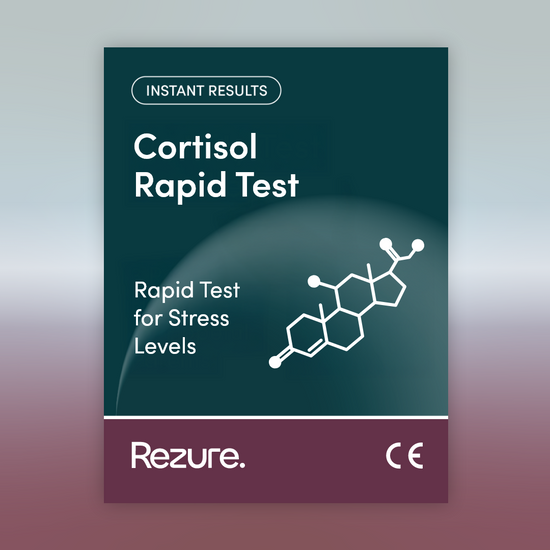
The Stress Hormone (Cortisol) Rapid Test Kit Rezure sells is a saliva test for professional use. It gives a threshold result in minutes; it does not establish why cortisol is raised or diagnose Cushing’s syndrome.
If a clinician suspects that condition, the Endocrine Society guideline recommends selected tests such as repeated late-night salivary cortisol measurements, 24-hour urine tests or a dexamethasone suppression test, followed by further assessment when needed.
What is the treatment for sustained cortisol excess?
Treatment depends on its cause. If steroid medicine is responsible, a clinician may gradually adjust it. Other causes may need medicine or treatment directed at a pituitary or adrenal growth. Those decisions come after assessment, not from a single rapid result.
If you’re taking prescribed steroids and suspect they’re causing problems, tell the clinician who prescribes them. Keep taking them as directed until you’ve agreed on a safe plan to change the dose.