Cup, cassette or strip: Which urine drug test format should you use?

A urine drug test can look simple from the outside. Then the moment arrives: a sample pot on a bathroom shelf, an instruction leaflet, a timer, and someone trying not to spill anything. The format matters more than you might expect.
In England and Wales, it’s estimated that 8.7% of people aged 16 to 59 used an illicit drug in the year ending March 2025, with cannabis remaining the most used drug and ketamine use among 16 to 59 year olds higher than in 2015. While that does not mean everyone needs to be tested, it does mean that when testing is used, the format should fit the job.
So when should you use a cup, a cassette, or a simple strip?
What is the difference between a cup, cassette and strip urine drug test?
The main difference is sample handling. A cup test collects and tests in the same device. A strip test is dipped into a urine sample.
A cassette test usually starts with urine collected in a separate sample pot. After that, the method depends on the cassette design. Some cassettes use a pipette or dropper to add urine to a sample well. Others have exposed absorbent strips that are dipped into the collected urine.
That sounds small. In practice, it affects almost everything:
-
How much you handle the sample
-
How much clean-up you need
-
How easy the test is to run under pressure
-
How many chances there are to make a mistake
-
How simple the result is to read
Urine testing is common because urine is relatively easy to collect and offers a useful detection window for many drugs. It does not measure impairment.
It looks for drugs or their metabolites within a detection window that can vary by substance, dose, frequency of use, hydration status, and metabolism.

When is a cup drug test the most practical choice?
A cup drug test is usually the best choice when you want broad screening with less sample handling. The sample goes directly into the cup, and then the test runs on the same device.
That is where the practical advantage sits. You are not transferring urine with a pipette, dipping strips into an open pot, or balancing a cassette beside a sample container.
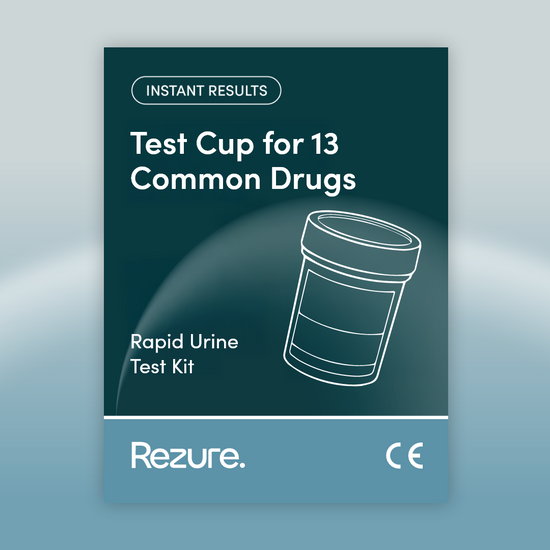
The Rapid Cup Drug Test for 13 Common Drugs (Urine) Rezure carries uses this all-in-one format, screens 13 drug groups, and gives results in around 5 minutes.
A cup format suits:
-
Workplace drug screening, where the process needs to be tidy and repeatable
-
Staff onboarding or random testing policies
-
A one-off broad urine drug screen
-
Settings where several drug groups need checking from one sample
-
Anyone who wants fewer separate items on the table
The person in the opening scene would probably choose the cup if they wanted the least awkward version of events.

When does a cassette drug test make more sense?
A cassette drug test makes sense when you want a compact format and are comfortable collecting urine in a separate sample pot. Some cassette tests use drops of urine added to the device. Others are dipped into the sample after the absorbent strips have been exposed, as in the cassette-style urine drug tests Rezure sells.
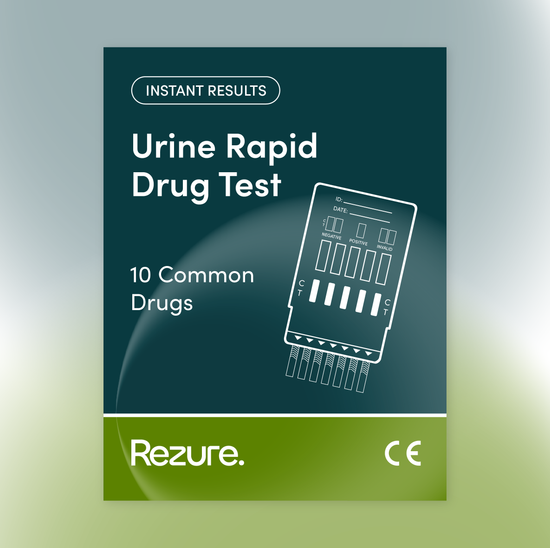
Cassette tests can be useful for targeted or smaller panel testing. For example, someone searching for a drug test may prefer Rapid Drug Test for 10 Common Drugs (Urine), which is a self-contained cassette test for 10 common drugs.
Cassette tests are a good fit when:
-
You only need a limited panel
-
You have a clean space to collect and handle the sample
-
You can follow the cassette instructions carefully
-
You are comfortable dipping exposed strips or using drops, depending on the test design
-
Cost and storage space matter
A cassette is not a poor choice. It just leaves more of the sample handling to you than an all-in-one cup format.

When would a strip urine drug test be enough?
A strip test can be enough when simplicity, low cost and single-substance testing matter most. The strip is dipped into urine, then read after the stated time.
Strip tests can work well for straightforward screening, especially when the person using the test understands the instructions. The trade-off is cleanliness. You still need a sample container, and you need to dip the strip to the correct level for the correct time.
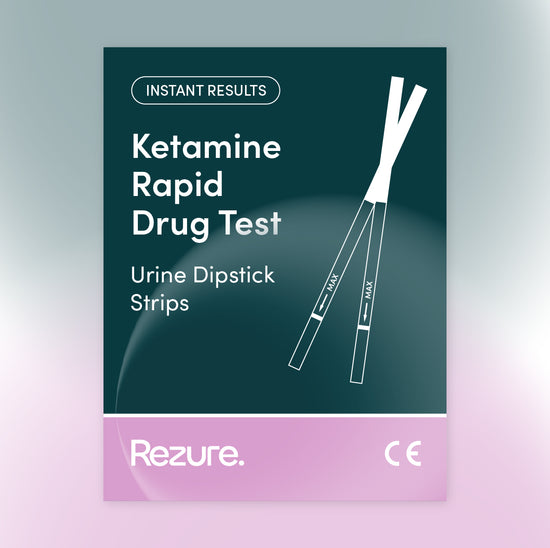
For targeted searches, a single-drug cassette or strip-style format may make more sense than a broad cup. If someone specifically needs a ketamine test, for example, the Ketamine Rapid Urine Drug Test Kit avoids paying attention to several unrelated result lines.
That matters because bigger panels are not always better. A wider test gives you more information, but only if those extra drug groups are relevant.
Which format has the cleanest sample handling?
The cup format is usually the cleanest option because collection and testing happen in one device. Cassettes and strips usually need a separate urine pot, then either a dipping step or, with some cassette designs, a dropper step.

Cup tests reduce the fiddly part. Cassette tests need more care. Strip tests can be basic and useful, but they make sample handling feel more exposed.
Which urine drug test is easiest to read?
The easiest test to read is the one with clear result windows, a clear time window, and the right number of drug groups for your situation.
Most rapid urine drug tests use line-based results. On many lateral flow drug tests, a negative result shows a control line and a test line. A preliminary positive often shows the control line only for that drug group. An invalid result usually means the control line has not appeared.
That last point matters. A faint line can still be a line if the instructions say so. Reading too early or too late can also cause confusion.
Use this basic reading checklist:
-
Read the instructions before collecting the sample
-
Start the timer as directed
-
Place the test on a flat surface where needed
-
Read the result inside the stated window
-
Check the control line first
-
Treat any preliminary positive as a screening result, not a final lab-confirmed result
Clinical guidance describes immunoassay urine tests as initial screening tools. They can yield false positives or false negatives, so positive, unexpected negative results may require confirmatory laboratory testing.
Is urine testing better than saliva testing?
Urine testing usually gives a longer detection window than saliva, while saliva testing can be easier to collect in some settings. The better option between saliva and urine depends on the question you need answered.
Urine makes sense when you want a practical screen for recent use across a range of substances. Saliva may be suitable for situations where supervised collection needs to feel less invasive. MedlinePlus notes that drug testing can use urine, saliva, blood, hair, sweat, fingernails or breath, though urine is the usual sample type.
For oral fluid testing, Rezure sells Rapid Drug Test Kit for 5 Common Drugs (Saliva) and Rapid Drug Test Kit for 10 Common Drugs (Saliva).
The sample type should match the setting, not the other way round.
What should workplaces think about before choosing a format?
For workplace drug testing, employers should choose the format after setting the policy. The test device is only one part of the process.
The Health and Safety Executive says workplace screening should have a clear purpose, staff consent, proper procedures, and a place within a wider health and safety policy.
Before choosing a cup, cassette or strip, employers should decide:
-
Who may be tested, and why
-
How consent will be handled
-
Which substances are relevant to the role or risk
-
How samples will be protected from contamination or tampering
-
Who reads and records results
-
What happens after a preliminary positive
-
When lab confirmation is needed
For safety-critical roles, the process carries more weight. A quick test can support a decision, but it should not replace a fair policy.
How do you choose the right urine drug test format?
Choose the format by matching the test to the job.
A cup drug test is the most practical choice when you want broad screening, fewer handling steps and a cleaner process. A cassette test is suitable for smaller panels or targeted checks when separate sample handling is not a problem. A strip test can work for basic, low-cost testing where the user is comfortable dipping and reading the strip correctly.
Back to the bathroom shelf, the timer and the slightly tense five minutes. The best urine drug test is not always the one with the largest panel or the smallest price. It is the one that gives you the right sample type, the right panel, the fewest avoidable steps, and a result you can read with confidence.