
Rapid Cup Drug Test for 13 Common Drugs (Urine)

About this test
Brand we're currently stocking: OneStep
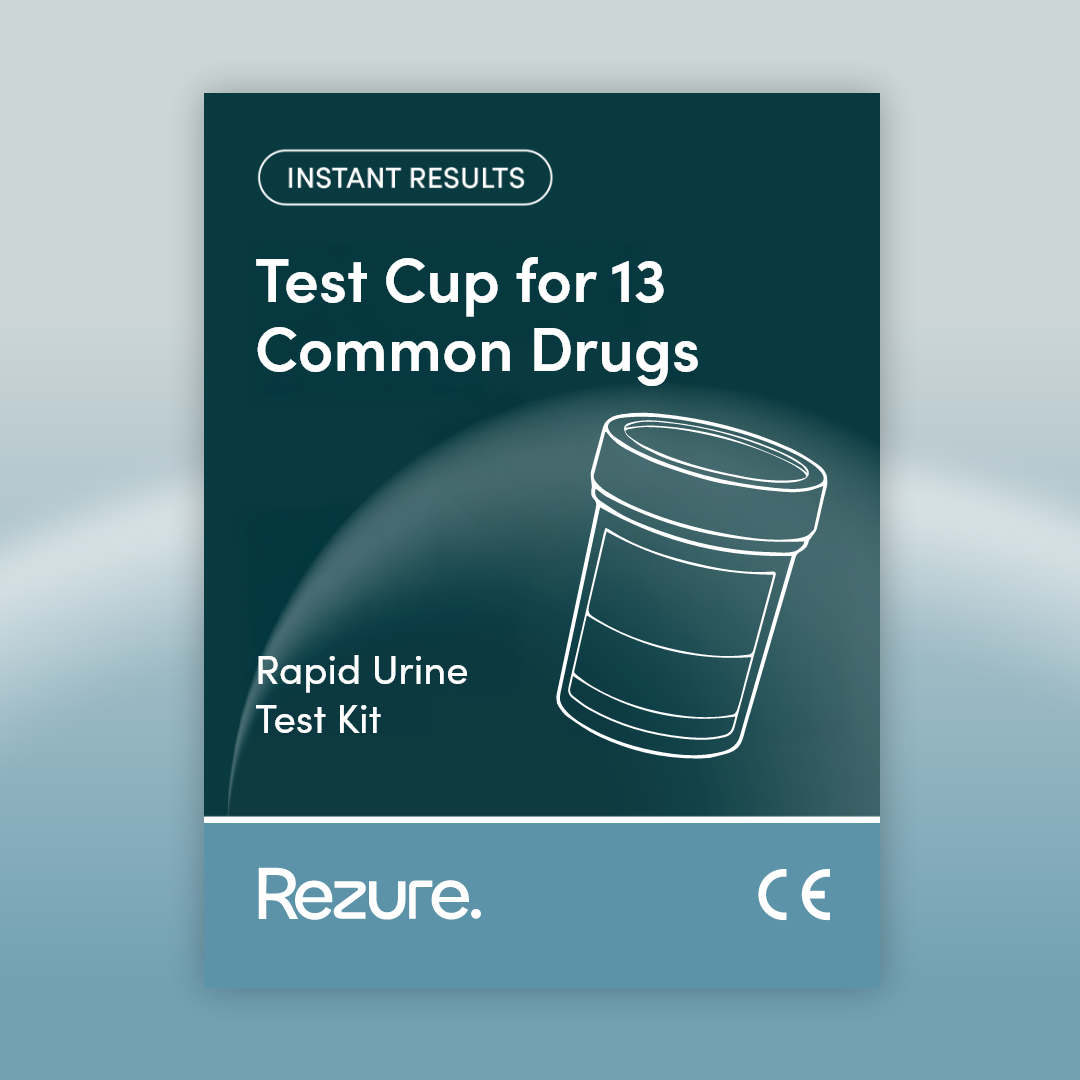
This urine cup drug test is designed for situations where broad drug screening needs to be simple, fast, and easy to manage. The cup format is useful because the urine sample is collected directly into the same device used for testing, helping reduce mess, handling, and extra steps.
This makes it suitable for one-off personal checks, workplace drug screening, staff onboarding, random testing policies, and professional environments where a wider drug panel is useful. It may also suit organisations that need a urine drug test format without sending samples to a laboratory.
The test gives a separate result for each drug group, so you can screen for several substances at once from one urine sample. Results are available in around 5 minutes, making the test practical for settings where decisions or next steps need to happen quickly.
This test screens for the following drugs at the stated cut-offs:
- Amphetamine, AMP: 500 ng/mL
- Barbiturates, BAR: 300 ng/mL
- Benzodiazepines, BZO: 200 ng/mL
- Buprenorphine, BUP: 10 ng/mL
- Cannabis, THC: 20 ng/mL
- Cocaine, COC: 100 ng/mL
- Ecstasy, MDMA: 500 ng/mL
- Ketamine, KET: 1,000 ng/mL
- Methadone, MTD: 300 ng/mL
- Methamphetamine, MET: 500 ng/mL
- Morphine, MOP: 300ng/mL
- Phencyclidine, PCP: 25 ng/mL
- Tricyclic antidepressants, TCA: 300 ng/mL
What this test offers
How to use this test
Collect the urine sample directly in the test cup. Make sure there is enough urine for the test panel to work correctly.
Fit the lid firmly onto the cup after collection. Check the temperature strip before reading the drug test results.
Remove the test panel label when you are ready to begin. Place the cup on a flat surface while the result lines develop.
Observe the result window after around 5 minutes. Use the colour-coded chart provided with the test to check each drug group.
A negative result shows a coloured line in both the control region and the test region. A positive result shows a coloured line in the control region only.
An invalid result shows no coloured line in the control region. This can happen if the sample is insufficient or the test has not run correctly.
Why choose our tests?
-
Instant, clear results
Get an immediate answer at home in 10 minutes. No waiting around.
-
CE-certified & regulated
Meets European standards for safety and reliability.
-
Clinically validated
Tested to ensure accurate and consistent results.
-
Exceptional accuracy
Detects even small traces clearly and reliably, every time.


Good value and instant results
- Broad 13-drug screening from one test
- Integrated cup design to reduce handling
- Clear result lines for each drug group
- Single-use format for clean, straightforward testing
- Suitable for one-off checks or repeat screening
- Bulk order options available
Explore more products
-
 £15.00 £17.00Sale
 £18.00 £20.00Sale
 £15.00 £17.00Sale
- Choosing a selection results in a full page refresh.
- Opens in a new window.


