What does bilirubin in urine mean if you feel fine?

You can feel perfectly well and still get a positive result for bilirubin in urine. Perhaps you took the test as a routine check, and now you’re wondering why one square changed colour when nothing feels different.
A home strip cannot tell you what caused the result, and an unexpected positive doesn’t automatically mean you have liver disease. It does give you something specific to discuss with your GP.
What does bilirubin in urine actually mean?
A positive result means the strip has reacted as though bilirubin is present in your urine. Normally, the bilirubin pad should read negative. Your body makes bilirubin as it breaks down old red blood cells. Your liver changes it into a form called conjugated bilirubin and usually sends it into your gut through bile. If that processed bilirubin builds up in your blood, some can pass into your urine.
There are different ways that can happen. One involves the liver itself. Hepatitis, or liver inflammation, is one example: inflammation can interfere with how the liver handles bilirubin. Hepatitis has several possible causes, and a urine strip cannot tell you if you have it. A positive pad doesn’t tell you how well your liver is working overall, either.
Another possibility concerns the route bilirubin normally takes out of the liver. If bile cannot drain properly, processed bilirubin can build up and reach the urine. A gallstone blocking a bile duct is one example; the NHS guidance on gallstones describes how a blockage can lead to jaundice and darker urine. Your result does not mean you have a gallstone. It means that bile flow is among the things a clinician may need to consider.
It also helps to separate a urine result from a blood bilirubin level. When you read about elevated bilirubin levels online, the article is often describing a blood test. The shade of a urine test pad cannot give you that number or show how serious a possible problem is.
Our guide to urine dipstick markers explains what the other squares check. Each measures something different. A positive bilirubin square gives your GP a finding to investigate, even if you feel fine and your urine looks its usual colour.
Can bilirubin show up before I have symptoms?
Yes. You might have no yellowing of your eyes, no pain and no noticeable change in your appetite. Urine bilirubin may appear before those symptoms develop. Tell your GP that you feel well, but don’t use the absence of symptoms to dismiss the result.
In a retrospective study of clinical tests, 85% of people with an unexpected positive urine bilirubin result who subsequently had liver blood tests had at least one abnormal blood result. That figure comes from a selected group who received follow-up testing, though. It does not mean 85% of positive home tests indicate liver disease.
The practical point is smaller and more useful: a positive strip deserves a proper follow-up, even when you feel fine.
Could Gilbert’s syndrome explain a positive urine test?
Usually, Gilbert’s syndrome is the wrong explanation for bilirubin on a urine strip. It commonly causes a mild rise in unconjugated bilirubin in the blood. The strip detects conjugated bilirubin. If you already know you have Gilbert’s syndrome, tell your GP, but don’t assume it accounts for this urine result.

People often come across Gilbert’s syndrome when searching for high bilirubin causes. The NHS guidance on Gilbert’s syndrome explains that some people only find out they have it during blood tests for another reason. A GP may consider it when blood results show an isolated rise in unconjugated bilirubin and the other relevant results fit. A urine strip cannot identify it.
Not drinking enough fluid can trigger a rise in blood bilirubin for some people with Gilbert’s syndrome. Our guide to how much water you need covers hydration in more detail. Drinking more water is not a way to explain away a positive bilirubin pad.
Could the strip be wrong?
Yes. One colour change needs context. Timing, lighting and some medicines can affect dipstick readings. A review of urine dipstick testing identifies medicines that can cause a false positive on the bilirubin pad. Tell your GP about prescription medicines, over-the-counter products and supplements. Don’t stop taking them because of a strip result.
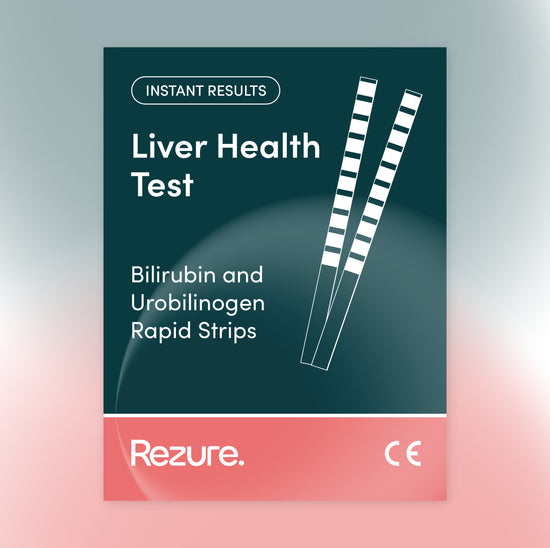
The Liver Health Rapid Home Test checks urine bilirubin and urobilinogen, along with eight other markers. Its instructions say to compare the colours with the supplied chart at 60 seconds. It gives you an initial reading, not a liver diagnosis.
Before you speak to your GP, keep a record of:
- The result and the date you tested.
- The time you read the strip and any doubt about the colour.
- Any medicines or supplements you take.
- A photo of the strip and chart, if you took one at the stated reading time.
You can mention a repeat result if you have one. A later negative strip does not, by itself, establish what happened with the first.
Does the colour of my urine tell me anything else?
It might give your GP another detail, but urine colour has several possible causes. Darker urine can happen when you’re dehydrated. It can also appear with jaundice, particularly alongside pale stools or itching. The NHS advice on jaundice lists these changes, though colour alone cannot tell you what caused them.
Notice anything you might otherwise dismiss: urine that stays unusually dark, a new change in your stools, or yellowing in the whites of your eyes. Yellowing of the skin can be harder to see on brown or black skin.
A multi-marker strip may also show protein or glucose, which raise different questions from bilirubin. Our article on urine and kidney health discusses kidney-related changes. Its guide to type 2 diabetes symptoms covers a separate concern if glucose or increased thirst has caught your attention. Report those details too, without trying to combine the pads into a diagnosis.
What should I discuss with my GP?
Tell your GP you had a positive urine bilirubin result despite feeling well. Show them the test details and mention any previous liver blood results, even if you were told your bilirubin level was normal. Your GP can decide if the urine finding needs checking and which investigations fit your circumstances.
Useful questions to take to the appointment:
- Should we check my blood bilirubin and other liver blood tests?
- If blood bilirubin is raised, would checking its different forms help explain the result?
- Could a medicine, supplement or another part of my health history be relevant?
- Do my results call for a repeat test, further investigation or a scan?
A liver blood panel measures substances the urine strip doesn’t. The NHS guidance on liver blood tests explains why a clinician looks at the pattern of results alongside your medical history. Your GP may ask about alcohol, recent illness, medicines and other health conditions before deciding what comes next.

If alcohol use is relevant, our article on liver recovery after drinking gives that question its own space. Be specific about what you drink at the appointment; the information helps your GP interpret the result.
When should I get help sooner?
If your skin or the whites of your eyes look yellow, ask for an urgent GP appointment or contact NHS 111. That’s the advice from the NHS on jaundice, even if you otherwise feel well. Treatment of jaundice in adults depends on its cause, so visible yellowing needs a medical assessment.
Tell the service if you’ve also noticed:
- Pale stools or persistently dark urine.
- New itching.
- Abdominal pain or swelling.
- Nausea, loss of appetite or unusual tiredness.
These details help the clinician assess you. They aren’t a checklist you need to complete before asking for help.
Should I try a liver cleanse while I wait?
No. A cleanse won’t identify why the bilirubin square changed colour. The claims behind liver cleanses rarely live up to the hype, but the useful step here is to discuss the result with your GP.
Bring the strip instructions, your result and your medicine list to that conversation. If your eyes or skin turn yellow before the appointment, seek urgent advice through your GP or NHS 111.