How much water should you actually drink? Hydration, kidneys and the 2-litre myth

There's a chance you own one. Think of those tall plastic bottles with hour markers printed down the side, bought in a burst of good intentions, now living at the back of a cupboard with a cheerful 11 am still visible on it.
We've all been told to drink two litres a day, and most of us quietly fail. The number is far less solid than the confidence behind it.
Where did the 8 glasses a day rule come from?
Nobody has traced it to a study. In 2002, Dartmouth kidney physiologist Heinz Valtin went looking and found no scientific studies supporting the idea that every healthy adult needs eight glasses of plain water daily.
The likeliest origin is a 1945 recommendation from the US Food and Nutrition Board, which put a suitable daily allowance at around 2.5 litres. Its very next sentence pointed out that most of that quantity already comes from food. That line got dropped, the figure survived on its own, and a wartime nutrition footnote hardened into a wellness rule.
So how much water should I drink?
Enough that you're rarely thirsty and your urine stays pale. Less satisfying than a number, and closer to what the evidence supports.

The Eatwell Guide suggests 6 to 8 glasses of fluid a day, and water isn't the only thing that counts. Milk, squash, soup, tea and coffee all contribute. The European Food Safety Authority sets adequate intake for total water at 2.0 litres for women and 2.5 litres for men, which includes the water in food, usually a fifth to a third of the total.
Then there's the gap between people. A 2022 study in Science tracked water turnover in more than 5,600 people across 23 countries and found daily figures ranging from roughly one litre to six, which shows how poorly one target fits everyone.
Your own requirement shifts with:
- Body size and muscle mass
- Air temperature and humidity
- How much you sweat, and how hard you're working
- Pregnancy and breastfeeding
- Illness, particularly with fever, vomiting or diarrhoea
How do your kidneys control water balance?
Automatically, and with a precision no drinking schedule can match. Your kidneys filter around 180 litres of fluid a day and reabsorb roughly 99% of it.
The control loop sits in the hypothalamus, where sensors track how concentrated your blood is. As concentration rises, you feel thirsty, and your body releases antidiuretic hormone, which tells the collecting ducts in the kidney to hold water back. Drink more than you need, and the hormone falls away within the hour, leaving a large volume of dilute urine.
This is where the 2 litres water myth falls down. Healthy kidneys cope with a wide range of intakes. What matters is whether they're working at the edge of that range, day after day.
What does specific gravity in urine tell you about hydration?
It shows how concentrated your urine is, which is a direct readout of how hard your kidneys are working to conserve water.
Specific gravity compares urine density against pure water at 1.000, and the normal range runs from about 1.005 to 1.030. Low readings mean dilute urine and plenty of fluid on board. Anything above 1.020 points towards concentrated urine and, usually, hypohydration. Morning readings run higher because you've gone eight hours without a drink.

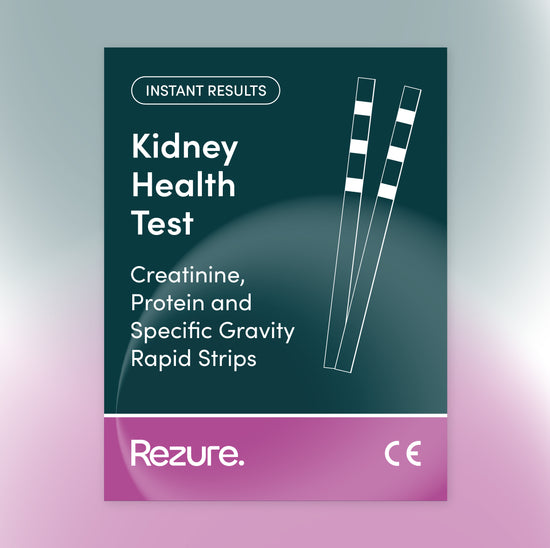
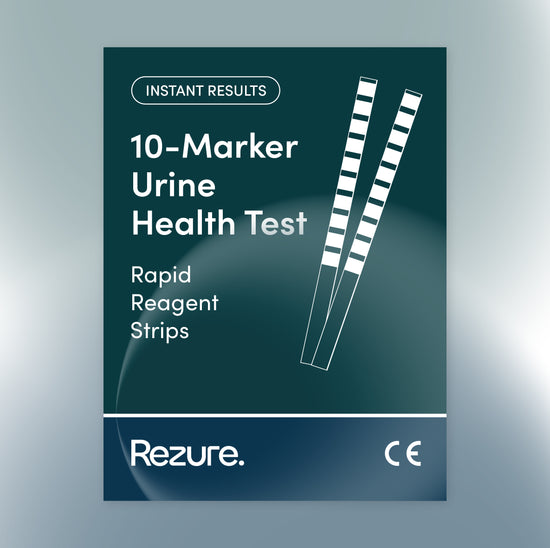
That marker sits on the Kidney Health Rapid Home Test Rezure sells, alongside creatinine and protein, and on the Home Urinary Health Dipstick Test Strips – 10 Markers. One caveat: when protein shows up in urine, or glucose does, the reading can rise for reasons unrelated to fluid.
What are the signs of chronic mild dehydration?
Dull, and easy to blame on something else. Tiredness, headache and patchy concentration arrive long before anything dramatic does.
The NHS lists dehydration symptoms including dark, strong-smelling urine, passing urine fewer than three or four times a day, dizziness and a dry mouth. Work at the University of Connecticut found that losing around 1.4% of body water was enough to degrade mood and concentration in healthy young women and to bring on headaches, before they felt notably thirsty.
Worth noticing if you get:
- Headaches that build mid-afternoon and ease after a drink
- Dark urine most mornings, not only the first one of the day
- Constipation with no change in diet
- Fatigue that doesn't match how you slept
None of this is specific to hydration. Tiredness that won't shift has a long list of causes, and low iron or thyroid problems often sit above fluid intake. Low energy can also link to liver and kidney function, which is why some people pair a kidney check with the Liver Health Rapid Home Test.
Does dehydration affect your kidneys over time?
For kidney stones, yes. For chronic kidney disease, the picture is less settled than headlines suggest.
Fluid is the first-line measure against stone recurrence. NICE advises adults who've had one to drink 2.5 to 3 litres of water a day, following a five-year randomised trial in which recurrence dropped from 27% to 12% among those drinking more.
The kidneys also clear uric acid. When uric acid stays high it can crystallise in joints and seed stones, and clinicians can measure it with the Gout (Uric Acid) Urine Rapid Test Strips, for professional use.
Beyond stones, the argument runs through vasopressin. A review in the American Journal of Nephrology concluded that recurrent dehydration and heat stress are the most probable cause of a kidney disease epidemic among Central American farm workers.
Against that, the CKD WIT trial coached 631 adults with stage 3 kidney disease to drink more for a year and found no difference in how fast their kidney function declined.
What actually helps you stay hydrated?
Making fluid easy to reach, then letting go of the daily total.

Approaches that hold up:
- Drink to thirst and check urine colour rather than keeping a tally
- Keep water where you already sit, since access beats intention
- Take fluid on before heat or exercise rather than catching up afterwards
- Go steadier as you get older, because thirst blunts with age
Overdoing it carries its own risk. Drinking too much water quickly can dilute blood sodium dangerously, a condition called hyponatraemia that has caused deaths in endurance events. There's a limit to how fast the kidneys shed excess, so a litre in one go won't hydrate you better than the same litre sipped.
So should the bottle go in the bin?
Not at all. It just isn't a rule.
If hour markers get you drinking when you'd otherwise forget, they're doing a job. The trouble starts when two litres becomes a target you've failed. Kidney problems tend to build quietly, and changes in your urine are often the first thing to show.
Keep the bottle or don't. Your kidneys have been doing the arithmetic either way.
This article is for information and isn't a substitute for medical advice. If your results look abnormal or symptoms persist, speak to a healthcare professional.