Feline AIDS (FIV) & Leukaemia (FeLV) Combo Blood Test Kit

£15.00 £18.00
In stock
Skip to product information
1 of 1

Feline AIDS (FIV) & Leukaemia (FeLV) Combo Blood Test Kit

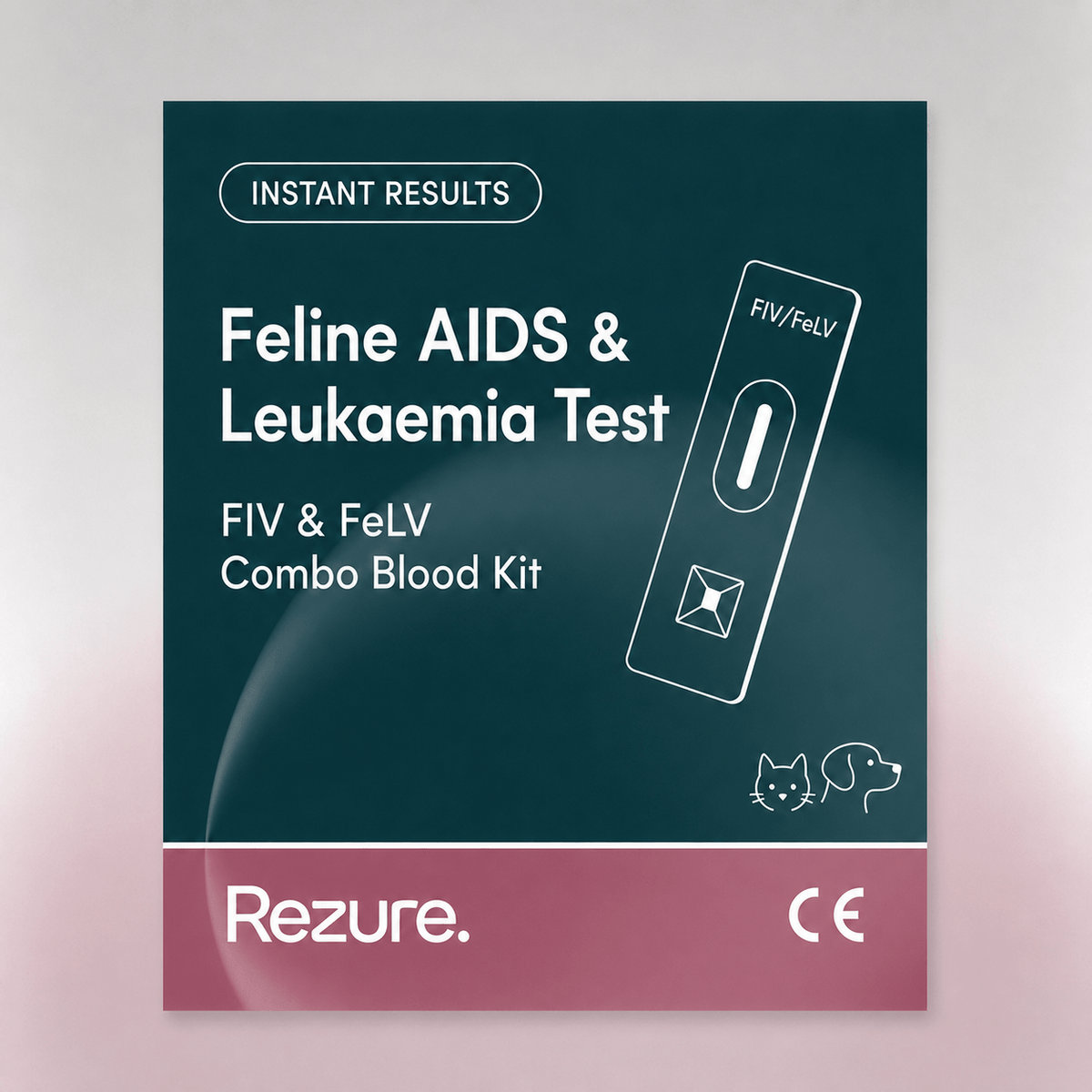
Feline AIDS (FIV) & Leukaemia (FeLV) Combo Blood Test Kit

Screen your cat for two of the most significant feline viral infections simultaneously with our FIV and FeLV combo blood test kit.

This single test detects both Feline Immunodeficiency Virus (Feline AIDS) and Feline Leukaemia Virus. These retroviruses severely weaken a cat's immune system, leading to chronic infections, weight loss, and an increased risk of cancer.

Early diagnosis is essential for managing these lifelong conditions effectively. By knowing your cat's status, you can provide the right supportive care and prevent the viruses from spreading to other cats in your community.

Results in just 10 minutes.

Regular price £15.00
Sale price £15.00 Regular price £18.00
Sale Sold out
Taxes included. Shipping calculated at checkout.

Free UK shipping for orders over £20

View full details

About this test

Brand we're currently stocking: OneStep

This combined FIV and FeLV Home Blood Test Kit checks your cat for two serious viral infections at once, using a serum, plasma or whole blood sample, with results in just 10 minutes.

Feline Immunodeficiency Virus (FIV) is a retrovirus that weakens a cat's immune system, in much the same way HIV affects humans. Symptoms can take years to appear and may include fever, weight loss and dental problems. It's mainly spread through deep bite wounds from fighting, so it's more common in outdoor and unneutered cats.

Feline Leukaemia Virus (FeLV) is a separate retrovirus that also suppresses the immune system, increasing the risk of cancer and secondary infections. Signs include pale gums, weight loss, and breathing difficulty. FeLV typically spreads through close contact between cats or from mother to kitten.

Neither FIV nor FeLV currently has a cure, so early diagnosis is what makes the biggest difference. Knowing your cat's status allows you to manage their condition with the right vet support, keep them indoors to reduce further infection risk, and take steps to protect other cats they come into contact with.

Brand of test may vary.

What this test offers

Tests for both FIV and FeLV 
Requires only a small whole blood sample
Provides highly accurate results in 10 minutes
Helps you protect other cats in your household
Enables early management of lifelong conditions
Uses the same diagnostic technology as vet clinics
Learn more about this test

Frequently Asked Questions

What is the difference between FIV and FeLV?

Feline Immunodeficiency Virus (FIV) and Feline Leukaemia Virus (FeLV) are both retroviruses that attack a cat's immune system, but they behave differently and are transmitted in different ways. FIV is often compared to human HIV; it slowly weakens the immune system over many years, leaving the cat vulnerable to other infections.

FeLV, on the other hand, tends to progress more rapidly. In addition to suppressing the immune system, FeLV frequently causes severe anaemia and is a leading cause of feline cancers, particularly lymphoma and leukaemia.

Because the symptoms of both viruses can be vague and overlap significantly—such as lethargy, weight loss, and recurring minor infections—a reliable dual diagnostic test is the only way to know for sure which virus, if either, is affecting your cat.

How are these viruses transmitted?

FIV is primarily transmitted through deep bite wounds. The virus is shed in high concentrations in the saliva of an infected cat and is injected directly into the bloodstream of another cat during aggressive fights. Therefore, unneutered outdoor male cats are at the highest risk. It is rarely spread through casual contact like sharing food bowls or mutual grooming.

FeLV is much more easily transmitted through close, casual contact. It is spread via saliva, nasal secretions, urine, and faeces. Cats can catch FeLV from mutual grooming, sharing food and water bowls, or using the same litter tray. It can also be passed from an infected mother cat to her kittens in the womb or through her milk.

Understanding these transmission routes is crucial. If you are bringing a new cat into your home, testing them first is a vital step in protecting your existing pets.

Is it difficult to get a blood sample at home?

Yes, obtaining a blood sample from a cat at home can be challenging, which is why this kit is primarily intended for use by veterinary professionals or highly experienced pet owners. Cats have thick skin and fur, and they rarely sit still for a needle prick.

If you are testing at home, you will need a separate lancing device and sterile lancets (similar to those used for diabetic blood glucose testing). The easiest places to get a small drop of blood are usually the edge of the ear (the marginal ear vein) or a paw pad.

If you are not confident in your ability to safely and cleanly obtain a blood sample without causing your cat undue stress, we strongly recommend taking the kit to your vet and asking them to perform the blood draw for you.

What do the test results look like?

The test cassette has two separate reading windows: one labelled FIV and one labelled FeLV. Each window works independently. You must read the results at exactly 10 minutes.

In each window, a coloured line should appear in the Control zone ('C'). This confirms the test has run correctly. If a second coloured line appears in the Test zone ('T'), the result is positive for that specific virus. For example, if you see a 'T' line on the FIV side but not the FeLV side, your cat is positive for FIV only.

If no 'C' line appears in a window, that specific test is invalid, usually due to an insufficient blood sample or an error in adding the buffer solution. For more guidance on interpreting results, see our tips for accurate testing.

Can a cat have both FIV and FeLV?

Yes, it is entirely possible for a cat to be co-infected with both Feline Immunodeficiency Virus and Feline Leukaemia Virus simultaneously. This is why a combo test is so valuable.

Cats with both viruses face a much poorer prognosis than those with only one. Their immune systems are under severe, double attack, making them extremely susceptible to secondary infections, severe anaemia, and certain types of cancer.

If your cat tests positive for both viruses, immediate and intensive veterinary consultation is required to discuss their quality of life and the most appropriate management plan moving forward.

What should I do if my cat tests positive?

A positive result for either FIV or FeLV is serious, but it is not necessarily an immediate death sentence. Many cats, particularly those with FIV, can live for years without showing severe symptoms if they are managed correctly.

First, you must contact your vet to confirm the diagnosis, often with a secondary laboratory test. Once confirmed, the most important step is to keep the infected cat strictly indoors. This protects them from catching secondary infections from other animals, and crucially, prevents them from spreading the virus to healthy cats in the neighbourhood.

Infected cats require a high-quality diet, stress reduction, and frequent veterinary check-ups (at least twice a year) to catch and treat any secondary infections—like urinary tract infections or digestive issues—as early as possible.

Can these viruses infect humans or dogs?

No. Both Feline Immunodeficiency Virus and Feline Leukaemia Virus are strictly species-specific. They can only infect felines.

You cannot catch FIV or FeLV from your cat, nor can your dog or any other non-feline pets in your household. While FIV is similar in structure to human HIV, the virus cannot bind to human cells and poses absolutely zero risk to human health.

However, because an infected cat has a weakened immune system, they may be more susceptible to carrying other secondary infections (like certain bacteria or parasites) that *could* potentially be zoonotic (transmissible to humans). Good hygiene, such as washing hands after cleaning the litter tray, remains important.

When is the best time to test a new kitten?

Testing kittens requires careful timing. For FeLV, kittens can be tested at any age. If they acquired the virus from their mother, they will typically test positive. However, a negative result in a very young kitten should be reconfirmed a few months later.

For FIV, the situation is more complex. The FIV portion of the test looks for *antibodies*, not the virus itself. Kittens born to an FIV-positive mother may absorb her antibodies through her milk and test 'false positive' for up to 6 months, even if they aren't actually infected.

Therefore, if a kitten under 6 months old tests positive for FIV, they should not be euthanised or permanently labelled as infected. They must be retested after they reach 6 months of age, by which time the maternal antibodies will have cleared from their system.

Can vaccination affect the test results?

This is a very important consideration. The FeLV portion of this test detects the viral antigen, so a cat vaccinated against FeLV will NOT test positive simply because they had the vaccine.

However, the FIV portion detects antibodies. Historically, there was an FIV vaccine available in some countries (though it is rarely used in the UK now). Cats that received this vaccine will produce antibodies and will test positive on this rapid test, making it impossible to distinguish between a vaccinated cat and a genuinely infected cat without complex laboratory PCR testing.

Always check your cat's vaccination history if possible. If you know they have had an FIV vaccine in the past, this rapid test will not be able to give you an accurate diagnosis for FIV.

How to use this test

1
Prepare the equipment

Wash your hands and lay out the test cassette, the capillary dropper, and the buffer solution on a clean, flat surface. Ensure your cat is calm and comfortably restrained.

2
Collect the blood sample

Using a sterile lancet (sold separately) or a veterinary needle, obtain a small drop of whole blood from your cat. The ear margin or a paw pad are common collection sites.

3
Draw up the blood

Use the provided capillary dropper to carefully draw up the blood sample. You only need a very small amount—enough to fill the capillary tube up to the marked line.

4
Apply blood to the cassette

Carefully squeeze exactly 1 drop of the collected blood into each of the two sample wells (marked 'S') on the test cassette—one for the FIV side and one for the FeLV side.

5
Add the buffer solution

Immediately add exactly 2 drops of the provided buffer solution into each of the two sample wells, directly on top of the blood drops.

6
Wait and read

Leave the cassette undisturbed on the flat surface. Read the results at exactly 10 minutes. Do not interpret any lines that appear after 20 minutes as they may be inaccurate.

  • Instant, clear results

    Get an immediate answer at home in 10 minutes. No waiting around.

  • CE-certified & regulated

    Meets European standards for safety and reliability.

  • Clinically validated

    Tested to ensure accurate and consistent results.

  • Exceptional accuracy

    Detects even small traces clearly and reliably, every time.

Good value and instant results

  • Detects FIV and FeLV simultaneously
  • Uses a single blood sample
  • Results ready in 10 minutes
  • High sensitivity and specificity
  • Crucial for multi-cat households
  • Clear, dual-result display