Kidney pain vs back pain: How to tell the difference

You bend to pick up a laundry basket and feel an ache somewhere behind your waist. A few hours later, it’s still there. Is it your back, or is the pain coming from a kidney?
The areas overlap, so location alone rarely answers the question. How the pain behaves, what brought it on and what else is happening in your body usually tell you more.
Where is kidney pain usually felt?
Kidney pain is usually felt higher and further to the side than many people expect. Your kidneys sit towards the back of your abdomen, under the lower ribs and on either side of your spine, according to Kidney Care UK.
Pain from a kidney is therefore often described as flank pain: discomfort in the side of the back between the bottom of the ribs and the hip. It may be on one side, although problems can affect both kidneys.
Lower back pain is more often musculoskeletal, especially when it involves the spine or the muscles beside it.
A quick location check can help:
- Kidney-related pain often sits under the ribs or in the flank.
- Muscular pain commonly sits lower, around the lumbar spine and surrounding muscles.
- Kidney stone pain may travel towards the abdomen, groin or genitals.
- Back pain may spread into the buttock or leg if a nerve is irritated.

If you notice urine changes as well, our guide to what protein in urine means explains one kidney marker worth understanding.
What does kidney pain feel like?
There is no single kidney-pain sensation. The cause changes the pattern.
A kidney infection can cause a persistent ache or tenderness in the back or side, often with fever, nausea or urinary symptoms. NHS kidney infection guidance lists pain in the lower back or side among the typical symptoms.
Kidney stones are different. A stone moving into the ureter can cause renal colic: severe pain that comes and goes in waves, usually on one side. It may spread towards the groin, and nausea or vomiting can occur. The NHS kidney stone guidance describes this pattern.
Common flank pain causes involving the urinary system include kidney infection and kidney stones. Blood in the urine can occur with either. Rezure’s guide to blood in urine covers haematuria in more detail.
What does muscular back pain feel like?
Muscular back pain is more likely to change with movement, posture or activity. A strain can follow lifting, twisting, exercise or an awkward movement, although back pain sometimes starts without an obvious trigger. The NHS back pain guidance lists pulled muscles among common causes.
You may notice stiffness, soreness, spasm or a tender area. Sitting in one position for a long time can aggravate mechanical back pain, while changing position may alter how it feels. NHS musculoskeletal guidance links prolonged positions with stiffness and muscular fatigue.
Think back to that laundry basket. If the pain started as you lifted it and now catches when you twist, bend or stand, a musculoskeletal cause becomes more plausible.
Which symptoms make kidney pain more likely?
Pain becomes more suspicious for a kidney or urinary problem when it arrives with symptoms outside the back itself.
Look for combinations such as:
- Fever, chills or feeling shivery.
- Burning or stinging when you urinate.
- Needing to urinate more often or urgently.
- Dark, cloudy or bloody urine.
- Nausea or vomiting.
- Severe wave-like pain travelling towards the groin.
These features can point towards kidney infection or stones, although they do not confirm either diagnosis. NICE notes that unilateral flank pain with fever and nausea or vomiting is more common in acute pyelonephritis than in lower urinary infection.
For more on urinary infection patterns, Rezure’s article on urine dipstick markers explains what leukocytes, nitrites, blood and protein can indicate.
Can a urine test tell kidney pain from back pain?
A urine test can add evidence, but it cannot settle the question on its own.
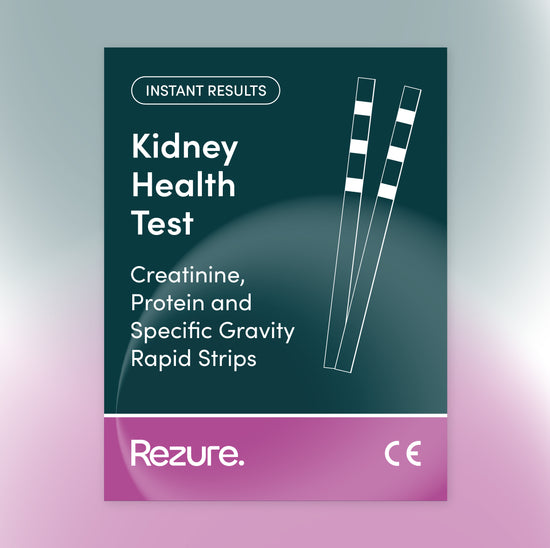
The Kidney Health Rapid Test for Creatinine, Protein and Specific Gravity checks three urine markers linked with kidney and hydration status. Protein can be associated with kidney problems, while specific gravity reflects urine concentration. The test does not diagnose the cause of acute flank or back pain.
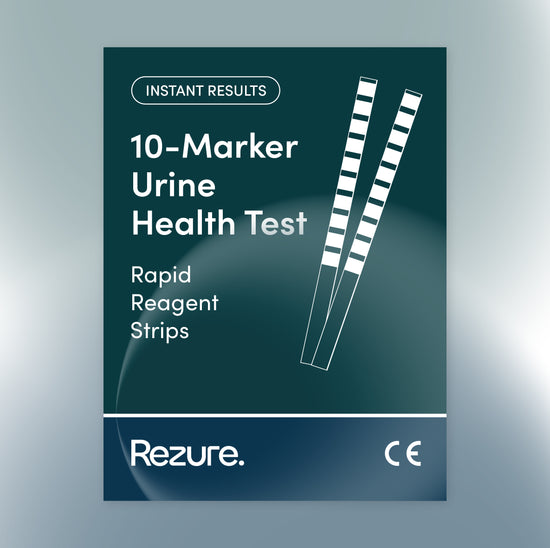
If your symptoms sound more like a UTI, the Home Urinary Tract Infection (UTI) Rapid Test Strips check leukocytes, nitrite, blood and protein. For a wider urinalysis, Home Urinary Health Dipstick Test Strips – 10 Markers include those markers alongside others such as specific gravity, glucose and ketones.

Clinicians may use urinalysis and urine culture when assessing a possible kidney infection. Further blood tests or imaging may be needed. NIDDK guidance explains why diagnosis combines symptoms, examination and tests.
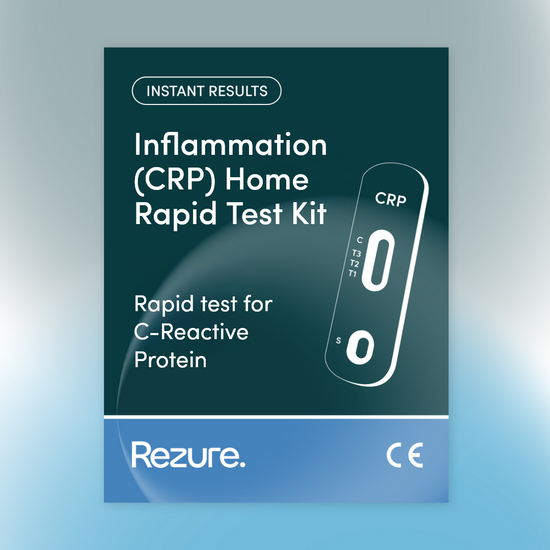
CRP adds context rather than identifying the source. An Inflammation (CRP) Rapid Home Test Kit checks C-reactive protein in blood. A raised result can occur with infection or inflammation, but it cannot show that the kidneys are responsible. Our guide to high CRP results explains that limit.
When should kidney or back pain be treated urgently?
Seek urgent medical help when pain comes with signs of infection, obstruction or serious nerve problems.
Contact an urgent GP service or NHS 111 if:
- You have suspected kidney pain with a high temperature, shivering, vomiting or blood in your urine.
- You have severe pain that could be a kidney stone.
- You have not urinated all day.
- You are pregnant and have symptoms suggesting a kidney infection.
- Your back pain starts severely and suddenly, worsens quickly, or comes with feeling generally unwell.
The NHS advises urgent assessment for these kidney infection and kidney stone patterns.
Go to A&E or call 999 for back pain with new numbness around the genitals or anus, difficulty controlling your bladder or bowels, or weakness or numbness affecting both legs. These can be signs of cauda equina syndrome.
What should you do if you still cannot tell?
Use the pattern, not one clue. Pain that changes with movement and follows lifting or twisting leans more towards a musculoskeletal problem. Deep flank pain with fever, urinary changes, nausea or wave-like attacks needs a kidney or urinary cause considered.

A home urine test can give you another data point, especially if urinary symptoms are present. It cannot replace clinical assessment when symptoms are severe or concerning.
Hydration can also affect urine concentration, so our guide to hydration and kidney health is useful if specific gravity is part of the picture.
Back to the laundry basket: the place you felt the pain was only the first clue. What happened next matters more.