Why low energy can link the liver, kidneys and vitamin D

You feel tired. Not dramatically unwell, just flat. It lingers for weeks, then months. You sleep, you eat reasonably well, but your energy doesn’t quite return. The issue is not always obvious. Fatigue rarely points to just one cause.
How energised you feel reflects things like how your body processes nutrients, filters waste, and regulates vital chemicals; your liver, kidneys, and vitamin D all fit into those processes. If something is off anywhere in your system, the effects can crop up as low energy without a clear explanation.
How are the liver, kidneys and vitamin D connected?
Vitamin D depends on both your liver and kidneys to become usable (bioavailable) in your body. You get it from sunlight or diet, but it is inactive to begin with. Your liver first converts it into 25-hydroxyvitamin D, then, your kidneys convert it into its active form, 1,25-dihydroxyvitamin D.
Once active, vitamin D helps your body to regulate calcium and phosphate. This might sound minor, but these nutrients are key for, among other things, your bones, teeth and muscle function.

You can break the link down like this:
-
The liver processes nutrients, beginning vitamin D conversion
-
The kidneys filter blood and activate the dormant vitamin D
-
Active vitamin D supports muscle and bone function
If one part of this chain isn’t working as it should, the effects can carry through the rest like a chain reaction.
Can liver or kidney problems affect vitamin D levels?
Yes, in some cases. In chronic kidney disease, reduced kidney function can limit vitamin D activation; this can affect your calcium balance and bone health. Severe liver disease can also alter vitamin D metabolism throughout your body.
Don’t be alarmed, as that does not mean mild fatigue points to organ disease, though. It shows that these systems are linked. Changes in one area can influence another.
How common is low vitamin D in the UK?
Low vitamin D levels are common, especially in colder months when we go for longer periods without sunlight. That’s why NHS guidance advises everyone to consider supplementation during autumn and winter.
Government data from the National Diet and Nutrition Survey shows that 16% of adults aged 19 to 64 have low vitamin D status when seasonal variation is included. That’s about one in six people.
Low vitamin D levels can link to:
-
Tiredness or low energy
-
Muscle weakness or aches
-
Low mood
The problem is that these symptoms overlap with many other conditions and aren’t just unique to vitamin D deficiency. That makes them hard to interpret on their own.
Can kidney or liver issues have no symptoms?
Yes. NHS guidance states that chronic kidney disease often has no symptoms in the early stages. Worryingly, many forms of liver disease can also develop without clear early signs, which can lead to being spotted relatively late.
This is why your symptoms like fatigue can feel vague. They do not clearly point to one system, even when something underlying may be changing.
What do home tests for liver, kidney and vitamin D check?
Rapid tests can look at three different parts of the same wider system.
-
Vitamin D Rapid Home Test checks vitamin D status from a small blood sample
-
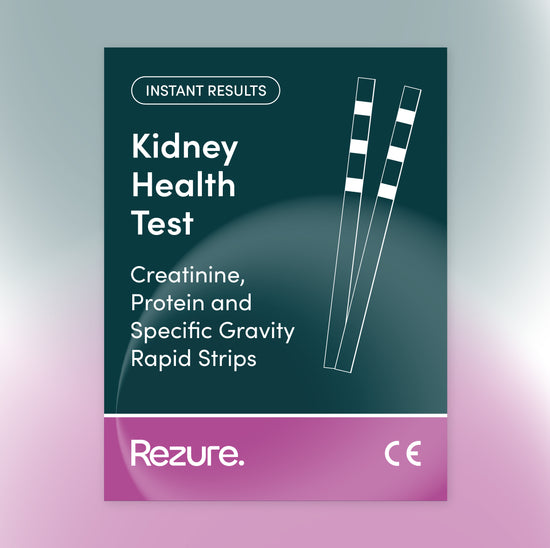
Kidney Health Rapid Home Tests measure urine markers such as protein, creatinine and specific gravity
-
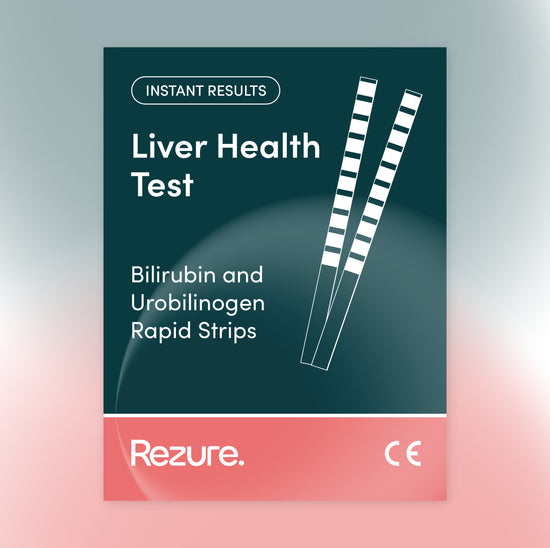
Liver Health Rapid Home Tests measure bilirubin and urobilinogen in urine
These markers provide insight into how your body is processing, filtering and regulating substances.

For example, urine protein can suggest kidney issues. It can also increase temporarily due to infection or physical stress. Kidney disease itself is usually confirmed with blood tests measuring creatinine and estimating eGFR.
Can home tests diagnose liver or kidney disease?
No. These tests do not diagnose a condition. They provide information about specific markers.
Medical diagnosis usually involves:
-
Blood tests
-
Clinical assessment
-
Follow-up investigations where needed
A home test can highlight something worth checking further. It should not be treated as a final answer.
How can I use these results in practice?
The value is in what you do next. You can use results to guide your decisions.
Common use cases include:
-
You have ongoing fatigue and want a starting point before speaking to a clinician
-
You want to monitor markers linked to general health over time
-
You get an unexpected result and decide to follow it up
This approach keeps the focus on action, not assumption
Why look at liver, kidney and vitamin D together?

Looking at one marker in isolation can miss patterns. These systems can connect through nutrient processing, waste removal, and chemical balance.
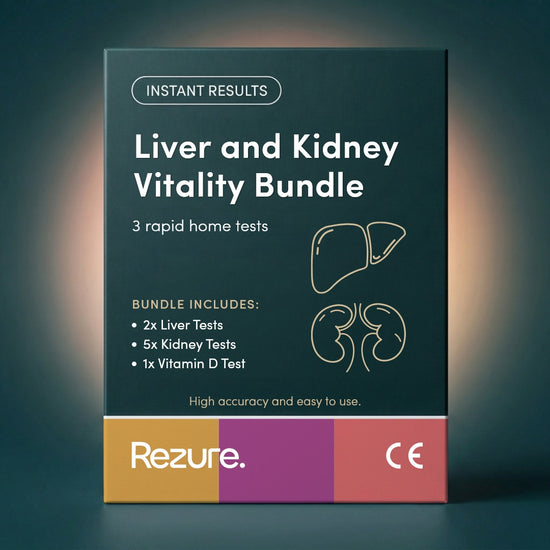
The Liver and Kidney Vitality Bundle brings together separate tests that reflect that link. The Vitamin D Rapid Home Test, Kidney Health Rapid Tests, and Liver Health Rapid Home Tests can be used at the same time to build a broader view.
That does not replace clinical care. It gives you a clearer starting point.
What is the takeaway if I feel persistently tired?
Fatigue often has more than one factor. The liver, kidneys and vitamin D are part of a wider system that supports energy and balance.
Looking across these areas can help you move from a vague symptom to a more informed next step. Not a diagnosis. A clearer sense of what to do next.