How do you prepare for a home FOB test and collect your sample?

FOB test preparation starts before you sit on the loo: read your kit’s leaflet, set up a way to catch your stool without toilet water touching it, and have the sampling tube ready.
You take a small amount using the supplied applicator, mix it with the liquid in the tube, then apply the prepared sample to the test cassette.
You don’t need to handle the poo with your fingers. And you don’t need to fill the tube with it.
How do you prepare for an FOB test?
Check which type of test you have. Preparation instructions differ, even when the boxes use similar names.
Some older guaiac-based FOB tests need food restrictions. Immunochemical tests use antibodies to detect human haemoglobin, the protein in red blood cells. The two testing methods explain why advice about avoiding red meat or vitamin C doesn’t apply to every stool blood test.
The instructions published by the manufacturer of the test Rezure sells say no dietary restrictions are necessary.
Don’t change prescribed medicines yourself to prepare for testing. Ask your pharmacist or GP about any medicine warnings in the leaflet, particularly if you take aspirin or medicines that prevent blood clots.
Get these ready before collecting:
- Your kit and its instructions, with the expiry date checked.
- The stool catcher or a suitable clean, dry collection container.
- A clean, flat surface for the cassette, away from food.
- A timer and a bag for disposing of used collection materials.
Leave the cassette sealed until you’re ready. Our tips for accurate self-testing cover the checks that apply across different kits; the instructions here focus on stool sampling.
What collection equipment comes with the test?
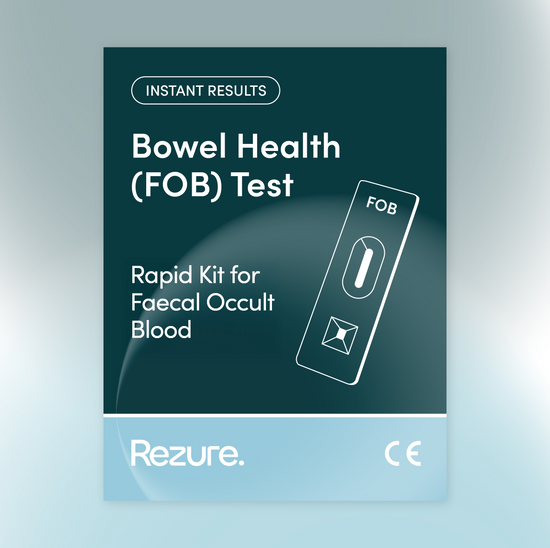
The Bowel Health (FOB) Rapid Home Test Rezure sells includes collection equipment: a stool catcher and a specimen tube with extraction buffer, along with the test cassette and instructions.
The catcher holds the bowel movement while you take a sample. The applicator attached to the tube’s cap transfers the small portion needed into the buffer. You then use drops of that mixture on the cassette and read the result at home, without posting a sample to a laboratory.

Use the equipment from that kit. If you’re also checking inflammation and hidden blood, keep each test’s tubes and instructions together so you don’t mix up their procedures.
How do you catch the stool without touching it?
Use the supplied catcher as its instructions show, keeping the stool clear of the toilet water. If you need an alternative, NHS collection advice includes catching it in a clean, dry plastic container.
To collect your stool sample at home:
- Have a wee first if you need to, then flush before setting up the catcher.
- Position the catcher or container so it can collect the stool without touching the water.
- Pass your stool into it, then use the kit’s applicator to take the sample.
- Close the sampling tube securely before clearing away the remaining stool and collection materials.
There is no need to aim directly into the narrow tube. Catching the bowel movement gives you somewhere to take the small sample from.
Dispose of leftover stool down the toilet. Bag disposable collection materials for the bin unless their instructions specify another disposal method. Wash your hands thoroughly with soap and water afterwards.
What should you avoid when collecting a stool sample?
Keep urine, toilet water and cleaning products out of the sample. NHS guidance specifically warns against contact with toilet cleaners and bleach. A container that still has cleaner in it is unsuitable, even if it looks spotless.
If the stool drops into the water, collect a fresh sample. Don’t rinse it or try to dry it off. Preventing stool sample contamination is easier than trying to judge how much contact matters afterwards.
Blood from another source also matters. The instructions leaflet says not to collect during or within three days of a menstrual period, or while you have bleeding haemorrhoids or blood in your urine.
That restriction doesn’t explain away bleeding. If you can already see blood in your poo, seek medical advice instead of waiting for a home test to tell you it is there.
How much stool do you need for an FOB test?
For the procedure shown on Rezure’s product page, use the applicator to sample at least three different places in the same stool. Don’t scoop stool into the tube.
You need the small amount picked up by the applicator. You don’t need a spoonful, and you shouldn’t pack the tube full. General instructions for filling a laboratory stool pot describe a different collection method.
Return the applicator to its tube, tighten the cap and shake vigorously to mix the sample with the buffer. Keep the liquid already in the tube; don’t replace it with water.

If you have very watery diarrhoea and the applicator cannot collect a sample as illustrated, check the leaflet’s instructions or ask the supplier before proceeding. Don’t improvise a quantity from instructions for another kit.
Can you collect your stool sample the night before?
The permitted delay depends on your kit. The instructions for the test we sell say to use fresh stool within one day at room temperature. An overnight delay must stay within that limit and follow the leaflet supplied with your test.
Fresh stool and a sample already mixed into buffer have different storage instructions. Don’t assume the same allowance applies after mixing. Collecting and completing the test in one sitting avoids that storage question.
And don’t borrow refrigeration advice from another stool test. Even within digestive testing, collection liquids and storage requirements vary. If your leaflet doesn’t clearly cover the delay you need, ask before keeping a stool sample overnight.
How long does an FOB test take?
For the OneStep procedure shown on Rezure’s page, read the result five minutes after applying the sample. Don’t read it after ten minutes. Allow extra time for collection and preparation.
Bring the test materials to the temperature specified in the leaflet before starting. Place the cassette flat, add two full drops of the prepared mixture to the well marked S, and start your timer. The result window is separate from that sample well.
Read the lines within the stated time:
- A line at C only means a negative result.
- Lines at C and T mean a positive result, including a faint coloured T line.
- No C line means an invalid result, even if a T line appears. Repeat with a new test.
A positive result needs medical follow-up. Our explanation of hidden blood without symptoms covers what the finding can mean. A negative result doesn’t settle persistent bowel symptoms.
If your poo is black or dark red, or you have bloody diarrhoea, seek urgent medical advice through your GP or NHS 111. Don’t wait to complete the test.