
Zinc Rapid Urine Test Kit

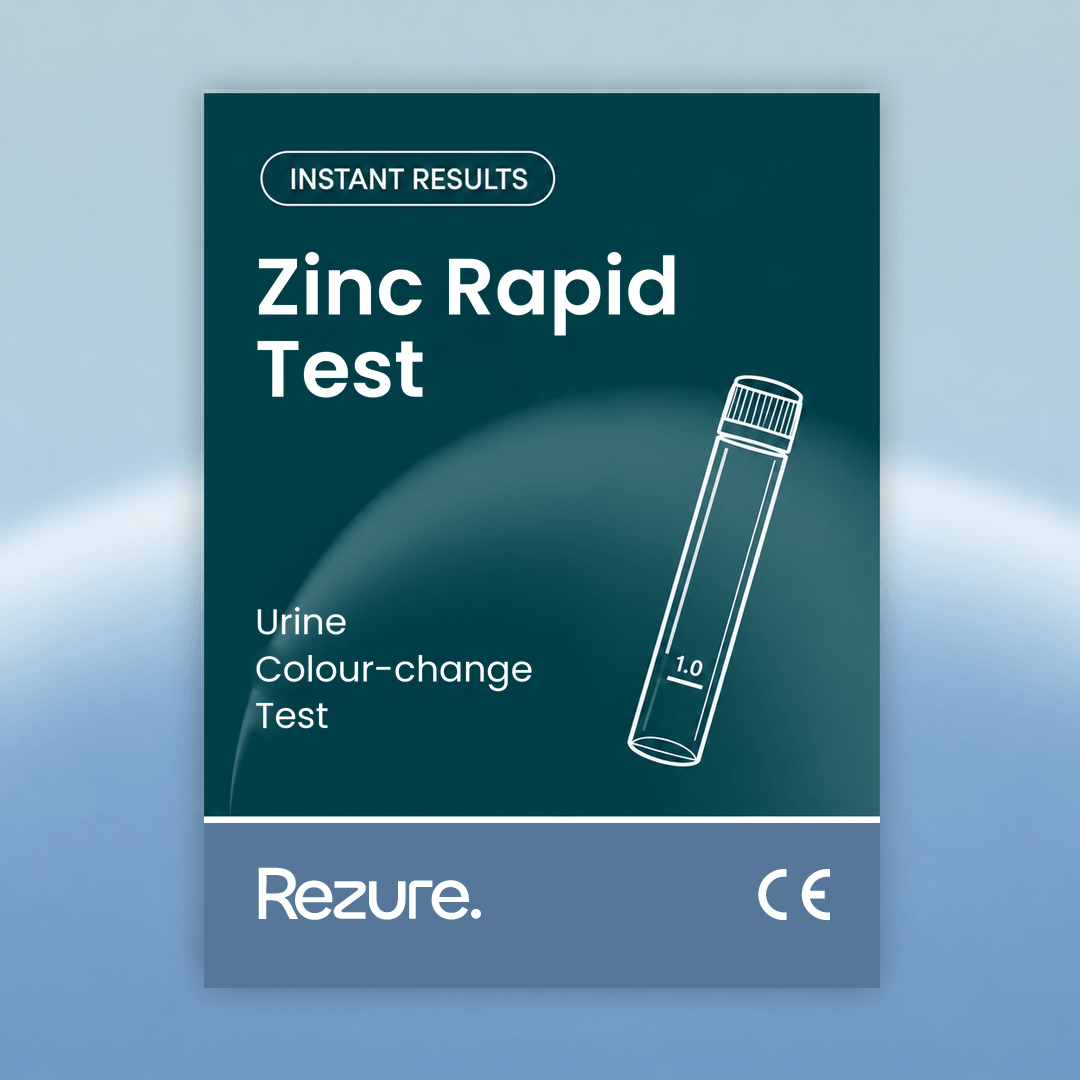
About this test
Brand we're currently stocking: OneStep
Zinc helps the body make new cells, process nutrients and heal wounds. A varied diet usually provides enough zinc, but high doses of zinc supplements can reduce copper absorption.
This semi-quantitative test groups urinary zinc concentrations into three bands:
- Below 0.40 µg/mL
- Within the manufacturer’s reference range of 0.40 to 0.50 µg/mL
- Above 0.50 µg/mL.
It provides an estimated range, not an exact measurement.
Healthcare professionals should interpret findings alongside the patient’s symptoms, diet and medical history. Urinary zinc results alone cannot confirm deficiency; further assessment may include a blood test.
Recent food intake, supplements and certain medicines can affect results. The manufacturer advises against use in patients with diagnosed liver or kidney disease, or acute or chronic infections. Check the full instructions before testing.
For professional use only
What this test offers
How to use this test
Allow the test and urine sample to reach room temperature, between 15 and 30°C.
Have a clean, disposable collection container, a timer and the supplied colour card ready.
Collect fresh urine in the clean, disposable container and mix the sample evenly.
Avoid testing immediately after the patient has taken zinc supplements or eaten foods high in zinc.
Open the foil pouch and remove the cap from the test tube.
Use the test within two hours of opening; solid particles inside the tube are normal.
Use the supplied dropper to transfer urine into the test tube up to the 1.0 mark.
Check the liquid level carefully, then replace the cap promptly.
Shake the tube up and down until the reagent dissolves completely.
If substantial bubbles affect the fill level, add urine to the 1.0 mark after dissolution and recap.
Compare the solution’s colour with the supplied colour card at 40 seconds after mixing.
Use the card to interpret the result; readings taken after two minutes are invalid.
Why choose our tests?
-
Instant, clear results
Get an immediate answer at home in 10 minutes. No waiting around.
-
CE-certified & regulated
Meets European standards for safety and reliability.
-
Clinically validated
Tested to ensure accurate and consistent results.
-
Exceptional accuracy
Detects even small traces clearly and reliably, every time.



Good value and instant results
- Get results in 40 seconds
- Use a urine sample, with no needles needed
- Check for low or high urinary zinc levels
- No samples to post or laboratory results to wait for
- No specialist testing equipment to buy
Explore more products
-
 £12.00 £14.00Sale
 £12.00 £14.00Sale
 £15.00 £18.00Sale
- Choosing a selection results in a full page refresh.
- Opens in a new window.


