
Cortisol (Stress Hormone) Rapid Saliva Test


About this test
Cortisol is a hormone made by the adrenal glands. It’s often called the stress hormone because it's an important part of the body's response to stress. Your cortisol levels naturally rise and fall throughout the day. That means the time you administer a saliva sample matters when interpreting the result.
This rapid saliva test is for professional use. The result shows if cortisol in the sample is above the test’s cut-off. A healthcare professional can interpret it in context and decide if further testing is needed.
Symptoms of chronically high cortisol can include the following:
- Weight gain, particularly around the chest and tummy, with thinner arms and legs
- Skin that bruises easily or develops wide, purple stretch marks
- Muscle weakness, especially in the upper arms or thighs
- The face becoming rounder or redder over time
These changes can have several causes, so cortisol should only be part of the investigation.
Read more about what high cortisol levels mean.
What this test offers
How to use this test
Allow the testing device to reach room temperature (15-30°C) before starting.
Ensure the donor has not consumed food, drink, chewing gum, or tobacco products for at least 30 minutes before collection.
Remove the protective cap from the testing device.
Ensure the mouth has ample oral fluid pooled for the sample, for at least 30 seconds.
Place the absorbent sponge under the tongue for 1 minute until fully saturated.
Then, swab the gums around your mouth 10-15 times to help with absorption.
Keep the device inserted in the mouth until the flow appears on the cassette (around 1 minute). Once the flow begins, remove the device, place it on a flat, clean surface, and start timing.
Results must be read between 3 and 10 minutes.
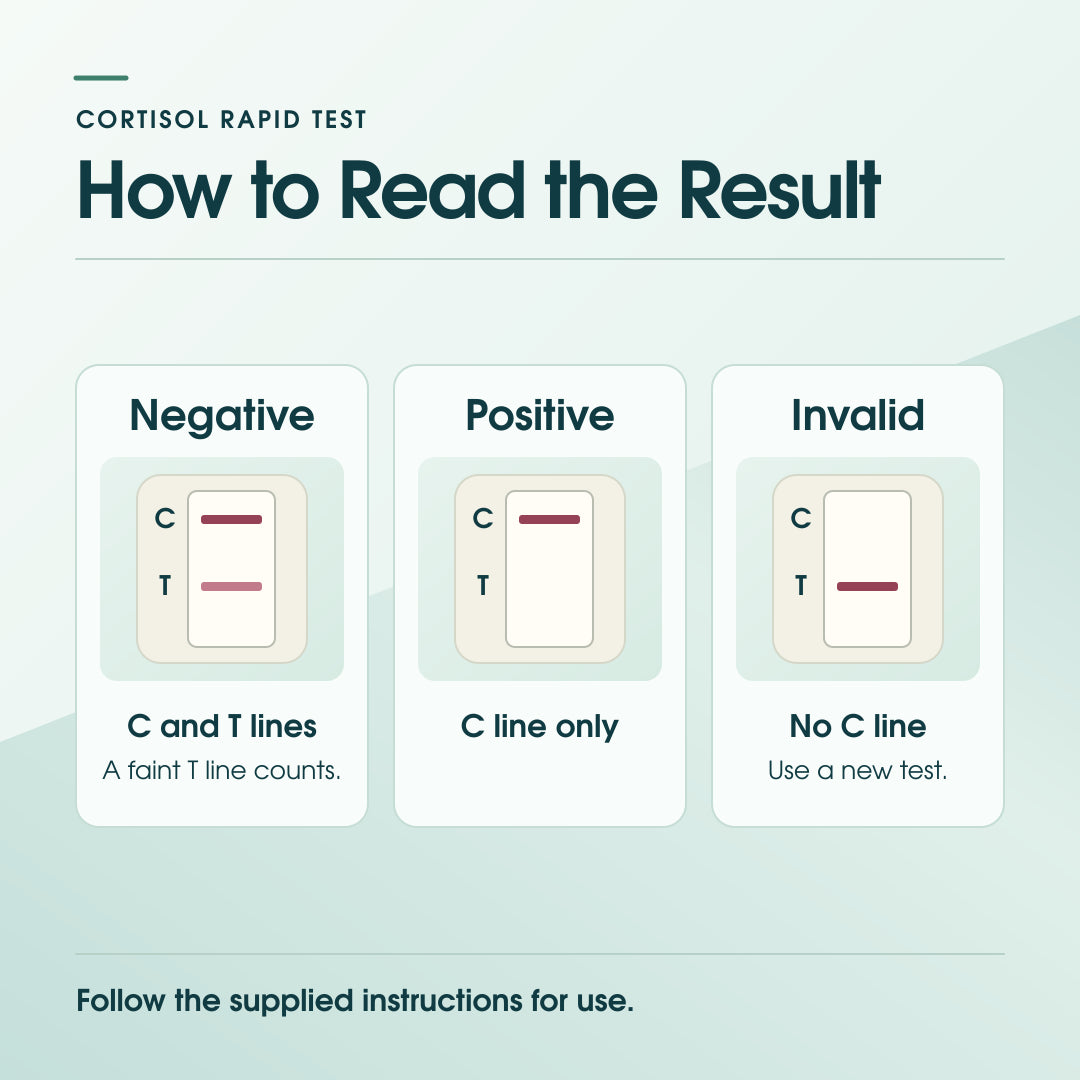
INVALID: No line appears in the control region (C). This may result from insufficient sample or procedural errors. Repeat the test with a new cassette. If the issue continues, discontinue use and contact your local distributor.
NEGATIVE: Two colored lines appear—one in the control region (C) and one in the test region (T). This indicates cortisol is below the detectable level. Even a faint line in the test region should be considered negative.
POSITIVE: Only one colored line appears in the control region (C), with no line in the test region (T). This indicates that cortisol exceeds the detectable level.
Why choose our tests?
-
Instant, clear results
Get an immediate answer at home in 10 minutes. No waiting around.
-
CE-certified & regulated
Meets European standards for safety and reliability.
-
Clinically validated
Tested to ensure accurate and consistent results.
-
Exceptional accuracy
Detects even small traces clearly and reliably, every time.


Cortisol testing for your practice
Collect a saliva sample and read the result in your practice. There’s no sample to send away.
Order a single test or choose a pack of 2 or 5. If you need a larger quantity or expect to order regularly, tell us how many tests you’ll need and we’ll put together a quote.
Ask about bulk orders
Explore more products
-
 £12.00 £14.50Sale
 £12.00 £15.00Sale
 £12.00 £14.00Sale
- Choosing a selection results in a full page refresh.
- Opens in a new window.


