Can perimenopause cause anxiety and panic attacks before your periods stop?

Your periods are still coming, so perimenopause may seem like something off on a distant horizon. Meanwhile, you’re sleeping badly and feeling more anxious than you used to. It’s easy to miss the possible connection.
Anxiety can begin during the menopause transition, well before periods stop.
In a study that followed 2,956 women, those who had reported little anxiety at the start were more likely to report high anxiety during perimenopause than before it. The study found an association, not proof that hormones caused each person’s symptoms.
Why can perimenopause cause anxiety while you still have periods?
Perimenopause begins before your final period. Your ovaries may still release eggs, and your oestrogen levels can rise and fall unevenly. Those changes may affect brain systems involved in mood and the stress response.
Researchers are still working out exactly how much each hormone contributes to anxiety. Perimenopause symptoms and testing cover the wider physical picture.
Hormones are only part of it. A night sweat can wake you repeatedly; the next day, ordinary worries may feel harder to handle. The NHS symptom guide also lists anxiety, palpitations and sleep problems among menopause and perimenopause symptoms. You don’t have to wait for your periods to stop before asking for help.
Does progesterone help keep you calm?
Progesterone may influence anxiety, though calling it a natural calming treatment goes too far. The body converts some progesterone into allopregnanolone, which acts on GABA receptors. GABA helps regulate activity in the nervous system.
During perimenopause, changes in ovulation can change progesterone levels too. That gives researchers a plausible route between hormone shifts and mood symptoms.
The effect isn’t the same for everyone. Research into allopregnanolone has found a complicated relationship with mood; a higher level does not reliably mean less anxiety. You also can’t tell from a spell of panic that your progesterone is low.
Can perimenopause trigger panic attacks?
Some people describe sudden episodes that feel like panic during perimenopause. A hot flush can bring a pounding heart, sweating, dizziness and a surge of anxiety.

Poor sleep may leave you feeling more on edge. If you’re waking tense and exhausted, Rezure’s look at the stress and insomnia cycle explores one part of that pattern.
Notice what happens around an episode:
- Does a wave of heat or sweating come first?
- Has your sleep changed?
- Do episodes cluster around a particular point in your cycle?
- Are you also noticing changes in your periods?
These clues can help at an appointment. They cannot tell you on their own if an episode was a panic attack, a hot flush or something else. New or persistent palpitations deserve a medical check. If palpitations come with chest pain, shortness of breath or fainting, seek urgent help as advised by the NHS palpitations guide.
Why does perimenopause sometimes get mistaken for anxiety or depression?
Mood symptoms can be the reason someone books an appointment, while changes in periods, sleep or temperature never come up. In a UK interview study involving 18 patients and 11 GPs, some patients were unsure if perimenopause played a part and felt uncomfortable raising it. The researchers identified missed opportunities to discuss it. A small interview study cannot tell us how often misdiagnosis happens.
Tell your GP about changes that appeared alongside the anxiety:
- Periods becoming heavier, lighter or less predictable
- New hot flushes or night sweats
- Broken sleep or difficulty concentrating
- Mood symptoms that feel new or markedly different for you
Anxiety and depression are real conditions, and they can occur during perimenopause. The useful question is what’s contributing to your symptoms. If you’re under 40 and your periods have changed, the possibility of premature ovarian insufficiency needs a separate assessment; Rezure’s article on perimenopause in your 30s explains why.
Why aren’t SSRIs always the answer?
SSRIs can help people with diagnosed anxiety or depression. They may be offered for mood symptoms during perimenopause too. They won’t necessarily address the full symptom pattern if hot flushes and disrupted sleep are also affecting how you feel.
The distinction matters in the guidance. NICE says SSRIs should not routinely be the first treatment for hot flushes and night sweats alone. It also says clinicians should consider menopause care alongside depression guidance when someone has depression. Neither recommendation means antidepressants are wrong for perimenopausal patients. If you already take one, don’t stop it suddenly; discuss any change with your prescriber.
Can HRT help with anxiety during perimenopause?
It can help when anxiety is linked to menopause symptoms, although it isn’t a guaranteed treatment for every type of anxiety. The NHS guidance on HRT lists anxiety and low mood caused by menopause among symptoms it can relieve. You can discuss HRT while you still have periods.
NICE recommends considering HRT for depressive symptoms that begin around the same time as other menopause symptoms, when those symptoms do not meet the criteria for diagnosed depression.
A clinician will also consider your medical history and the benefits and risks of treatment. If you have a womb, oestrogen HRT normally needs a progestogen to protect its lining.
Can a home FSH test confirm that perimenopause is causing anxiety?
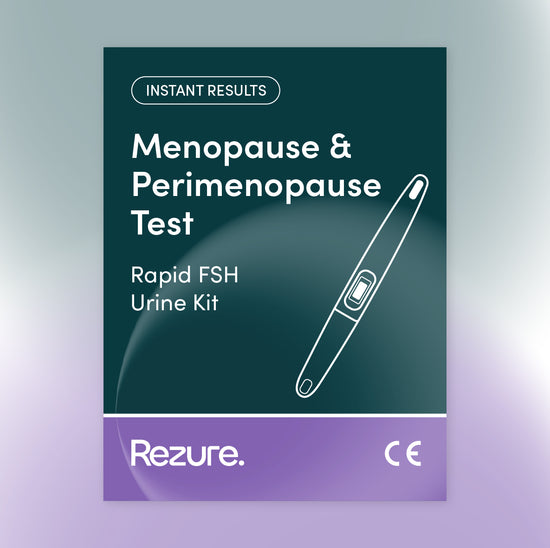
No. Follicle-stimulating hormone, or FSH, can rise as ovarian activity changes. Rezure’s Menopause & Perimenopause (FSH) Rapid Home Test checks for raised FSH in urine. The pack contains two tests, and its instructions advise repeating a test after several days when checking for perimenopause.
A raised result may give you something to discuss with a GP. A result cannot establish the cause of anxiety, and a result that isn’t raised cannot rule out perimenopause.
Testing has important limits. NICE guidance recommends identifying perimenopause from symptoms and cycle changes, without laboratory tests, in otherwise healthy people aged 45 or over. Clinicians may consider an FSH blood test at ages 40 to 45 in certain circumstances, or investigate suspected premature ovarian insufficiency under 40.

A home urine result does not replace those clinical assessments. Hormonal contraception or HRT can also make FSH results harder to interpret. You do not need a positive home test to ask about treatment.
What should you tell your GP about new anxiety?
Bring the pattern, even if it feels messy. Note when the anxiety began, what happens during an episode, and how it affects your day.
A short record could include:
- Dates and changes in your periods
- Flushes, sweating, sleep changes and palpitations
- Current medicines, including contraception or HRT
- Any home test results, with the dates you took the tests
Ask your GP to assess the anxiety itself and consider perimenopause and other possible causes. If your symptoms are affecting daily life, ask about treatment now rather than waiting for your periods to stop.