Perimenopause in your 30s: Early menopause isn't as rare as you think

A period-tracking app can make the first signs look like a glitch. One cycle is ten days late. The next arrives early. Then a month disappears. In your 30s, stress or contraception may seem like the obvious explanation.
Sometimes they are. Yet irregular periods with hot flushes, night sweats or fertility changes can point to premature ovarian insufficiency, known as POI.
What does perimenopause in your 30s mean?
Perimenopause can begin in your 30s, though persistent symptoms before 40 need investigation for POI and other causes.
Natural menopause usually happens between 45 and 55. Menopause before 45 is early menopause. Loss of ovarian function before 40 is classed as POI under the current POI guideline.
POI is not always a final, permanent menopause. Ovarian activity may return at times, so periods can reappear and natural pregnancy remains possible in a small minority of cases. Rezure's guide to perimenopause symptoms and testing covers the usual midlife transition; this article focuses on ovarian insufficiency before 40.
How common is menopause before 40?
The long-used UK estimate is around 1 in 100 women before 40. POI affects about 1 in 1,000 before 30 and 1 in 10,000 before 20, according to Leeds Teaching Hospitals.

Newer research reports higher prevalence in some populations, so age alone should not rule POI out. It may follow chemotherapy, radiotherapy or ovarian surgery. Genetic and autoimmune causes are also possible, though no cause is found in many cases.
What are early menopause symptoms in your 30s?
The clearest sign is a change in periods. They may become irregular, infrequent or stop. Other symptoms can resemble stress, anxiety or poor sleep.
Possible signs include:
-
Irregular or missed periods
-
Hot flushes or night sweats
-
Sleep problems
-
Mood changes or poor concentration
-
Vaginal dryness or pain during sex
-
Lower sex drive
-
Difficulty becoming pregnant
One late period rarely means POI. A continuing pattern matters more. The NHS symptom guide covers the wider symptom range.
Periods may become heavier before growing less frequent. If so, read how heavy periods affect iron.
Why can POI be missed in younger women?
POI can be missed because the symptoms do not fit the age people expect menopause to begin.
Tiredness, poor sleep, low mood and irregular periods may be blamed on stress, weight changes or contraception. The problem comes when symptoms continue, and the menstrual pattern is not investigated. Leeds Teaching Hospitals notes that symptoms are sometimes put down to stress, delaying recognition.
Record:
-
Cycle dates and changes in flow
-
Flushes, sweats and sleep disruption
-
Medicines, contraception and recent illness
-
Pregnancy plans or fertility concerns
-
Family history of early menopause
-
Previous cancer treatment or ovarian surgery
Those blank squares in your app become useful clinical information when shown as a pattern.
What else can look like early menopause?
Several conditions can cause irregular periods, fatigue or fertility problems. POI cannot be diagnosed from symptoms alone.

A GP may consider:
-
Pregnancy
-
Polycystic ovary syndrome
-
Thyroid disease
-
High prolactin
-
Major weight change or intense exercise
-
Medicines and hormonal contraception
An underactive thyroid can cause tiredness, low mood, weight changes and irregular periods. The Underactive Thyroid (TSH) Rapid Home Test Kit Rezure sells is a separate check, while its article on high TSH results explains possible follow-up.
Low iron and low vitamin D can add fatigue or weakness without explaining the menstrual pattern. Rezure also offers the Iron Deficiency (Ferritin) Rapid Home Test Kit and Vitamin D Rapid Home Test Kit. Its guides to persistent fatigue and low vitamin D cover these overlaps.
Why does early diagnosis matter?
Early diagnosis matters because oestrogen supports bone and cardiovascular health. With POI, lower oestrogen exposure begins years earlier than expected.
The British Menopause Society states that women with POI face higher risks of osteoporosis and cardiovascular disease. It advises discussion of bone density, exercise, calcium, vitamin D, smoking and alcohol as part of care.
POI also reduces fertility, though ovarian activity may occasionally return. Women who want children may need timely specialist advice. The Vitamin D Rapid Home Test Kit can indicate vitamin D status, though it cannot measure bone density or diagnose POI.
Can an FSH home test diagnose POI?
No. A home FSH test can indicate raised follicle-stimulating hormone, though it cannot diagnose POI by itself.
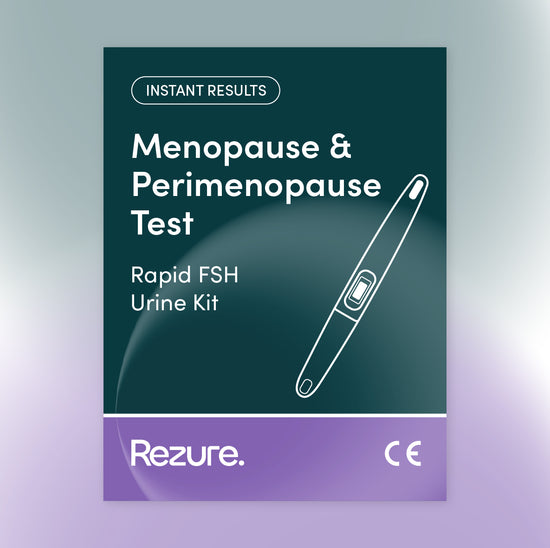
When ovarian function falls, the brain releases more FSH to stimulate the ovaries. Rezure's Menopause & Perimenopause (FSH) Rapid Home Test checks for raised FSH in urine. The pack contains two tests, and the instructions advise repeating the test after a week when checking for perimenopause.

For someone under 40, a raised result can support a GP conversation about blood testing. A negative result does not rule POI out, and hormonal contraception or HRT may affect FSH results.
Clinical diagnosis uses menstrual history and blood tests. International guidance defines POI through irregular or absent cycles plus biochemical evidence of ovarian insufficiency before 40.
How is POI treated in younger women?
Treatment usually includes hormone replacement, unless it is medically unsuitable.
For younger women, HRT replaces hormones the ovaries would normally still produce. The British Menopause Society advises continuing hormone replacement until around the natural menopause age, usually 50 to 51, when there is no contraindication. It may ease symptoms and protect bone and cardiovascular health.
Treatment may include:
-
Oestrogen through a patch, gel or tablet
-
Progestogen if you have a womb
-
Vaginal oestrogen for dryness
-
Fertility advice based on your plans
-
Bone and heart health monitoring
HRT is not contraception. Ovarian activity can occasionally return, so ask about contraception if pregnancy is not wanted. Your medical history will guide the safest treatment.
When should you speak to a GP?
Book a GP appointment if you are under 40 and your periods have become irregular or stopped for several months, especially with hot flushes, night sweats, vaginal dryness or fertility concerns.
Bring your cycle record, symptom notes, medical history and any home test results. Ask directly if POI should be considered and which blood tests or referrals fit your situation. Seek help sooner for very heavy bleeding, severe pelvic pain, fainting or possible pregnancy.
A period app cannot tell you what is wrong. It can show that the pattern has changed. When the blank dates keep multiplying, do not let your age close the conversation before it has properly started.