
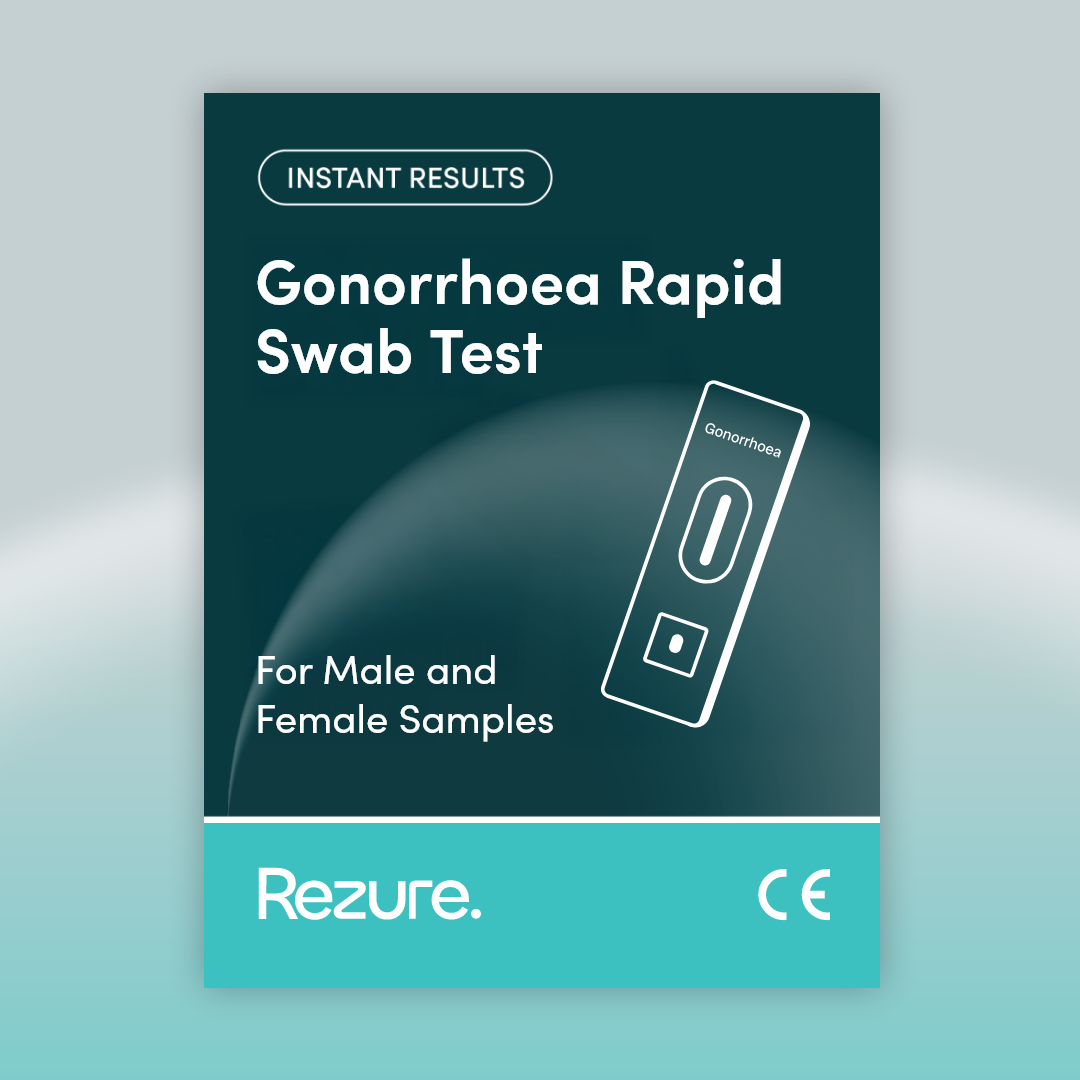
Gonorrhoea Rapid Male and Female Swab Test

About this test
Brand we're currently stocking: AllTest
Gonorrhoea is the second most common bacterial sexually transmitted infection in the UK. Annually, there are over 70,000 new cases, with high transmission among young people (18–24) and those in urban areas.
This test gives you a quick way to check for gonorrhoea antigen from simple female cervical and male urethral swabs. It is designed for professional use and provides a clear cassette result in 10 minutes.
The test uses a lateral flow immunoassay to detect an antigen associated with Neisseria gonorrhoeae. A positive result indicates that gonorrhoea antigen was detected in the sample. A negative result means it was not detected, or was present below the test’s detectable level.
As with other professional rapid tests, the results should be considered alongside symptoms, clinical findings, and any other relevant information.
In the manufacturer’s clinical study, performance for female cervical swabs showed 94.4% relative sensitivity, 96.9% relative specificity, and 95.9% accuracy. For male urethral swabs, the figures were 91.6% relative sensitivity, 97.1% relative specificity, and 94.3% accuracy.
Brand of test may vary.
How this test helps you
How to use this test
Use it as soon as possible after opening, and place it on a clean, level surface so it is ready for the extracted sample later in the process.
This test is intended for female cervical swabs and male urethral swabs, and careful collection is important because the quality of the sample affects antigen detection.
Insert the swab straight away, press it against the bottom of the tube, rotate it 15 times, and then leave it to stand for 2 minutes so the first stage of extraction can take place.
The solution will change appearance at this stage, then the swab should be rotated 15 times again while the tube is compressed, helping complete the extraction before the next short standing period.
Once the swab has been removed, fit the dropper tip securely on top of the extraction tube.
Read the result at 10 minutes and do not interpret it after 30 minutes.
Why choose our tests?
-
Instant, clear results
Get an immediate answer at home in 10 minutes. No waiting around.
-
CE-certified & regulated
Meets European standards for safety and reliability.
-
Clinically validated
Tested to ensure accurate and consistent results.
-
Exceptional accuracy
Detects even small traces clearly and reliably, every time.



Good value and instant results
- Simple cassette format with an easy visual readout
- Suitable for female cervical and male urethral swab specimens
- No equipment-heavy analysis needed at the point of use
- No lab analysis needed before getting a result
- Designed for professional use where speed and clarity count
Explore more products
-
 £25.00 £28.00Sold out
 £10.00 £11.50Sale
 £12.00 £15.00Sold out
- Choosing a selection results in a full page refresh.
- Opens in a new window.


