Gonorrhoea symptoms in men and women: what to look for and when to test

Gonorrhoea symptoms are not always obvious. One person may notice a clear change, such as pain when peeing or unusual discharge. Another may feel fine, carry on as normal, and only start to wonder after a partner gets in touch.
A number of things could tip you off to the need to test: a sting when peeing, a change in discharge, a condom that broke, or even a text message you weren’t expecting.
Gonorrhoea is one of the main sexually transmitted infections in the UK. In England, there were 71,802 gonorrhoea diagnoses in 2024. While rates are declining overall, the numbers still show why symptoms and testing warrant attention.
Uncertainty is common, though, because sexual health concerns so often begin with a question rather than a clear answer. Could this irritation be just a UTI? Is my discharge normal? Should I test even though I feel fine?
This guide explains what gonorrhoea is, what symptoms can look like in men and women, why infections can appear without symptoms, and when to consider a gonorrhoea test.
What is gonorrhoea?
Gonorrhoea is a sexually transmitted infection caused by Neisseria gonorrhoeae bacteria. It thrives in warm, damp environments, so it can infect the cervix, urethra, rectum, throat and, less often, the eyes.
It spreads mainly through vaginal, anal or oral sex without a condom, though it can also spread through sharing sex toys that have not been washed or covered with a new condom between users.
People often think of gonorrhoea as a genital infection, but that’s only part of the picture. Rectal and throat infections can occur in men and women, and these infections are usually asymptomatic. That means they often don’t cause the clear symptoms which might drive you to get tested.
Gonorrhoea is treatable, though, and should not be ignored. NHS guidance says untreated gonorrhoea can cause pelvic inflammatory disease in women and painful infection in the testicles or prostate gland in men. In some cases, it can affect fertility.
What are the first signs of gonorrhoea?
That depends largely on the individual, their sex, and the area of the body that’s been infected. The first signs of gonorrhoea often involve a change in urination or discharge.
Burning pain when peeing is a symptom in both men and women. Yellow or greenish vaginal discharge in women, discharge from the penis in men, lower abdominal pain in women, bleeding between periods, and sore testicles may also be signs.

Symptoms do not always arrive in a neat order. You might notice a slight sting first, then discharge later. You might get pelvic discomfort and assume it is linked to your period. You might feel irritation after sex and wait to see if it settles.
That is where gonorrhoea becomes difficult to judge. Its symptoms can overlap with many other common issues, which can cloud the picture.
Pain when peeing can point to an STI. It can also happen with a urinary tract infection. A change in vaginal discharge may make someone think about thrush or bacterial vaginosis before they think about an STI.
The safer approach is to look at the whole picture. Recent sexual contact, symptoms, partner notifications and exposure type all matter.
What are gonorrhoea symptoms in women?
On top of the yellow or greenish vaginal discharge, gonorrhoea symptoms in women can include unusual vaginal discharge, burning pain when peeing, lower abdominal pain, bleeding between periods, or bleeding after sex.
The symptoms can be mild. That is one reason they are easy to miss. A small change in discharge might be put down to a normal cycle change. Mild pelvic discomfort might be dismissed. Bleeding after sex may happen once and then be forgotten.
These symptoms are not specific to just gonorrhoea. BV, thrush, cystitis, chlamydia and other infections can cause similar problems.
What are gonorrhoea symptoms in men?
Gonorrhoea symptoms in men differ slightly and often affect the urethra, the tube that carries urine out of the body. Burning pain when peeing, fluid or discharge from the penis, and sore testicles are common symptoms in men.
For some men, discharge is the symptom that prompts action. It may be white, yellow or green. For others, the first sign is a burning feeling when they pee. Testicular pain or swelling can also happen, though it is less common.
These symptoms may feel too obvious to ignore. That can be useful, because it pushes people to seek advice. The risk is assuming symptoms will clear on their own, or trying to work out the cause based on appearance alone.
You cannot reliably tell which STI you may have based on discharge colour, pain level or timing.
If there has been oral or anal exposure, symptoms can show up away from the genitals. Sometimes they do not show up at all. Rectal infection, for example, is mostly asymptomatic, though it can cause anal discharge, pain or discomfort. Throat infections are usually asymptomatic, though some people report a sore throat.
Can you have gonorrhoea with no symptoms?
Yes. You can have gonorrhoea with no symptoms. This is one of the main reasons testing matters.
Many people with gonorrhoea will not notice any symptoms. Plus, when symptoms do occur, they usually appear between 1 and 14 days after infection, which is quite a broad window.
Silent infection can be frustrating because it removes the warning sign. You may feel fine and still need a test because of what happened, rather than because of how you feel.
A partner’s positive result is a good example, as is unprotected sex with a new partner. The same applies after a broken condom or when a partner has symptoms.
A symptom-free infection can still pass to someone else. It can also lead to complications if left untreated.
“I feel fine” is useful information, but it is not the same as a negative gonorrhoea test.
When should you test for gonorrhoea?
You should consider a gonorrhoea test if you have symptoms, if a sexual partner has tested positive, or if you have had sex that may have exposed you to an STI.

Testing is worth considering after:
-
Vaginal, anal or oral sex without a condom with a new or casual partner
-
A condom breaking or slipping
-
A partner telling you they have gonorrhoea or another STI
-
Unusual discharge from the vagina or penis
-
Burning pain when peeing
-
Bleeding after sex or between periods
-
Pelvic, testicular, rectal or throat symptoms after sexual contact
If someone has no symptoms, testing should take place at least 2 weeks after exposure. If symptoms are present, or a partner has tested positive, it is sensible to seek sexual health advice rather than wait and guess.
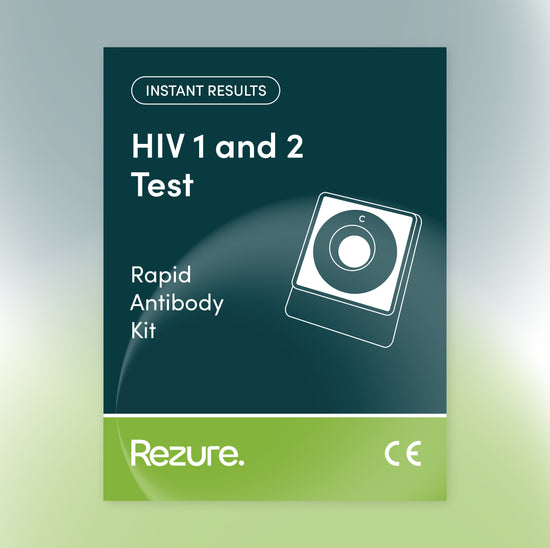
Sexual health testing may need to cover more than one infection. If HIV is also part of the concern after a sexual risk, Rezure sells a Home HIV 1 and 2 Rapid Test Kit. That is a separate test for a separate infection.
How does a Gonorrhoea Rapid Male and Female Swab Test work?
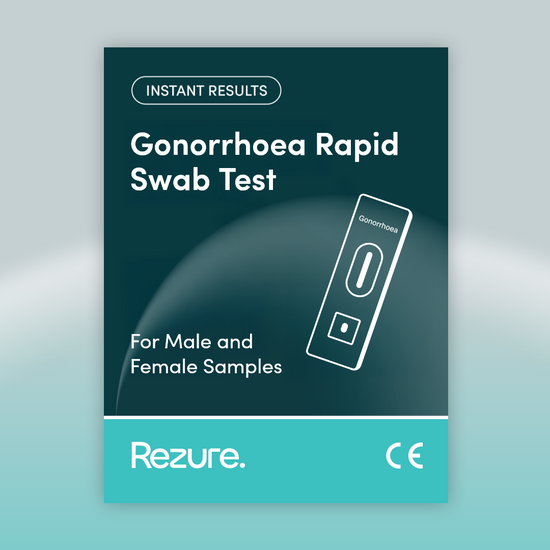
The Gonorrhoea Rapid Male and Female Swab Test that Rezure sells is designed for professional use. It checks female cervical and male urethral swab samples for gonorrhoea antigen and gives a cassette result in 10 minutes.
The test uses a lateral flow immunoassay to detect an antigen linked to Neisseria gonorrhoeae. A positive result means gonorrhoea antigen was detected in the sample. A negative result means it was not detected, or was present below the test’s detectable level.
In the manufacturer’s clinical study, performance for female cervical swabs showed 94.4% relative sensitivity, 96.9% relative specificity and 95.9% accuracy. For male urethral swabs, the figures were 91.6% relative sensitivity, 97.1% relative specificity and 94.3% accuracy.
Those figures are useful. They do not remove the need for clinical judgement.
The result should be considered alongside symptoms, sample quality, exposure history and any other relevant information. It also matters that this is not a self-test. It is a rapid swab test for professional use.
What does a positive gonorrhoea result mean?
A positive gonorrhoea result means the test detected gonorrhoea antigen in the sample. The next step is clinical advice and treatment.
Gonorrhoea is usually treated with antibiotics. You should avoid sex until a healthcare professional tells you it is safe. This helps reduce the risk of passing the infection on or getting it again.

Current and recent sexual partners may need testing and treatment. Partner notification can feel awkward, but it is still part of stopping the infection from moving silently between people.
A positive result does not say anything about someone’s character. It says there is an infection that needs a practical response.
What does a negative gonorrhoea result mean?
A negative gonorrhoea result means gonorrhoea antigen was not detected in the sample, or the level was below the test’s detectable limit. It does not always rule out infection in every situation.
Timing matters. So does the sample site. A female cervical or male urethral swab answers a question about that sample. It does not automatically rule out throat or rectal infection after oral or anal exposure.
Follow-up may still be needed if symptoms continue, the sample was taken too soon, the swab was difficult to collect, a partner has tested positive, or a clinician thinks another test is needed.
A negative result can be reassuring. It still needs context.
What happens if gonorrhoea is left untreated?
Untreated gonorrhoea can cause complications.
In women, it can spread to the reproductive organs and lead to pelvic inflammatory disease. This can increase the risk of long-term pelvic pain, ectopic pregnancy and infertility. In men, gonorrhoea can cause painful infection in the testicles and prostate gland. It may affect fertility in some cases.
Gonorrhoea can also affect the rectum and throat. These infections can be easy to miss because they often do not cause symptoms. Rectal and pharyngeal infections are usually asymptomatic.
The better route is early testing, proper treatment where needed, and clear advice on when sex can safely resume.
What should you do if you are worried about gonorrhoea symptoms?
Start with what has changed.
Pain when peeing, unusual discharge, pelvic pain, sore testicles, rectal symptoms or bleeding after sex all deserve attention. Then think about recent sexual contact. A symptom that seems minor can matter more if it follows unprotected sex or a partner notification.

If gonorrhoea is a realistic possibility, speak to a sexual health service, GP, pharmacist or suitable healthcare professional.
The Gonorrhoea Rapid Male and Female Swab Test that Rezure sells can support quick professional-use screening from female cervical or male urethral swab samples, with a result in 10 minutes.
That first small worry after sex is easy to push aside. It is also easy to overthink. Testing gives you a clearer answer, a better next step, and less room for guesswork.