Can you develop coeliac disease later in life, after years of eating gluten?

Yes, you can develop coeliac disease later in life, even if you’ve eaten bread and pasta for decades without obvious problems. It can develop at any age.
But a new reaction to food doesn’t tell you when a disease began. Adult-onset coeliac disease, symptoms becoming noticeable and a diagnosis arriving in adulthood aren’t interchangeable.
Coeliac disease involves an autoimmune reaction to gluten that can damage your small intestine. Feeling uncomfortable after a sandwich isn’t enough to establish that this is happening.
Why did I suddenly develop coeliac disease?
You may have developed it recently, or an existing condition may only now be causing problems you recognise. The timing of symptoms can’t distinguish the two.
Coeliac disease can exist without obvious symptoms. So years of apparently tolerating gluten don’t prove that your gut was unaffected throughout that time.
There are two different possibilities:
- Adult onset: The autoimmune process developed after a period without detectable disease.
- Later recognition: Disease was already present, with few symptoms or changes you hadn’t connected to it.
Research supports the first possibility. A study following 3,511 people compared blood samples collected in 1974 and 1989. Nine people who initially tested negative developed coeliac-related antibodies by the second sample.
That shows the immune markers can emerge later. It doesn’t pinpoint the day disease began, or mean every antibody-positive person had confirmed intestinal damage.
And sudden gluten intolerance is a description, not a diagnosis. The difference between gluten intolerance and coeliac disease matters before you change your diet.
When does coeliac disease typically start?
There’s no single typical starting age. It can develop after gluten enters the diet in childhood, during adulthood or in older age.
The harder question is when it started in one person. Without earlier tests, doctors often can’t reconstruct that history. Your first noticeable digestive problem may be a useful date to record, but it isn’t necessarily the date the autoimmune process began.

Sometimes unexplained low iron prompts investigation before bowel symptoms do. Problems absorbing nutrients can occur in coeliac disease; nutrient deficiencies may therefore lead to its recognition rather than mark its onset.
The Iron Deficiency (Ferritin) Rapid Home Test Kit checks iron stores. It can’t identify why they’re low or date any underlying disease.
At what age do most people get diagnosed with coeliac disease?
Coeliac UK says the condition is most frequently diagnosed in people aged 40 to 60.
That’s a diagnosis pattern, not proof that most cases begin during those years. It includes people whose disease developed recently and people whose condition went unrecognised.
Being outside that age range doesn’t exclude you. A coeliac test for adults may be appropriate at 25 or 75 when the clinical reasons are there.
What can trigger coeliac disease later in life?
Gluten drives the immune reaction in susceptible people, but researchers haven’t established one event that explains why an individual develops disease later.
The distinction is between what sustains the reaction and what might help it begin.
The evidence has different levels of certainty:
- Genetic susceptibility: Coeliac disease almost always involves gene variants called HLA-DQ2 or HLA-DQ8, though most people with these variants never develop it.
- Gluten exposure: Eating gluten is necessary for the usual disease process.
- Infections: Researchers are investigating links, including digestive infections and infections early in life.
- Gut bacteria: Changes in the gut’s microbial community may play a part, but this remains under investigation.
The research on causes doesn’t give you a reliable way to name a personal trigger. Childhood findings can’t simply explain an adult’s recent stomach bug.
Autoimmune thyroid disease increases your likelihood of coeliac disease. That association doesn’t mean it caused the onset. And thyroid tests and antibodies answer different questions from coeliac testing.
Can stress trigger coeliac disease?
Stress isn’t a proven cause of adult-onset coeliac disease. Some research reports an association, which is a narrower finding.
A 2013 study compared 186 adults with newly diagnosed coeliac disease with 96 people who had gastro-oesophageal reflux disease. The coeliac group reported more stressful life events before diagnosis.
People were looking back at events. That design can’t establish that stress started the autoimmune disease, rather than preceding its recognition. Diagnosis and biological onset may be years apart.
Don’t blame yourself for having a difficult year.
Stress can also affect digestive symptoms without coeliac disease. Persistent changes still deserve assessment; IBS and other gut conditions can produce overlapping complaints.
Can coeliac disease develop after a negative test?
Yes. A previous negative result isn’t lifelong clearance. The blood-sample research above demonstrates that coeliac-related antibodies can appear later.
An older result also needs context: were you eating gluten, and was it actually a coeliac antibody test? Normal routine blood results don’t necessarily mean someone checked for coeliac disease.
The NHS testing guidance notes that negative blood tests don’t always exclude the condition. If symptoms persist or your circumstances change, ask your GP about reassessment rather than relying on a result from years ago.
Can a home coeliac test tell you when the disease started?
No. It can look for antibodies present now, not tell you how long you’ve had the condition.
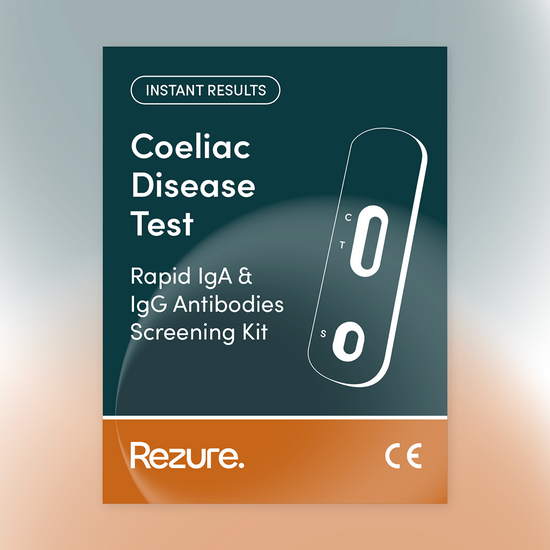
The Coeliac Disease Rapid Home Test Kit Rezure sells provides home coeliac screening using a finger-prick sample. It detects IgA and IgG antibodies against deamidated gliadin peptides, called DGP.

A home result can’t confirm a diagnosis or rule out every case. Coeliac UK advises discussing your symptoms with your GP, whatever the outcome of a home test.
Should you stop eating gluten before testing?
Don’t start a gluten-free diet before completing diagnostic testing, unless your clinician advises otherwise. Reducing gluten can make antibody results harder to interpret.
The guidance on gluten intake recommends some gluten in more than one meal every day for at least six weeks before testing, for people eating a normal gluten-containing diet.
Before your appointment:
- Record when the new problems began.
- Bring earlier test results, including any coeliac tests.
- Mention family history and autoimmune conditions.
- Tell your GP how much gluten you’re currently eating.
If you’ve already stopped eating gluten, speak to your GP before restarting it for testing.