Rezure partners with Mulberry Care Homes for residents’ rapid testing

In a care home, the duty of care goes beyond shelter, food, and security. As people age, their health needs tend to become more urgent and complex, and the burden of responsibility for their health outcomes increasingly falls on home operators and nurses.
Nurses and primary carers, especially, notice the small things: a resident seems more tired than usual, someone else has less appetite, and another says their legs feel weaker getting up from a chair. None of that proves anything on its own. It does, though, show why extra health information can matter.
That is the thinking behind Rezure’s new partnership with Mulberry Care Homes, a West Yorkshire care group with three homes in Huddersfield, Holmfirth, and Almondbury. Rezure will supply the operator with rapid testing kits to help identify potential unseen health concerns among residents.
What is the Rezure and Mulberry Care Homes partnership?
The partnership gives Mulberry’s nurse-led teams access to additional rapid testing within the care home setting. In practice, that means residents can have selected checks carried out in a familiar place, with support from staff who already know them and their care needs.
The aim is not to replace GP input, hospital care, or laboratory testing. It is to add another practical layer of information that can help staff notice changes, decide when follow-up is needed, and support better conversations with families and clinicians.
That fits the NHS England enhanced health in care homes framework, which is built around personalised care, joined-up working, and better outcomes for people living in care homes.

Mulberry is a family-run group focused on person-centred care. Rezure’s role in the partnership is to provide rapid tests that can support that model with extra, structured health insight.
It is a natural fit. Care homes already monitor residents closely. Rapid testing does not replace that judgment. It gives teams another source of evidence when something seems off or when a broader picture would help.
Why begin with vitamin D testing?
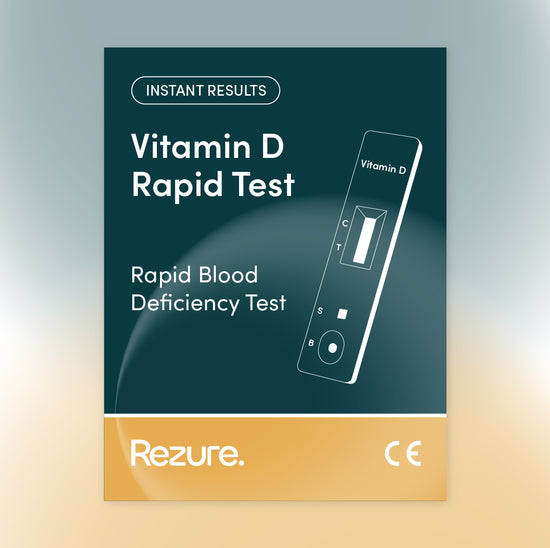
The partnership has started with Rezure's Vitamin D Rapid Home Test Kit, and that choice makes sense. In the UK, vitamin D status is a recurring issue because sunlight is not strong enough for the body to make enough vitamin D during autumn and winter.
Government figures show that around 1 in 6 adults in the UK have vitamin D levels below the recommendations, and older people and those who are housebound are among the groups most likely to have lower levels. Guidance for care homes has also recognised care home residents as a priority group for vitamin D support.
That matters in care settings because vitamin D supports bone and muscle health. When a resident already has mobility issues, frailty, or limited outdoor time, low vitamin D is not a small issue. It can be part of a broader pattern affecting strength, comfort, and day-to-day independence.
Starting here gives Mulberry’s teams a useful first marker to track, especially through darker months when routine risk rises.

When a resident says they feel “a bit slower lately”, staff do not want to rely on guesswork alone. A rapid vitamin D check cannot answer every question. It can, though, help show where a more informed next step should start.
What does this give residents and care teams in real terms?
For residents, the value is practical. Testing happens in a place they know, with staff they already trust. For families, results can make health discussions less vague. For nurses, rapid checks can help determine what needs monitoring, what needs escalation, and what needs a more thorough clinical review.
That benefit shows up in a few clear ways:
-
Testing can happen in the home, without adding travel or disruption
-
Results can support earlier conversations with GPs or other clinicians
-
Staff can build a broader picture alongside existing observations and care plans
-
Residents and families get clearer information to talk through together
None of that turns a care home into a diagnostic lab. It does make routine care more informed. That is very much in line with the NHS direction of travel for proactive care in care homes.
Which Rezure tests are most likely to be useful in a care home setting?
Vitamin D is the obvious starting point, though it is certainly not the end point. Some of the other tests Rezure offers that could be useful in the right resident context include those linked to symptoms that are easy to miss or misread in older adults.
Examples include:
-
Iron Deficiency (Ferritin) Rapid Home Test Kit, where tiredness, breathlessness, or weakness need a clearer starting point; NHS guidance notes that iron deficiency anaemia can present with fatigue, shortness of breath, and palpitations
-
Underactive Thyroid (TSH) Rapid Home Test Kit, because hypothyroidism can develop slowly, and common symptoms include fatigue, weight gain, constipation, and low mood
-
Inflammation (CRP) Rapid Home Test Kit, as CRP is a recognised marker used to help detect inflammation in the body and can be useful in the wider clinical picture
These products are helpful because they point to questions that may need to be asked next. They do not close the case. In a care home, that distinction matters. Good staff do not need false certainty. They need timely clues they can act on properly.
What does this partnership mean for Rezure and Mulberry as organisations?
For Mulberry, it adds another tool to a care model that already depends on observation, judgement, and personal knowledge of residents. For Rezure, it shows that rapid tests can have a role beyond individual home use. They can also support structured, nurse-led monitoring where the goal is not consumer convenience alone, but better day-to-day visibility of resident health.

There is also a wider point here. Care quality often depends on what gets noticed early. Low vitamin D, iron deficiency, elevated inflammatory markers, or signs pointing to thyroid or glucose issues can all underlie symptoms that may seem ordinary at first.
A resident is a bit quieter. A bit weaker. A bit less steady than last month. The job is to spot that drift before it becomes a bigger problem. Rapid testing will not do that on its own. Used carefully, it can help teams do it sooner.
In care homes, good care is often made up of small moments that could easily be brushed off. A slower walk to breakfast. A missed activity. A tired look that was not there last week. Partnerships like this matter because they provide more context for those moments.
Sometimes that context says, “keep watching”. Sometimes it says, “act now”. Either way, that is useful knowledge.