Prostate health decoded: Signs, risks and when to test

As a man living in the UK, you might be wondering when to get a PSA test or what early signs could indicate a prostate issue.
Maybe you’ve noticed changes in your urination, or you’re experiencing some discomfort around your pelvis and abdomen. Maybe you’ve simply heard about the importance of your prostate and you want to ensure you’re clued up on how to keep it healthy.
The truth is, as you grow older, your prostate will naturally change. Although conditions like prostate enlargement are normal and usually harmless, there are some diseases, such as prostate cancer, that can be life-altering if not detected early.
This is why it’s imperative to understand the function of your prostate gland and how you can check that it’s in good shape.
This guide explains what your prostate does, who’s most at risk of prostate-related disease, and how a PSA test kit can provide you with insight before symptoms progress.
In a hurry? Here are the key points:
-
The prostate is a small gland below the bladder
-
It makes a fluid that protects and nourishes sperm
-
Common issues include prostate enlargement, prostatitis, and prostate cancer
-
Men most at-risk of cancer are those over 50, of Black African or Caribbean heritage, and those with a family history
-
An at-home PSA test can give an early indication of prostate health
What is the prostate and what does it do?
The prostate is a small gland, about the size of a walnut, that sits just below your bladder and in front of your rectum.
It produces seminal fluid, which mixes with sperm to form semen. This fluid nourishes and protects sperm, helping them survive and move effectively after ejaculation.
Because the urethra passes through the prostate, any changes in the gland can affect both urination and sexual function.

What are common prostate problems and warning signs?
Your prostate might be small, but it has a big impact on both urinary and sexual health. When things go wrong, it can seriously affect your quality of life.
According to Cancer Research UK, prostate cancer is the most common cancer in men, with more than 55,000 new cases diagnosed every year.
Understanding the differences between common prostate conditions can help you spot issues early and know when to get checked:
Benign Prostatic Hyperplasia (BPH)
BPH is a non-cancerous enlargement of the prostate that can make urinating difficult.
It’s very common with age: around 9 in 10 men in their 90s have some degree of enlargement, according to the NHS.
Prostatitis
Prostatitis is inflammation or infection of the prostate, which can cause pain, fever, or a general sense of discomfort.
It can affect men at any age, but as reported by The Urology Foundation, it’s most common between 30 and 50.
Prostate cancer
Prostate cancer develops when cells in the prostate grow abnormally. It often progresses slowly, but can spread beyond the gland if untreated.
Men over 50, those of Black African or Caribbean heritage, and anyone with a family history of prostate cancer are at higher risk.
Possible signs and symptoms of prostate problems include:
-
Frequent or urgent urination, especially at night
-
Weak or interrupted urine flow
-
Pain or burning when passing urine
-
Lower-back, pelvic, or groin pain
-
Blood in urine or semen
-
Erectile difficulties or reduced sexual function
-
Unexplained weight loss or fatigue
Some men may also experience symptoms like a feeling that the bladder hasn’t fully emptied, dribbling after urination or pain in the lower abdomen or during ejaculation. A symptom of prostatitis includes fever, chills, or flu-like symptoms, while bone pain (in the spine, hips or pelvis) is a recognised later-stage sign of prostate cancer.
See your GP if you notice any of these changes. An at-home PSA test can help check whether your prostate may need further investigation.
Why should you check your prostate?
Because early-stage disease often causes no noticeable symptoms, regular prostate checks and PSA testing are among the most effective ways to spot potential problems early and protect your long-term health.
Catching prostate issues early usually means more treatment options, simpler interventions, and better outcomes.
What is a PSA test?
PSA stands for prostate-specific antigen; a protein produced by the prostate. Most PSA is found in semen, but a small amount naturally also enters the bloodstream.
A PSA test is a simple blood test that measures how much of this protein is present in your blood. A higher level may indicate a prostate condition, such as one of those mentioned earlier: BPH, prostatitis or in some cases, prostate cancer.
Quick definition:
PSA test UK = a blood test that measures prostate-specific antigen to assess prostate health.
It’s worth remembering that a PSA test is a screening tool, not a diagnosis. A raised result doesn’t always mean disease, but it’s a useful early indicator that further checks may be needed.
When should you get a PSA test?
Knowing when to test is just as important as knowing how. Most experts recommend that men get a PSA test when they are most at risk. This means from around age 50, or from age 45 if you have a higher risk.
For example, if you have a father, brother, or close relative who’s had prostate cancer, or if you’re of Black African or Caribbean heritage.
You should also get tested if you notice any of the symptoms described earlier, particularly any persistent urinary or pelvic symptoms.
How do you get a PSA test in the UK?
There’s no national prostate screening programme in the UK, so you have two main options:
-
Request a PSA test from your GP, or
-
Use a home PSA test kit UK and share the result with your GP for follow-up.
Tip: A home PSA test can be a useful first step while you wait for a GP appointment, giving you insight and peace of mind sooner.
How does an at-home PSA test work?

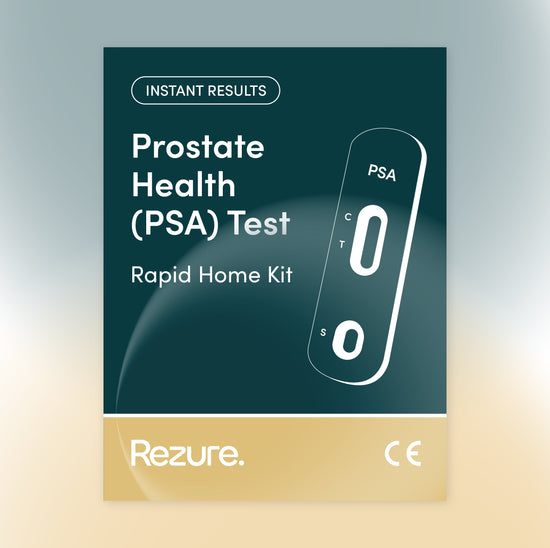
A home PSA test is a quick and easy way to check your prostate health from the comfort of your home. It uses a small finger-prick blood sample to measure the level of prostate-specific antigen (PSA) in your blood.
Once you’ve added the sample and testing solution to the device, the result appears in around 10 minutes, showing whether your PSA level is within or above the typical range.
These CE-marked home tests offer privacy and convenience, helping you take the first step in understanding your prostate health.
If your result is higher than expected, or changes over time, it’s important to share it with your GP for further assessment and guidance.
Lifestyle habits that support prostate health

While PSA testing gives you valuable insight, your lifestyle plays a major role, too. Simple, consistent habits can support your prostate health and benefit your whole body.
1. Eat for your prostate
A balanced, plant-forward diet supports hormone balance and reduces inflammation.
What to focus on:
-
Eat at least five servings of fruit and veg daily. Go for brightly coloured produce rich in antioxidants (like tomatoes, peppers, and leafy greens).
-
Choose whole grains over refined ones; swap white bread and pasta for whole-grain versions.
-
Limit red and processed meats (beef, pork, lamb, sausages, bacon). Try leaner proteins such as fish, poultry, beans, and eggs.
-
Include healthy fats like olive oil, nuts (almonds, walnuts), avocados, and seeds, and limit animal fats.
-
Keep dairy moderate; opt for low-fat yoghurt or semi-skimmed milk.
-
Reduce sugar and salt intake.
Tip: Diets low in animal fat and rich in plants benefit both heart and prostate health.
2. Move regularly and stay active
Exercise regulates hormones, improves circulation, and helps maintain a healthy weight, all of which support prostate and urinary health.
How to get started:
-
Aim for 150 minutes of moderate activity per week, such as brisk walking, cycling, or swimming.
-
Small changes count: simple habits like walking to the shops, gardening, or taking the stairs all help.
-
Mix aerobic exercise with strength and flexibility training for balance and stamina.
If you’re new to exercise, start gently and build up; consistency matters more than intensity.
Did you know?
According to Harvard Health, physically active men are less likely to develop prostate enlargement (BPH) or erectile dysfunction.
3. Limit alcohol and manage drinking habits
While alcohol doesn’t directly cause prostate cancer, excess drinking can increase inflammation, affect hormone balance and lead to weight gain; all risk factors for prostate problems.
Better drinking habits:
-
Stick to the UK guideline of no more than 14 units per week (around six pints of beer or six medium glasses of wine).
-
Spread drinks evenly across the week, with alcohol-free days in between.
4. Stop smoking (or get support to quit)
Smoking has been linked to more aggressive prostate cancer and worsening urinary symptoms. Quitting reduces inflammation, improves circulation, and lowers your risk across the board.
If you smoke, support is available:
-
Your GP or local NHS stop-smoking service can offer tailored support and nicotine replacement options.
-
The NHS Quit Smoking app is a free tool to track progress and stay motivated.
You can’t control your age or genetics, but you can make daily choices that protect your prostate. Eating a balanced diet, staying active, limiting alcohol, and quitting smoking all support long-term health.
Key takeaways
-
Prostate issues can develop silently; early awareness saves lives.
-
PSA testing identifies changes before symptoms worsen.
-
Men ≥ 50 (≥ 45 if high risk) should consider regular checks.
-
Diet, exercise, and quitting smoking all protect prostate health.
-
Always discuss unusual results or symptoms with your GP.
Think it’s time to check your prostate health?

Take control today with a Prostate PSA Test: CE-marked, accurate, and results within minutes.
Get fast, private results from home and share them easily with your GP.