Is total cholesterol testing worth it, or do you need a full lipid panel?

Most health checks start with a clear worry, like a strange pain, a new symptom, or a family history that suddenly feels closer than it used to. Cholesterol is different. For many people, there is no obvious moment. No warning sign or clear reason to stop and think about what is happening inside your arteries.
That is what makes total cholesterol testing useful, and also easy to misunderstand. Testing gives you a number before there is a problem you can feel. The question is what that number can actually do for you. A total cholesterol test can point you in the right direction, but it cannot give the full map.
This article explains where knowing your total cholesterol helps, where it falls short, and when a full lipid profile makes more sense.
Is total cholesterol testing worth it?
Total cholesterol testing is worth considering if you want a quick first look at your cholesterol level, especially because high cholesterol usually has no symptoms. You can feel completely normal and still have a result that needs attention. The NHS makes it clear that you can only find out if you have high cholesterol from a blood test.
Someone once described cholesterol testing as “a bit like weighing your suitcase before a flight”. It does not tell you what is inside or not tell you what to remove. It does, however, stop you from turning up at the desk with a problem you could have seen coming.
That is a good way to think about a total cholesterol test. It gives you a broad reading, not a full breakdown. That reading can still be useful. It can tell you that your cholesterol is within a healthy range, or that you should get a more comprehensive lipid profile and speak with a healthcare professional.
What is cholesterol in simple terms?
Cholesterol is a fatty substance in your blood. Your body needs some of it, but too much can raise your risk of heart and circulatory disease.
The British Heart Foundation explains that high cholesterol means you have too much cholesterol in your blood, which can narrow your arteries and lead to fatty build-up, known as atherosclerosis. This can raise the risk of heart attack and stroke.

You will often hear cholesterol talked about in different parts:
-
HDL cholesterol, often called “good” cholesterol
-
Non-HDL cholesterol, which covers the main cholesterol types linked with artery build-up
-
LDL cholesterol, often called “bad” cholesterol
-
Triglycerides, another type of blood fat that can affect cardiovascular risk
The names sound technical, but the basic idea is simple. Some cholesterol particles are more likely to contribute to arterial plaque buildup. Others help move cholesterol back to the liver.
What does a total cholesterol test measure?
A total cholesterol test measures the overall amount of cholesterol in your blood. It gives you one number.
A total cholesterol result can help you answer a simple first question: Is my cholesterol level where I expected it to be?
It may be useful if you want to:
-
Check cholesterol at home before deciding what to do next
-
Track a broad change after diet, weight, activity, or medication changes
-
Follow up because high cholesterol runs in your family
-
Take a first step if you also have high blood pressure, diabetes, or excess weight
-
Start a better conversation with your GP, pharmacist, or nurse
The Total Cholesterol Rapid Home Blood Test Kit that Rezure sells uses a finger-prick blood sample and gives results within minutes without sending a sample to a lab. It is aimed at people who want to measure total cholesterol from home, especially if they have factors such as a family history of heart disease, high blood pressure, excess weight, or lifestyle-related risk factors.
Why does total cholesterol still matter?
Total cholesterol still matters because it can act as an early signal. It is not a full risk score. It is still part of the wider cholesterol picture.
NICE recommends measuring total cholesterol and HDL cholesterol to estimate cardiovascular disease risk as accurately as possible. By contrast, it describes a full lipid profile as a test that measures total cholesterol, HDL cholesterol, and triglycerides, then calculates non-HDL cholesterol and LDL cholesterol.

So, total cholesterol has not become pointless just because fuller tests exist. It still has value as a starting point. The problem comes when people treat it as the final answer.
That is where the “weighing the suitcase” idea comes back. The weight matters. The contents matter too.
What can a total cholesterol test not tell you?
A total cholesterol test cannot tell you which part of your cholesterol result is causing concern. That is its main limit.
Two people could have the same total cholesterol figure and quite different risk profiles. One may have a higher HDL level. Another may have higher non-HDL cholesterol or triglycerides. The single number does not show that split.
A total cholesterol test cannot show:
-
LDL cholesterol breakdown
-
HDL cholesterol breakdown
-
Non-HDL cholesterol breakdown
-
Triglycerides breakdown
-
Total cholesterol to HDL ratio
-
Your full cardiovascular risk
-
The reason your result is high
That does not make the test useless. It means you need to use it properly. A total cholesterol test is a screening-style check. A full lipid profile gives more detail.
This matters most when results may change medical decisions. If a result could affect statin treatment, cardiovascular risk scoring, or long-term monitoring, you should discuss a full lipid profile with a healthcare professional. Guidance on cardiovascular disease risk assessment uses lipid results alongside wider risk factors and treatment discussion.
When does a total cholesterol test make sense?
A total cholesterol test makes sense when you want a quick, broad check and understand its limits.
It may be especially relevant if:
-
You are over 40
-
You have a family history of high cholesterol, heart attack, or stroke
-
You have high blood pressure
-
You live with diabetes
-
You smoke or used to smoke
-
You are carrying excess weight
-
You have changed your diet or exercise routine
-
You want to check in between formal health reviews
A GP may suggest a cholesterol test because of your age, weight, or a condition such as high blood pressure or diabetes.

For some people, home testing removes a small but real barrier. You do not need to book a blood test just to get an initial total cholesterol reading. You still need medical follow-up if the result is high, unexpected, or worrying.
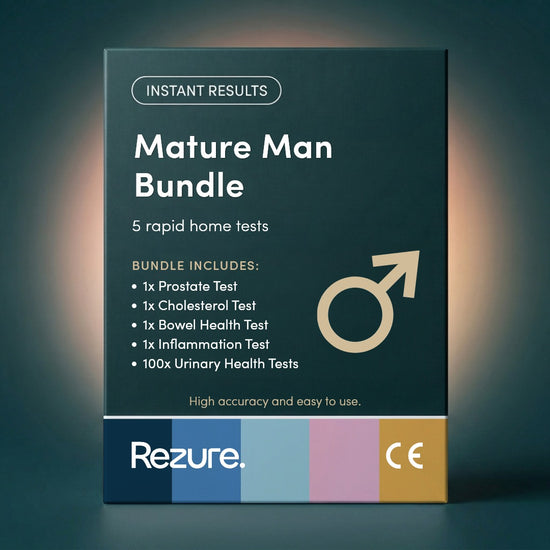
The same thinking applies to broader age-related checks. Rezure’s Mature Man Health Bundle includes the Total Cholesterol Rapid Home Blood Test Kit, alongside checks such as PSA and urinary health markers.
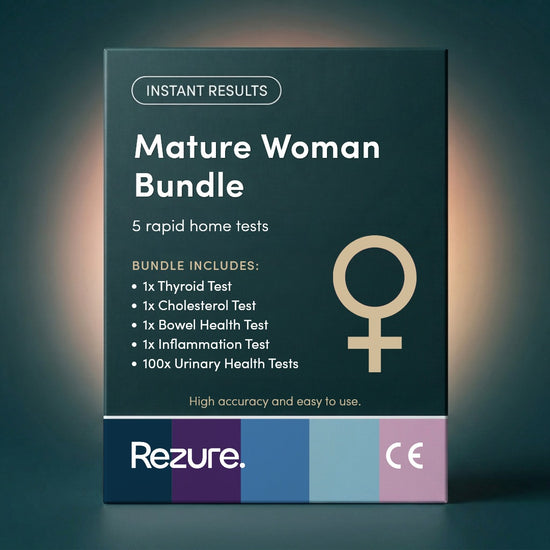
Rezure’s Mature Woman Health Bundle also includes the Total Cholesterol Rapid Home Blood Test Kit, alongside TSH, urinary health, bowel health, and CRP checks.
When should you choose a full lipid profile instead?
Choose a full lipid profile when you need detail, not just a first check.
A full lipid profile is the better route if your total cholesterol result is high, if you already have cardiovascular disease, or if you are discussing medication.
A full lipid profile measures total cholesterol, HDL cholesterol, and triglycerides, then calculates non-HDL cholesterol and LDL cholesterol. A fasting sample is not required in that guidance.
You should also think about a full lipid profile if you have:
-
Diabetes
-
Chronic kidney disease
-
High blood pressure
-
A strong family history of early heart disease
-
Previous heart attack, stroke, angina, or circulation problems
-
Very high cholesterol in previous tests
-
A clinician who wants to calculate your cardiovascular risk
Cholesterol levels can be used with other factors, such as age, blood pressure, and health conditions, to estimate cardiovascular disease risk.
There is another reason not to look at cholesterol in isolation. The British Heart Foundation lists underactive thyroid, type 2 diabetes, kidney disease, liver disease, menopause, age, family history, and genetics among factors linked with cholesterol levels.
If thyroid symptoms sit in the background, such as tiredness, weight gain, feeling cold, or low mood, Rezure’s Underactive Thyroid (TSH) Rapid Home Test Kit may be relevant as a separate check. The product page says it measures thyroid-stimulating hormone using a small blood sample.
What should you do after a high total cholesterol result?
After a high total cholesterol result, do not guess your risk from that number alone. Use it as a prompt to get a fuller view.
A sensible next step looks like this:
-
Check that you followed the test instructions properly
-
Write down the result and the date
-
Think about any short-term factors, such as recent illness or unusual diet changes
-
Ask your GP, pharmacist, or nurse about a full lipid profile
-
Discuss blood pressure, diabetes risk, smoking, family history, weight, and medication
-
Do not start or stop prescribed medicine without medical advice
This is where some people make the wrong move. They see a high result, search “how to lower cholesterol fast”, then try to fix the number without knowing what kind of cholesterol is high.
That misses the point. A high total cholesterol result is not a diagnosis in itself. It is a reason to get the right follow-up.
Decisions about statins for primary prevention should involve discussion of lifestyle change, benefits and risks, personal preferences, other health conditions, frailty, and life expectancy.
Is a total cholesterol test enough?
A total cholesterol test can be enough for an initial check. It is not enough for a full cholesterol breakdown or a complete cardiovascular risk assessment.

That is the honest answer. Total cholesterol testing has a clear role when you want a quick reading, when you have risk factors, or when you want to track broad change over time. It can also help you notice a problem before symptoms appear, which matters because high cholesterol often gives no warning.
It cannot tell you everything. It cannot split LDL from HDL. It cannot show triglycerides. It cannot explain why your result is high.
So think of the test like that suitcase scale. If the number looks fine, good. If it looks high, you know not to ignore it. Open the case. Check what is inside. Then decide what needs to change.